Aspen Bracket Care (Phellinus tremulae)

Aspen Bracket

About Aspen Bracket

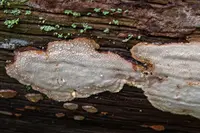
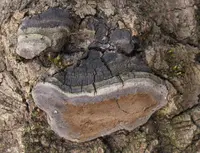
Aspen bracket, Phellinus tremulae, is a perennial wood-decay fungus rather than a leafy houseplant. It forms hard, hoof-shaped brackets tightly attached to aspen trunks. These fruiting bodies are usually brown to dark brown with a rough, cracked surface and a pale pore layer underneath.

The fungus is native to cooler regions of the Northern Hemisphere, especially forests with abundant trembling aspen. It is a heart-rot pathogen, meaning it slowly decomposes the inner wood and can weaken trees over time.

Because it depends on living or dead aspen wood, it is not practical to grow or care for Aspen Bracket as a typical ornamental plant.

Main Plant Requirements

Care Difficulty

Moderate Care

Light Preference

Partial Shade

Water Requirements

Moderate Water

Temperature Preference

Cool Climate

Hardiness Zone

Unknown

Soil Texture

Loamy, Silty, Organic-rich

Soil pH

Acidic (5.5–6.5), Slightly acidic (6.5–7.0)

Soil Drainage

Moist but well-drained

Fertilization

Minimal (feed rarely)

Get Personalized Care Plan

Scan your plant to receive care tips personalized for your specific plant

Available on iOS and Android

How to Care for the Aspen Bracket

This wood-decay fungus naturally grows on aspen trunks and does not require direct sun exposure.

  • Thrives in full shade to dappled or filtered light, such as north-facing woodland edges or shaded forest interiors with 0–3 hours of weak direct sun.
  • Handles 2–4 hours of gentle morning sun but prolonged strong afternoon sun can dry host bark and slow Aspen Bracket development.
  • In dense stands, reduced light is acceptable as long as host aspens remain healthy enough to sustain long-term fungal growth.

This species relies on natural moisture in its host tree rather than direct watering.

  • In managed landscapes, focus on keeping host aspens in moist but not saturated soil, allowing the top 3–5 cm to dry slightly between irrigations.
  • Soils must drain freely; chronic puddling, sour smell, or algae on the surface indicates overwatering stress to the tree supporting Phellinus tremulae.
  • Wilting foliage, early leaf drop, or branch dieback on the host tree suggests chronic drought and signals a need for deeper, less frequent irrigation.

This fungus is adapted to cool-temperate climates typical of aspen forests.

  • Active growth is strongest around 50–70°F (10–21°C), common in spring and fall in many temperate regions.
  • Tolerates winter cold well; dormant mycelium in wood can survive prolonged periods down to about -20°F (-29°C) where aspens naturally grow.
  • Sustained heat above 86°F (30°C), especially combined with drought, can stress the host tree, indirectly limiting decay activity and fruiting.

Humidity is not a significant factor for this wood-decaying fungus, which naturally grows on aspen trunks in outdoor conditions.

This fungus is not grown in conventional soil and instead develops directly in the wood of living or dead aspen trees.

  • In nature, Phellinus tremulae colonizes the heartwood of trembling aspen and related Populus species rather than any mineral soil layer.
  • The fungus exploits existing wood moisture gradients, so artificially adding soil amendments like compost, perlite, bark, or sand is unnecessary and not helpful.
  • Soil pH, drainage, and aeration management are irrelevant, because the organism relies on the chemical and structural properties of aspen wood for establishment.
  • Avoid trying to establish it in potting mixes or garden beds, as it requires intact host wood to complete its life cycle.

This species is not suitable for typical container growing because it depends on intact aspen wood rather than potting media.

This wood-decay fungus on aspen does not require fertilizing in natural or landscape settings.

Pruning is not a care practice for Phellinus tremulae, but sanitation pruning of the host tree is important.

  • Inspect aspen trunks during late winter or early spring and mark infected sections for removal once conditions are dry.
  • Remove severely decayed or structurally compromised branches or stems from the host tree using a sharp pruning saw or chainsaw.
  • Cut well below visible conks to reach sound wood, then dispose of infected material off-site to limit further inoculum.
  • Focus on maintaining safe tree structure rather than influencing fungus growth or appearance.

This fungus is not grown in pots; management focuses on handling infected trees rather than repotting Aspen Bracket.

  • Consider removing and replacing young, heavily infected aspens instead of attempting to transplant them to new locations.
  • If a valuable tree is only lightly affected, consult an arborist before any transplanting decision, as root disturbance increases stress.
  • Schedule any transplanting of replacement trees for early spring or early fall for milder temperatures and steadier soil moisture.
  • Water transplanted replacement trees deeply, mulch 5–8 cm, and avoid root disturbance to reduce stress and improve establishment.

Propagation of Phellinus tremulae is not a goal in gardens or managed landscapes.

Phellinus tremulae is cold hardy and requires no dedicated winter care in outdoor conditions.

  • The fungus survives on living or dead aspen wood through freezing temperatures without added protection.
  • Prioritize overall tree health with proper watering and mulching, which indirectly limits the impact of decay.
  • Do not move infected wood indoors for winter storage to reduce unwanted spore spread into indoor or sheltered areas.

Care Tips

Select Host Trees

Choose only stressed or already-declining aspens as inoculation hosts, since this fungus is a wood-decayer and will eventually weaken and kill vigorous trees.

Monitor Structural Safety

Inspect infected aspens at least once a year for signs of internal decay such as cracking, large brackets, or hollow sounds when tapped, and remove high-risk trees near paths, buildings, or play areas.

Use Clean Tools

Disinfect saws and drill bits with 70% alcohol or a similar disinfectant before and after working on infected trunks to reduce accidental spread of the fungus to healthy aspen stands.

Retain Habitat Safely

Where space allows and safety is not an issue, leave some infected trunks and fallen logs on the ground to support wildlife and decomposition, but clearly mark and exclude access to unstable stems.

Plan Stand Rotation

In managed woodlots, map trees with large, persistent brackets and schedule earlier harvest or removal of heavily infected stems to limit long-term structural loss and manage risk while growing Aspen Bracket as a habitat resource.

Common Pests and Diseases

Heart rot progression

This disease further decays the internal wood of infected aspen hosts, expanding from initial Phellinus tremulae infection and leaving the tree structurally weak. Symptoms include extensive internal cavities, brittle stems, and increasing deadwood in the crown.

Solution

Manage by promptly removing and safely disposing of heavily decayed stems or entire trees where failure risk is high, and by pruning out dead or severely weakened branches back to sound wood. Avoid mechanical damage to remaining aspens, and favor mixed-species plantings to reduce the spread of heart rot within uniform aspen stands.

Stem cankers

This disease causes localized dead patches on aspen bark around existing bracket infections, sometimes leading to sunken, cracked, or roughened areas that girdle branches. Symptoms include dieback beyond the canker and increased entry points for secondary fungi and insects.

Solution

Prune out cankered branches during dry weather, cutting well below visible damage into healthy tissue, and disinfect tools between cuts. Improve tree vigor with appropriate watering and reduced competition, and avoid wounding trunks, as fresh injuries increase the likelihood of new canker development.

Wood-boring beetles

These insects exploit weakened or decaying aspen wood around the brackets, creating tunnels that accelerate structural decline and invite further decay organisms. Symptoms include small round exit holes, frass (sawdust-like material), and increasingly brittle wood.

Solution

Remove and destroy heavily infested or structurally compromised branches or stems and avoid storing cut infected wood nearby, which can harbor emerging adults. Support host tree health through proper site selection, mulching, and reduced drought stress, as vigorous aspens are less attractive to wood-boring beetles.

Bark-boring insects

These insects tunnel under the bark of stressed aspens that already carry brackets, disrupting nutrient flow and increasing dieback above the affected area. Symptoms include bark cracking, pitch or dark staining, and thinning foliage in the upper crown.

Solution

Promptly prune and dispose of dying or heavily infested limbs to reduce breeding sites, and avoid further stress from soil compaction or excessive pruning. In managed plantings, maintain species diversity and avoid dense, uniform aspen groupings, which tend to support larger bark-borer populations.

Secondary saprotic fungi

These fungi colonize dead or heavily decayed sections around the brackets, leading to faster breakdown of structural wood and larger, unstable cavities. Symptoms include multiple fungal bodies on the same trunk, soft or spongy wood, and flaking or crumbling bark over dead areas.

Solution

Periodically inspect infected trees for advanced decay and remove those that pose a safety hazard, especially near buildings or paths. Limit unnecessary injury to remaining aspens, and when planting replacements, consider more decay-resistant companion species to reduce long-term risk while still growing Aspen Bracket where appropriate for study or habitat value.

Interesting Facts

Aspen specialist parasite

This bracket fungus almost exclusively infects trembling aspen (Populus tremula and related aspens), forming long‑lasting heart rot that hollows the trunk from the inside while the outer wood often appears sound.

Distinctive sterile margin

The fruiting body typically develops a thick, sterile outer band with a sharp transition to the spore‑producing surface, a feature field mycologists use to distinguish it from other brown‑rot and white‑rot bracket fungi on hardwoods.

Forest health indicator

Foresters often treat its presence as an indicator of internal decay and reduced timber quality in aspen stands, yet the resulting hollow trees provide important nesting and roosting sites for birds and small mammals.

Botan icon

Did you know?

Genetic and decay‑pattern studies have shown that a single Aspen bracket colony can persist and continue to rot the heartwood of the same living aspen host for several decades, effectively sharing a long-term lifespan with the tree it inhabits.

FAQs about Aspen Bracket

This fungus spreads slowly through aspen stands by infecting living trees and continuing to fruit on dead wood. It is not invasive in gardens but is a serious decay pathogen in managed or natural aspen forests.

Grow Healthy Plants with Botan Care

Keep your plants happy and healthy with plant identification, disease detection, and easy care guidance.

Botan plant care app — identify plants on mobile

Explore More Plants