crown-tipped coral fungus Care (Artomyces pyxidatus)

Also known as: crown-tipped coral
crown-tipped coral fungus

About crown-tipped coral fungus

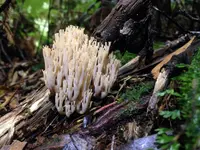
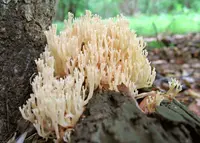
Crown-tipped coral fungus, Artomyces pyxidatus, is a saprophytic fungus that decomposes dead wood rather than a traditional green plant. It forms upright, branched clusters that resemble tiny coral antlers, each tip crowned with a small, shallow cup.

This species is most often found on well-decayed hardwood logs and stumps in temperate forests across North America and parts of Europe and Asia. It is considered moderately challenging to cultivate because it depends on the right wood substrate, consistent moisture, and good air circulation.

For those wanting to learn how to care for crown-tipped coral fungus, it helps to understand its forest habitat and mimic cool, shaded, evenly moist conditions around decomposing wood.

Main Plant Requirements

Care Difficulty

Hard Care

Light Preference

Shade

Water Requirements

Keep Soil Moist

Temperature Preference

Cool Climate

Hardiness Zone

Unknown

Soil Texture

Organic-rich, Loamy

Soil pH

Acidic (5.5–6.5)

Soil Drainage

Moist but well-drained

Fertilization

Minimal (feed rarely)

Get Personalized Care Plan

Scan your plant to receive care tips personalized for your specific plant

Available on iOS and Android

How to Care for the crown-tipped coral fungus

This wood-decaying fungus develops best under low to moderate light in moist forest settings.

  • Provide dappled or filtered light under tree canopies, similar to a shaded woodland floor, rather than full, open sun.
  • Allow brief morning sun of 1–2 hours if humidity is high, but avoid intense midday or afternoon sun that dries the substrate quickly.
  • In summer, prioritize shade with indirect light; in spring and fall, slightly brighter but still filtered light helps crown-tipped coral fungus form healthy fruiting bodies.

Moist, not waterlogged, conditions are essential for reliable fruiting on decaying wood.

  • Keep the substrate or log evenly moist; surface wood should feel damp to the touch but not slimy or dripping with free water.
  • Increase misting or irrigation when the outer 2–3 mm of wood feels dry, especially during warm or windy periods that speed evaporation.
  • Reduce supplemental moisture in cool seasons to prevent standing water, which encourages bacterial rot and mold instead of healthy Artomyces pyxidatus clusters.

This species fruits best in cool to mild conditions typical of temperate forests.

  • Aim for an optimal range of 55–70°F (13–21°C) for consistent development of fruiting bodies on decaying wood.
  • Allow short exposures down to about 40°F (4°C), but expect growth to slow markedly near this lower limit and during cold snaps.
  • Avoid prolonged heat above 80°F (27°C), since hot, dry conditions desiccate the substrate and can abort or distort emerging clusters.

Artomyces pyxidatus requires consistently high humidity to form and maintain healthy fruiting bodies.

  • Aim for 80–95% humidity using a closed tub, humidity tent, or plastic bag with air holes over the substrate.
  • Dry air causes browned, shriveled tips and stunted crowns on the fungus clusters.
  • Increase humidity by misting the air around the substrate, adding trays of water with mesh separation, or using a small ultrasonic humidifier nearby.

This fungus grows on decaying wood rather than true soil, so the focus is on a suitable lignin-rich substrate.

  • Use fully pasteurized or sterilized hardwood sawdust, fine wood chips, or a mix with 10–20% wheat bran for nutrition.
  • Ensure the substrate drains freely but stays evenly moist by avoiding dense, clay-based garden soil or compacted mixes.
  • Maintain a slightly acidic environment around pH 5.5–6.5 by using hardwood rather than alkaline wood sources like heavily limed materials.
  • Improve aeration by loosely packing the substrate and adding a small proportion of coarse chips to prevent anaerobic, foul-smelling patches.

This species can be grown in containers if the vessel is adapted to mimic a moist, well-ventilated log environment.

  • Choose a tall, stable container that can hold a deep block of colonized substrate so fruiting clusters have room to develop vertically.
  • Drill side slits or holes in plastic tubs or buckets to allow lateral fruiting while still retaining high internal humidity.
  • Use an opaque or dark container to limit light on the substrate block, which helps reduce overheating and surface drying near the walls.

Artomyces pyxidatus grows on decaying wood and usually does not benefit from additional fertilizer.

Pruning needs for Artomyces pyxidatus are minimal and mainly hygienic.

  • Inspect fruiting bodies during or after their flush and remove only clearly dead, collapsed, or moldy tissue.
  • Use clean scissors or a sharp knife to cut at the base without disturbing the underlying wood substrate.
  • Hygienic removal limits spread of rot and keeps surrounding wood surfaces suitable for future fungal growth.

This fungus is normally managed by renewing or moving its woody substrate rather than traditional repotting.

  • Transplant only when the colonized wood is breaking down fully, contaminated with other fungi, or drying out excessively.
  • Plan moves in cool, moist weather to reduce desiccation of mycelium, typically in spring or fall.
  • Shift the entire colonized log or block intact onto fresh, similarly moist hardwood material.
  • Handle gently, avoid shaking, and keep the substrate shaded and evenly moist for several weeks after relocation.

Propagation of Artomyces pyxidatus is specialized and usually done by experienced growers on sterile substrates.

  • Use spore prints or purchased cultures to inoculate pressure-sterilized grain or sawdust in clean conditions.
  • Transfer fully colonized spawn to pasteurized hardwood-based substrates in trays, bags, or logs.
  • Maintain high humidity, gentle airflow, and cool to mild temperatures to encourage successful colonization and fruiting.
  • Keep tools and containers disinfected to reduce competing molds and bacteria, which quickly outgrow the fungus.

Outdoor colonies on natural logs are generally cold hardy and need little specific winter care.

  • In very exposed sites, a light mulch of leaves around the log helps moderate freeze–thaw swings.
  • For container-grown substrates in freezing climates, move them to an unheated but frost-sheltered space.
  • Maintain only slight moisture in winter, preventing both complete drying and waterlogged conditions.

Care Tips

Use hardwood blocks

Mount the culture on pre-soaked, pressure-sterilized hardwood blocks or tightly packed hardwood sawdust rather than loose chips to give the mycelium a stable, long-lasting food source and more uniform fruiting.

Maintain high airflow

Provide gentle but continuous fresh air exchange around developing clusters, such as by propping open terrarium lids or using a small fan set well away, to prevent CO2 buildup that causes elongated, weak branches.

Control condensation drip

Angle lids or covers and add a simple drip guard (for example, a strip of clean plastic film) above the substrate so condensation slides away instead of dripping directly on the coral tips, which can cause spotting and collapse.

Harvest in stages

Cut only the largest, fully crowned tips with a clean, sharp knife and leave smaller sections intact, allowing the colony to redirect energy and produce several flushes from the same substrate.

Monitor substrate aging

Track the age and weight of the colonized block and retire or replace it once it becomes noticeably lighter, patchy, or slow to fruit, as this indicates that the wood has been mostly consumed and growing crown-tipped coral fungus will decline in yield.

Common Pests and Diseases

Fungivorous springtails

These insects feed on moist fungal tissue and can graze the delicate branch tips of fruiting bodies, especially in very damp cultivation containers or terraria. Symptoms include pitted, roughened tips and slow collapse of the coral-like branches.

Solution

Reduce excess moisture and improve air exchange in the growing container, then physically rinse or brush springtails off the substrate and fruiting bodies. For persistent issues, allow the top layer of the wood or substrate to dry slightly between mistings and use fine-mesh covers to limit re‑infestation while maintaining high ambient humidity needed to grow Artomyces pyxidatus.

Fungus gnat larvae

These insects lay eggs in wet, organic substrates; the larvae may burrow into young fungal tissue and feed on the base of fruiting clusters. Symptoms include thinning or toppled clusters, with bases that appear chewed or water‑soaked.

Solution

Allow the upper surface of the inoculated wood or substrate to dry slightly between waterings while keeping internal moisture stable, and use sticky traps to capture adults near the growing area. Cover air inlets with fine mesh and, if needed, drench only the substrate (not the fruiting bodies) with a biological control containing Bacillus thuringiensis israelensis according to label directions.

Mite grazing

These pests include various tiny mites that can colonize humid fruiting chambers and feed on fungal tissue, causing abrasion of branches and a dusty or speckled appearance. Symptoms include misshapen, shortened tips and very fine webbing or moving pinpoints on close inspection.

Solution

Improve ventilation and avoid stagnant, overly warm conditions while maintaining humidity in the 80–95% range suitable for crown-tipped coral fungus care instructions. Rinse affected blocks and fruiting bodies gently with clean water, remove heavily damaged clusters, and use predatory mites as a biological control if populations remain high.

Bacterial soft rot

This disease develops when fruiting bodies stay constantly wet with poor air movement, allowing bacteria to break down tissue. Symptoms include slimy, translucent, foul‑smelling branches that collapse rapidly into a mushy mass.

Solution

Increase fresh air exchange, reduce direct misting on the fruiting bodies, and only humidify the surrounding air or chamber walls. Remove and discard all rotten tissue and any obviously contaminated substrate, and disinfect tools and surfaces before handling new or healthy clusters.

Green mold contamination

This disease is usually caused by Trichoderma or similar green molds that colonize the hardwood or substrate before or alongside the fungus. Symptoms include bright to dark green patches on the substrate surface, reduced or aborted fruiting, and eventual failure of new clusters to form.

Solution

Physically cut out small contaminated sections of substrate with clean tools and reduce free water on surfaces while keeping internal moisture adequate for the fungus. If contamination is extensive, discard the block or log, clean the growing environment thoroughly, and start new cultures from healthy, uncontaminated material under stricter hygiene and airflow control.

Interesting Facts

Crown-shaped branch tips

Each branch tip ends in a tiny cup with several short points, forming a structure that looks like a miniature crown, which is the origin of the common name crown-tipped coral fungus.

Specialist wood decomposer

This species decomposes well-rotted hardwood, especially logs that are already heavily decayed, and plays a specific role in the late stages of nutrient recycling in temperate forests.

Cool-season fruiting pattern

In many parts of North America and Europe, it fruits in cool, moist conditions from late spring to fall, often reappearing on the same log over multiple years if the wood remains suitable.

Botan icon

Did you know?

Artomyces pyxidatus produces unusually ornamented spores with distinctive surface patterns that help mycologists separate it from similar coral fungi under the microscope.

FAQs about crown-tipped coral fungus

This species is generally considered edible when young and clean, but quality varies. Identification must be absolutely certain, as coral fungi are easily confused. Only harvest from unpolluted wood and cook thoroughly before eating.

Grow Healthy Plants with Botan Care

Keep your plants happy and healthy with plant identification, disease detection, and easy care guidance.

Botan plant care app — identify plants on mobile

Explore More Plants