Use sterilized substrate
Prepare a substrate mix and sterilize it by pressure cooking or oven pasteurization to reduce competing fungi and bacteria before inoculating for growing Dark Fieldcap.

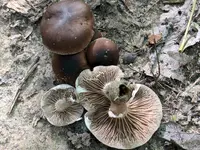
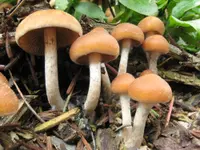
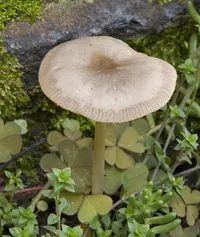
Dark fieldcap, Cyclocybe erebia, is a small to medium-sized woodland mushroom rather than a leafy houseplant. It typically forms dark brown, slightly sticky caps with pale gills and a slender stem, often appearing in groups.
This species is usually found in cool, northern forests, especially in Europe, growing on soil rich in decaying organic matter. It favors moist, shaded conditions and depends on specific fungi–soil relationships, which makes it challenging to cultivate intentionally.
For those studying how to care for Dark Fieldcap, it is generally observed in its natural habitat rather than grown as a typical garden or indoor specimen.

Care Difficulty
Moderate Care

Light Preference
Partial Shade

Water Requirements
Keep Soil Moist

Temperature Preference
Cool Climate

Hardiness Zone
Unknown

Soil Texture
Loamy, Silty, Organic-rich

Soil pH
Acidic (5.5–6.5)

Soil Drainage
Moist but well-drained

Fertilization
Minimal (feed rarely)
Scan your plant to receive care tips personalized for your specific plant
Available on iOS and Android
Cyclocybe erebia prefers cool, subdued light that mimics its natural woodland habitat.
Watering for Cyclocybe erebia focuses on maintaining consistently moist, never waterlogged, soil.
This fungus prefers cool to mild conditions and declines in prolonged heat or hard frost.
Cyclocybe erebia prefers moderately moist air but usually grows well in typical outdoor humidity.
Cyclocybe erebia grows best in moist, airy, organic-rich substrate rather than dense garden soil.
This species can be grown in containers if the vessel supports deep, evenly moist substrate and reliable drainage.
This woodland fungus gains most nutrients from decaying organic matter and usually needs no added fertilizer in garden settings.
Pruning is not applicable to Cyclocybe erebia because it is a mushroom-forming fungus, not a leafy ornamental plant.
Transplanting focuses on moving colonized substrate rather than handling the fungus as a typical potted plant.
Propagation of this dark fieldcap fungus relies on spreading spores or transferring colonized substrate rather than conventional plant methods.
Cyclocybe erebia in outdoor beds usually overwinters without special attention in temperate climates.

Plant Health Check
Not sure what's wrong with your plant? Check your plant's health inside the app.
The cap is distinctly hygrophanous, appearing dark brown when moist but fading to a much paler, often unevenly blotched brown as it dries, a key character used by field mycologists to separate it from similar species.
This species typically fruits in nutrient-rich, often grassy or disturbed soils such as lawns, parks, and road verges rather than on wood, reflecting a saprotrophic lifestyle focused on decomposing organic matter in the upper soil layer.
Its spore print is dark brown to purplish-brown and, together with the fibrous stipe and dark cap, helps distinguish it from superficially similar brown mushrooms in genera such as Agaricus and Panaeolus.
This mushroom is not considered a choice edible and may be confused with toxic brown field species. For safety, it should be treated as inedible and not collected for food or casual tasting.
Keep your plants happy and healthy with plant identification, disease detection, and easy care guidance.