Spore-friendly mulching
Use a 3–5 cm layer of loose, undecorative wood chip mulch over the inoculated bed to conserve moisture while still allowing the fruiting bodies to emerge and disperse spores freely.

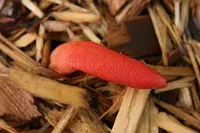
Red stinkhorn, Mutinus ravenelii, is a saprophytic fungus, not a traditional foliage plant. It grows from underground egg-like structures into slender, bright reddish-orange spikes. The tip is coated with a dark, foul-smelling slime that attracts flies, which spread its spores.
This species is native to North America but now appears in gardens, mulch beds, and woodlands in many temperate regions. It tends to appear suddenly after rain and then collapse within a short time.
Because it feeds on decaying organic matter, it is not cultivated in a typical houseplant sense. Gardeners who want to care for red stinkhorn usually maintain moist, organic-rich soil in shaded or partially shaded outdoor areas.

Care Difficulty
Moderate Care

Light Preference
Partial Shade

Water Requirements
Keep Soil Moist

Temperature Preference
Cool Climate

Hardiness Zone
5–9

Soil Texture
Loamy, Silty, Organic-rich

Soil pH
Acidic (5.5–6.5), Slightly acidic (6.5–7.0)

Soil Drainage
Moist but well-drained

Fertilization
Minimal (feed rarely)
Scan your plant to receive care tips personalized for your specific plant
Available on iOS and Android
Mutinus ravenelii grows best in dappled woodland-style light rather than full sun exposure.
Mutinus ravenelii thrives in consistently moist, well-drained soil that never stays saturated for long periods.
This fungus prefers mild, temperate conditions and fruits most reliably in warm, moist weather.
This fungus tolerates a wide humidity range and does not require special air moisture control.
This saprophytic fungus prefers moist, loose, organic-rich ground that stays aerated but never waterlogged.
This species is not well suited to long-term container growing, but short-term cultivation in tubs or trays is possible for observation only.
Mutinus ravenelii is a saprophytic fungus that usually does not need supplemental fertilizer when grown in rich, woody organic matter.
Mutinus ravenelii does not require conventional pruning, but spent structures can be removed for tidiness and spore control.
This stinkhorn is rarely grown in containers; management focuses on relocating or limiting it in garden beds rather than classic repotting.
Intentional propagation of Mutinus ravenelii is uncommon, as it spreads naturally by spores and mycelium in suitable organic debris.
This fungus is generally cold hardy in temperate climates and needs no specific winter care beyond maintaining suitable organic mulch or woody debris.

Plant Health Check
Not sure what's wrong with your plant? Check your plant's health inside the app.
The foul, carrion-like odor and bright reddish-orange spore-covered tip closely mimic decaying animal tissue, which specifically attracts carrion-loving flies that spread its spores after walking through the sticky gleba.
The fruiting body can expand from an underground egg to a full stalk in only a few hours, driven by water uptake and pressure changes in its sponge-like tissue rather than true stem growth.
This species is most often found in rich wood chips, garden mulch, and composted organic matter in eastern North America and parts of Europe, reflecting its role as a saprobe that decomposes lignin- and cellulose-rich plant debris.

This stinkhorn’s microscopic spores often remain unnoticed in commercial mulch or soil, so entire garden patches can suddenly produce multiple fruiting bodies in a season even though no one intentionally introduced the fungus.
This fungus can spread locally where there is abundant decaying organic matter, as spores are easily dispersed. It is usually patchy rather than lawn‑filling and does not damage living plants or roots.
Keep your plants happy and healthy with plant identification, disease detection, and easy care guidance.