Russula rubescens Care

Russula rubescens

About Russula rubescens

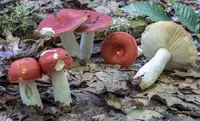
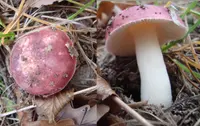
Russula rubescens is a wild ectomycorrhizal fungus, not a traditional garden plant. It forms a mutual partnership with tree roots, helping them absorb water and nutrients. The fruiting bodies appear as pinkish to reddish caps with paler stems, usually in forests.

This species naturally occurs in temperate woodlands, often with conifers or broadleaf trees, emerging from soil or leaf litter after rain. It is not suitable for typical indoor culture, and attempts to grow or care for Russula rubescens at home are usually unsuccessful.

Successful growth depends on the right tree partners, undisturbed soil, and natural forest conditions, which are difficult to reproduce in gardens or containers.

Main Plant Requirements

Care Difficulty

Hard Care

Light Preference

Partial Shade

Water Requirements

Keep Soil Moist

Temperature Preference

Cool Climate

Hardiness Zone

Unknown

Soil Texture

Loamy, Silty, Organic-rich

Soil pH

Acidic (5.5–6.5)

Soil Drainage

Moist but well-drained

Fertilization

Minimal (feed rarely)

Get Personalized Care Plan

Scan your plant to receive care tips personalized for your specific plant

Available on iOS and Android

How to Care for the Russula rubescens

This ectomycorrhizal mushroom prefers cool, dappled woodland light rather than open sun.

  • Provide partial shade with 2–4 hours of weak, early-morning or late-afternoon sun filtered through tree canopies, mimicking mixed or conifer forest edges.
  • Avoid strong, direct midday sun, which dries the upper soil or leaf litter too quickly and can reduce fruiting frequency and cap quality.
  • Site in stable, lightly shaded woodland where seasonal leaf cover changes still allow bright shade in spring and deeper shade in midsummer for Russula rubescens.

This forest fungus depends on consistently moist, not waterlogged, soil around its tree partners.

  • Aim for evenly moist mineral soil and leaf litter, letting only the top 1–2 cm begin to dry between natural rain events or supplemental irrigation.
  • Use well-drained, humus-rich soil; standing water, sour smells, or slimy litter indicate overwatering and can damage the fine mycelial network.
  • In dry spells, give slow, deep soaking 1–2 times per week, watching for shrinking caps, cracking surfaces, or very brittle litter as signs of insufficient moisture.

This species thrives in cool to mild woodland temperatures with protection from extremes.

  • Optimal growth and fruiting occur around 55–70°F (13–21°C), typical of shaded late-spring to autumn forest conditions.
  • Tolerates cool spells down to about 35–40°F (2–4°C) without lasting damage but is sensitive to hard frost below 28°F (-2°C), which can destroy fruiting bodies.
  • Handles short warm periods up to 80–82°F (27–28°C) if soil and litter stay moist and shaded; prolonged hotter, dry weather sharply reduces Russula rubescens fruiting.

Humidity is not a significant controllable factor for Russula rubescens, which is a wild ectomycorrhizal mushroom rather than a cultivated houseplant.

Russula rubescens naturally grows in undisturbed forest soils, so replicating a loose, humus-rich forest floor is essential for any cultivation attempts.

  • Use a deep layer of loose, crumbly, organic-rich soil or leaf litter rather than dense mineral garden soil to support the fungal network.
  • Maintain consistently moist but never waterlogged conditions, with rapid drainage through a slightly sloped or well-structured forest-type substrate.
  • Aim for slightly acidic soil, around pH 5.0–6.5, using pine needles, oak leaves, or peat-free acidic organic matter to adjust pH.
  • Avoid compacted, heavily tilled, fertilized, or salty soils, which disrupt the fine fungal threads and reduce the chance of successful mycorrhizal association.

This species is not realistically suitable for container growing, because it depends on complex mycorrhizal associations with tree roots in natural soil conditions.

This mycorrhizal fungus is not managed like a typical garden plant and routine fertilization is not recommended for Russula rubescens.

Pruning is not applicable for Russula rubescens because it is a wild ectomycorrhizal mushroom, not a woody or herbaceous garden plant.

This species is a forest-dwelling mycorrhizal mushroom that is not suited to normal repotting or transplanting.

  • Russula rubescens forms symbiotic associations with tree roots, so it cannot be lifted and moved like a potted plant.
  • Transplanting fruiting bodies or soil rarely establishes a stable new colony and usually fails.
  • For research or cultivation attempts, disturb the forest floor as little as possible to avoid damaging the host tree roots.
  • Instead of moving it, conserve its existing habitat with minimal soil compaction and chemical use.

Propagation of Russula rubescens is complex and not practical for home growers, as it depends on a long-term partnership with specific tree roots.

As a native forest mushroom, this species is naturally cold hardy in its climate range and needs no active winter care from gardeners.

Care Tips

Mycorrhizal host choice

Establish the fungus near known host trees such as spruce, pine, or oak, and avoid isolated lawn areas, since this species relies on forming mycorrhizae with suitable tree roots to fruit reliably.

Minimal soil disturbance

Mark the fruiting zone and avoid digging, rototilling, or heavy raking there so the underground mycelial network and fine tree roots remain intact and can support future flushes.

Selective harvesting method

Twist and gently lift mature mushrooms at the base rather than cutting high on the stem, then lightly replace leaf litter to protect the mycelium from drying and mechanical damage.

Maintain leaf litter

Allow a natural layer of leaf litter and conifer needles to accumulate around host trees to keep the soil surface cool, moist, and rich in organic matter that supports stable mycorrhizal activity.

Seasonal moisture monitoring

During dry periods in late spring and summer, check soil moisture 5–10 cm deep under host trees and apply slow, deep irrigation in that zone only when it begins to dry, which can support more consistent results when growing Russula rubescens.

Common Pests and Diseases

Mycophagous slugs

This pest feeds directly on mushroom caps and stems, leaving irregular holes and slime trails on developing fruiting bodies. Symptoms include missing sections of the cap margin and shallow gouges in the flesh.

Solution

Hand-pick slugs during damp evenings, use physical barriers such as copper tape or coarse grit around the fruiting area, and reduce dense ground cover that shelters them. In outdoor sites, targeted iron phosphate slug baits placed away from the main fruiting zone can reduce damage while limiting impact on non-target organisms.

Fungus gnats

These insects are attracted to moist, organic substrates and can damage delicate primordia (young mushroom structures) by feeding and tunneling. Symptoms include aborted or misshapen young fruiting bodies and small black flies hovering near the substrate surface.

Solution

Improve surface drainage and avoid waterlogged conditions around the fruiting zone, then use yellow sticky traps to capture adults. For persistent problems, a biological control such as Bacillus thuringiensis israelensis (BTi) applied to the substrate can reduce larvae without harming the mycelium when used according to label directions.

Mucor mold

This disease appears as fast-growing, fluffy white to gray mold patches on or near developing mushrooms, often outcompeting slower mycelium. Symptoms include stunted or aborted fruiting bodies and a cottony overgrowth on the substrate or damaged tissue.

Solution

Remove and discard heavily colonized material and any affected mushrooms to prevent further spore spread. Improve airflow, avoid overwatering, and keep debris such as decaying leaves or old caps cleared from the fruiting area to limit nutrient-rich spots where this mold thrives.

Trichoderma contamination

This disease is caused by aggressive green mold species that colonize the same substrate, forming dense white growth that turns bright green as spores develop. Symptoms include reduced or completely suppressed mushroom formation where the green patches appear.

Solution

Physically remove contaminated substrate and adjacent material, then reduce moisture excess and improve ventilation around the colonized zone. In managed or semi-cultivated settings, keep tools and containers clean and avoid introducing heavily decomposed organic matter that already shows green mold growth, to support balanced Russula rubescens care instructions in the habitat.

Interesting Facts

Blushing flesh reaction

When the flesh of this mushroom is cut or bruised, it slowly turns pink to reddish, a color change caused by oxidation of specific pigment compounds in the tissues.

Mycorrhizal partner choice

This species forms ectomycorrhizal symbioses with conifers such as spruce and fir, exchanging mineral nutrients and water from the soil for sugars produced by the tree’s photosynthesis.

Distinctive spore print

Its spore print is pale cream to light ochre, a diagnostic feature that helps distinguish it from similar brittlegills that have white or much darker spore deposits.

Botan icon

Did you know?

The brittle, snap-prone texture of this mushroom’s gills and cap flesh is due to its hyphal structure lacking clamp connections and forming spherical cells called sphaerocysts, a hallmark of the Russula lineage that gives the group its characteristic chalky breakage.

FAQs about Russula rubescens

This mushroom is considered edible when thoroughly cooked, but it is easily confused with toxic red russulas. Only experienced foragers should eat it, and local expert confirmation is strongly recommended before consumption.

Grow Healthy Plants with Botan Care

Keep your plants happy and healthy with plant identification, disease detection, and easy care guidance.

Botan plant care app — identify plants on mobile

Explore More Plants