incense webcap Care (Cortinarius subtortus)

incense webcap

About incense webcap

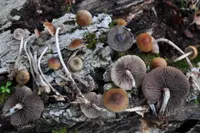
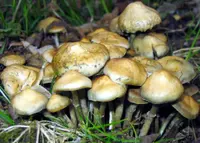
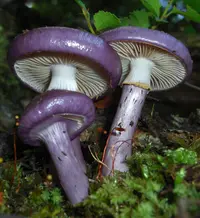
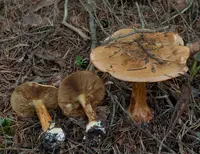
The incense webcap, Cortinarius subtortus, is a woodland mushroom, not a true houseplant. It forms small, brownish to violet caps with a cobweb-like veil on young specimens. The fruiting bodies appear in soil rather than on wood.

This species typically grows in coniferous and mixed forests in temperate regions, often in association with trees such as spruce or pine. It relies on a mycorrhizal partnership, where fungus and tree roots exchange nutrients, which makes it difficult to cultivate artificially.

Anyone wanting to care for incense webcap should understand that it is best appreciated in its natural habitat, where it prefers undisturbed, moist, well-drained forest soil and dappled to low light.

Main Plant Requirements

Care Difficulty

Hard Care

Light Preference

Partial Shade

Water Requirements

Regular Water

Temperature Preference

Cool Climate

Hardiness Zone

Unknown

Soil Texture

Loamy, Peaty, Organic-rich

Soil pH

Strongly acidic (4.5–5.5)

Soil Drainage

Moist but well-drained

Fertilization

Minimal (feed rarely)

Get Personalized Care Plan

Scan your plant to receive care tips personalized for your specific plant

Available on iOS and Android

How to Care for the incense webcap

This ectomycorrhizal fungus prefers low, forest-floor light that mimics its natural woodland habitat.

  • Position Cortinarius subtortus under closed-canopy conifers or mixed woodland, receiving dappled or filtered light for roughly 1–3 hours of weak direct sun only, mostly in the morning.
  • Favor north or east-facing woodland edges; avoid open, exposed sites with full midday or afternoon sun that can dry the litter layer and reduce fruiting.
  • In summer, dense shade helps maintain moist leaf litter; in early spring and autumn, slightly more open light is acceptable as long as the ground does not bake or crack.

This forest mushroom depends on consistently moist, not waterlogged, soil around its tree partners.

  • Aim for humus-rich soil that stays evenly damp 5–10 cm deep; the surface litter may look dry, but underneath should feel cool and slightly moist when checked by hand.
  • Increase moisture in dry spells with gentle irrigation that wets the upper 10–15 cm, then allow the top litter to partially dry before the next soak to avoid stagnant, waterlogged conditions.
  • Reduce added water in cool, wet seasons; signs of excess include sour odor and standing water, while prolonged cracking soil, brittle needles, and shrinking caps suggest insufficient moisture.

This species fruits best in cool, temperate conditions similar to natural coniferous forests.

  • Optimal fruiting usually occurs around 45–60°F (7–16°C), typical of autumn in many temperate regions, with the underground mycelium remaining active in a broader cool range.
  • The fungus can tolerate near-freezing soil, down to about 32°F (0°C), but repeated hard freezes below this can damage fine mycelial strands, especially in shallow, poorly mulched areas.
  • Prolonged heat above 77°F (25°C), combined with dry soil, reduces fruiting and may kill surface mycelium, so thick organic mulch and shade help buffer summer temperature swings.

This ectomycorrhizal fungus is not suited to controlled home humidity management and is best left in natural forest conditions, so humidity guidance for incense webcap in cultivation is not meaningful.

This forest fungus relies on a symbiotic relationship with tree roots and cannot be grown reliably by adjusting soil mixes alone.

  • In nature, Cortinarius subtortus fruits in loose, organically rich leaf litter and topsoil under conifers or mixed woodland, not in conventional potting media.
  • Its mycelium occupies well-aerated, crumbly mineral soil layered with decomposing needles or leaves that maintain moisture yet drain freely after rain.
  • Soil typically ranges from slightly acidic to acidic, often around pH 4.5–6, influenced by conifer needles and other forest litter inputs.
  • Attempts to simulate this with compost, bark, and sandy mineral soil rarely succeed without compatible host trees, so container-style soil preparation is not recommended.

This species is not suitable for container growing because it depends on ectomycorrhizal association with living tree roots in undisturbed soil ecosystems.

This wild mycorrhizal fungus does not need fertilization in garden or forest settings, so incense webcap care focuses on habitat rather than added nutrients.

Cortinarius subtortus is a wild ectomycorrhizal fungus and is not pruned in the way ornamental plants are managed.

This species is not suited to normal repotting, as it lives in symbiosis with tree roots in soil rather than as a potted ornamental.

  • Avoid attempting container culture; this fungus depends on living host tree roots for nutrition and cannot complete its life cycle in a standard potting mix.
  • If part of a restoration project, move intact soil blocks containing both host tree seedlings and native soil rather than bare fungal tissue.
  • Carry out any soil block relocation during cool, moist weather to reduce stress on roots and fungal hyphae.
  • Keep soil structures intact, avoid shaking off soil from roots, and replant at the same depth to maintain the mycorrhizal network.

Propagation of Cortinarius subtortus is specialized and not practical for home growers, as it requires complex mycorrhizal relationships with suitable trees.

This fungus is naturally cold hardy in its native range and requires no special winter care from gardeners.

Care Tips

Spore-friendly habitat

Leave a few mature caps in place to release spores and avoid heavy raking or leaf removal so the fungal network in the soil can expand naturally over several seasons.

Minimal soil disturbance

Limit digging, tilling, or root pruning near host trees, since this species forms mycorrhizae and relies on undisturbed fine roots to maintain a healthy underground network.

Host tree support

Promote strong host trees such as pines or spruces with appropriate watering and mulching, because healthy roots increase the chances of growing incense webcap fruiting bodies nearby.

Low-input mulching

Apply a thin, loose layer of untreated conifer needles or leaf litter rather than rich organic compost, which helps mimic its natural forest floor without overfeeding competing fungi.

Avoid fungicide use

Do not apply broad-spectrum fungicides or anti-rot paints around host tree roots or nearby soil, as these products can severely damage the mycelium and reduce fruiting for years.

Common Pests and Diseases

Mycophagous springtails

These insects live in moist forest litter and graze on developing fruiting bodies and surrounding mycelium, sometimes deforming caps or reducing mushroom formation. Symptoms include small feeding pits, surface scarring, and stunted or aborted fruiting bodies in very damp sites.

Solution

Reduce excess surface moisture by slightly improving drainage and avoiding heavy disturbance of the forest floor, which favors large springtail populations. If collecting for study, lift and clean specimens promptly, and for cultivation trials use well-drained, pasteurized substrates and fine mesh barriers to limit access.

Slugs and snails

These pests commonly feed on wild mushrooms, chewing irregular holes in caps and stems and sometimes consuming whole young fruiting bodies overnight. Slime trails and ragged edges on the cap are typical signs.

Solution

Hand-remove slugs and snails during damp periods and use physical barriers such as copper tape or coarse grit bands around small experimental plots. Avoid broad chemical molluscicides in natural woodland, as they disrupt non-target organisms and the wider fungal community.

Fungal parasitism

This disease results from other fungi colonizing the fruiting bodies, causing discoloration, soft patches, or powdery or fuzzy growth on the cap and gills. Symptoms include distorted or partially decayed mushrooms that sporulate poorly or not at all.

Solution

Remove and discard parasitized fruiting bodies to reduce local spore load and avoid handling unaffected mushrooms after touching infected ones. In controlled cultivation settings, use clean substrate, minimize excess humidity, and maintain good air movement to limit establishment of opportunistic parasitic fungi.

Interesting Facts

Distinct incense-like odor

Fresh fruitbodies of this species often have a noticeable resinous or incense-like smell, which is unusual among webcaps and is one reason for its common name incense webcap.

Specialist forest partner

This fungus forms ectomycorrhizal associations with conifers such as spruce and pine, exchanging mineral nutrients from the soil for sugars produced by the trees, and is most often recorded in cool, moist coniferous forests.

Variable cap shape

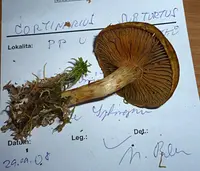
The cap typically starts convex with a somewhat inrolled margin and becomes more irregular and twisted with age, which is reflected in the species epithet subtortus, meaning somewhat twisted.

FAQs about incense webcap

This fungus is considered inedible and potentially poisonous. Identification within Cortinarius is difficult, and several related species are seriously toxic. It should never be eaten, and foraging should be left to experienced mycologists only.

Grow Healthy Plants with Botan Care

Keep your plants happy and healthy with plant identification, disease detection, and easy care guidance.

Botan plant care app — identify plants on mobile

Explore More Plants