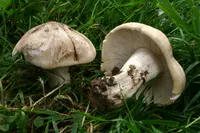
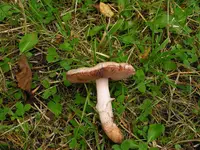
Anthoporia Care (Anthoporia albobrunnea)

Anthoporia

About Anthoporia

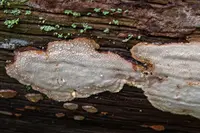
Anthoporia albobrunnea is a crust-forming wood-decay fungus rather than a leafy houseplant. It forms flat, spreading fruiting bodies with pale to brown tones on dead conifer wood. This species is mainly recorded in boreal and temperate forests of Europe and parts of Asia, where it contributes to the natural breakdown of fallen trunks and stumps.

In cultivation, it is rarely grown intentionally and is mostly of interest to mycologists and forest managers. Anyone wanting to care for Anthoporia must understand it behaves like a decomposer, relying on consistently moist, cool wood and shaded forest-like conditions rather than typical potting soil or indoor environments.

Main Plant Requirements

Care Difficulty

Moderate Care

Light Preference

Partial Shade

Water Requirements

Moderate Water

Temperature Preference

Warm Climate

Hardiness Zone

Unknown

Soil Texture

Loamy

Soil pH

Slightly acidic (6.5–7.0)

Soil Drainage

Well-drained

Fertilization

Minimal (feed rarely)

Get Personalized Care Plan

Scan your plant to receive care tips personalized for your specific plant

Available on iOS and Android

How to Care for the Anthoporia

This wood-inhabiting fungus favors cool, shaded forest conditions with only brief, gentle sun exposure.

  • Provide dappled or filtered light, such as beneath shrubs or trees, allowing at most 1–2 hours of weak morning sun and avoiding direct midday or afternoon sun.
  • Site Anthoporia albobrunnea on the shaded side of logs or stumps, where canopy cover blocks roughly 60–90% of direct light throughout the day.
  • In summer, increase shade or leaf litter cover if caps appear pale, dry, or cracked, and in winter ensure positions are bright but still largely sun-sheltered.

This species relies on consistently moist wood and surrounding substrate rather than direct, frequent watering.

  • Maintain wood or woody debris that is damp 2–5 cm deep but not soggy, using rainfall as the primary source and supplementing only during extended dry spells.
  • Water the substrate thoroughly when the surface and upper 3–5 cm feel dry, then allow excess to drain so air pockets remain around the decaying wood.
  • Reduce supplemental watering in cool or wet seasons; signs of overwatering include anaerobic, sour-smelling wood, while underwatering shows as hard, brittle wood and shriveling fruiting bodies.

This fungus prefers cool to mild conditions and is sensitive to prolonged high heat or deep freezing.

  • Aim for an active growth range of about 50–68°F (10–20°C), with fruiting most reliable in the cooler end of this spectrum under moist, shaded conditions.
  • It tolerates short dips to around 32°F (0°C), but repeated hard freezes below 25°F (-4°C) or freeze–thaw cycling can damage exposed fruiting bodies.
  • Sustained temperatures above 77–82°F (25–28°C), especially with low humidity, slow development, so prioritize shaded, humid microhabitats during hot seasons to stabilize conditions.

This wood-decay fungus is not typically humidity-sensitive in cultivation but benefits from stable moderate moisture.

  • Aim for 50–70% humidity if attempting structured Anthoporia albobrunnea culture, avoiding extreme dry indoor air below 30%.
  • Low humidity leads to cracked, overly dry fruiting bodies and stalled growth on colonized wood or substrate.
  • Increase local humidity by tenting the colonized log or block with ventilated plastic and misting nearby air, not the fungal surface.

Anthoporia albobrunnea naturally develops on woody material rather than in true soil, so a wood-based substrate is needed.

  • Use a substrate of well-decayed hardwood chips, sawdust, or small logs with high organic content and a loose, crumbly structure.
  • Ensure very fast drainage so water flows through and the substrate remains moist but never waterlogged, which encourages bacterial rot.
  • A slightly acidic to neutral environment around pH 5.5–7 supports fungal activity; avoid liming the substrate heavily.
  • Improve aeration by mixing coarse wood chips with finer sawdust and avoiding compacted, clay-heavy garden soil around the colonized wood.

This species can be maintained in containers on inoculated wood or sawdust blocks, mainly for observation rather than ornamental display.

  • Choose a sturdy, wide container that keeps the colonized wood stable and prevents tipping as fruiting bodies develop on one side.
  • Drill side ventilation holes high on the container to allow gas exchange while keeping the lower substrate zone shaded and evenly moist.
  • Place the container on blocks or a grate so excess water drains quickly away from the base, preventing chronic wetness around the wood.

This wood-decaying fungus typically gains all needed nutrients from its substrate and does not benefit from additional fertilization in cultivation.

Pruning is not applicable to Anthoporia albobrunnea, as it is a bracket-forming wood-decay fungus rather than a leafy ornamental plant.

Transplanting is rarely relevant because this fungus naturally establishes in dead or decaying wood rather than in standard containers.

  • If cultivation is attempted, move only small colonized wood pieces rather than disturbing the whole substrate.
  • Transplant in cool, moist conditions to reduce desiccation stress on the mycelium.
  • Handle colonized wood gently, keeping it shaded and avoiding direct sun or drying winds.
  • Place the wood onto similar fresh logs or stumps so the mycelium can expand into comparable material.

Propagation of this wood-decay species is generally left to natural spore dispersal and is not a routine horticultural practice.

In its natural range this fungus is cold hardy and usually needs no special winter care when established on outdoor wood.

Care Tips

Use clean substrate

When preparing new culture containers, sterilize hardwood sawdust or chips by pressure cooking or oven pasteurization to reduce contamination and give Anthoporia albobrunnea a competitive advantage.

Inoculate in layers

Distribute spawn in thin, even layers through the substrate rather than just on top, so the mycelium can colonize more uniformly and reduce the risk of anaerobic pockets in the middle.

Control gas exchange

Provide filtered air holes or loose-fitting lids so CO₂ can escape and fresh air can enter, which supports steady mycelial growth without drying out the substrate surface.

Monitor colonization zones

Check the leading edge of the mycelium for uniform color and texture, removing or isolating any sections that show off-color patches or unusual odors before they spread.

Rotate production blocks

If growing Anthoporia in a dedicated area, rotate substrate blocks or containers on a schedule and clean surfaces between batches to break pest and pathogen cycles and maintain more consistent yields.

Common Pests and Diseases

Competing wood-decay fungi

This disease issue arises when other wood-decay fungi colonize the same log or stump, competing for nutrients and space. Symptoms include distorted or reduced fruiting of the Anthoporia albobrunnea colony and mixed patches of different fungal fruiting bodies on the same substrate.

Solution

Remove heavily colonized pieces of wood from competing species and, where possible, provide fresh, undecayed conifer wood for Anthoporia to colonize. Avoid moving infected or mixed-colony wood to new sites, and maintain stable moisture and shade levels to favor the established Anthoporia mycelium.

Insect larval feeding

These insects, mainly beetle or fly larvae, tunnel through the fruiting bodies and underlying wood. Symptoms include small holes, crumbly or shredded tissue, and rapid breakdown of the brackets or crusts.

Solution

Cut away and discard heavily infested fruiting bodies and avoid leaving freshly damaged wood exposed for long periods, as this attracts egg-laying adults. If managing a cultivation or monitoring site, wrap or partially cover key sections of colonized wood with fine mesh during peak insect activity to reduce new infestations.

Slime molds

This disease-like issue happens when slime molds spread over the fungal surface during very wet, mild periods. Symptoms include slimy, often brightly colored patches that cover or suffocate the fruiting tissue.

Solution

Gently remove affected surface tissue with a clean tool and improve airflow around the substrate to dry the surface more quickly after rain. Avoid overhead watering in managed settings and, if possible, slightly elevate or reposition the wood so excess water drains freely, which supports more stable Anthoporia indoor care conditions on cultivated material.

Interesting Facts

Brown‑zoned pore surface

The fruiting body is a crust fungus with a white to cream pore surface that develops distinct brown zones as it matures, which is one of the key macroscopic traits used to separate it from similar resupinate polypores.

Conifer wood specialist

This species typically colonizes dead conifer wood, especially spruce and pine, where it forms thin, tightly adherent crusts that contribute to the decomposition of lignified tissues and nutrient recycling in boreal and temperate forests.

Taxonomic reshuffling history

The species has a complex taxonomic history and has been placed in several polypore genera before molecular studies led to its current placement in Anthoporia, reflecting how DNA data reshaped understanding of its evolutionary relationships.

FAQs about Anthoporia

This wood-decaying fungus grows slowly, forming crust-like patches that expand over several seasons. Visible colony enlargement depends on the amount of dead conifer wood available, local moisture, and temperature stability rather than typical horticultural factors.

Grow Healthy Plants with Botan Care

Keep your plants happy and healthy with plant identification, disease detection, and easy care guidance.

Botan plant care app — identify plants on mobile

Explore More Plants