Host tree selection
Establish this mycorrhizal fungus with suitable hosts like pine, spruce, or birch seedlings, as pairing it with an appropriate tree species greatly improves colonization and long‑term persistence.

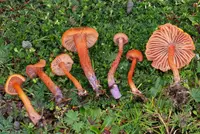
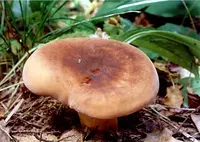
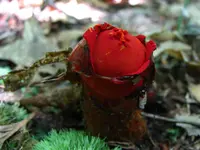
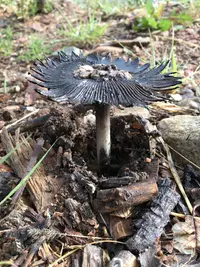
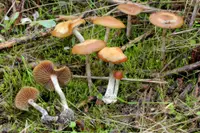
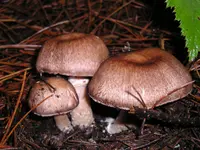
Bicoloured deceiver, Laccaria bicolor, is a small mycorrhizal mushroom that lives in partnership with tree roots rather than as a typical foliage houseplant. It produces slender stems with purple to brown caps and gills, often appearing in groups on forest floors.
This species occurs widely across temperate regions, especially in conifer and mixed woodlands with leaf litter and well-drained soil. It is generally considered hardy in the right outdoor conditions but not suited to typical indoor pot culture.
Gardeners sometimes introduce it to support tree health, since it helps roots access water and nutrients. For anyone wanting to care for Bicoloured Deceiver, the main needs are a compatible host tree, natural light, and consistently moist but not waterlogged soil.

Care Difficulty
Hard Care

Light Preference
Partial Shade

Water Requirements
Keep Soil Moist

Temperature Preference
Cold Hardy

Hardiness Zone
3–8

Soil Texture
Loamy, Sandy, Organic-rich

Soil pH
Strongly acidic (4.5–5.5), Acidic (5.5–6.5)

Soil Drainage
Moist but well-drained

Fertilization
Minimal (feed rarely)
Scan your plant to receive care tips personalized for your specific plant
Available on iOS and Android
This woodland fungus prefers gentle, filtered light rather than strong direct sun.
This mycorrhizal fungus depends on consistently moist, never waterlogged, soil around its host tree roots.
This species is adapted to cool to mild climates with distinct seasonal shifts.
This mycorrhizal fungus grows outdoors in ground contact, so active humidity management is usually unnecessary.
This woodland fungus needs a loose, organic, well-drained substrate that supports its tree root partners rather than a standard potting soil.
This species is generally unsuitable for container growing because it depends on forming mycorrhizal partnerships with tree roots in undisturbed ground.
This ectomycorrhizal fungus generally needs no direct fertilizing, as it partners with tree roots for nutrients.
Laccaria bicolor does not require pruning, since the fruiting bodies are temporary and the main organism lives in the soil with host tree roots.
This species is usually established outdoors with host trees rather than grown in containers.
Propagation is specialized, since this fungus depends on living tree roots for normal growth.
In-ground colonies are cold hardy in temperate climates and usually need no specific winter care.

Plant Health Check
Not sure what's wrong with your plant? Check your plant's health inside the app.
This species forms ectomycorrhizal partnerships with conifers such as pine and spruce, wrapping around fine roots and increasing the tree’s access to water and mineral nutrients in exchange for sugars.
Its mycelium is known to selectively attract and associate with beneficial soil bacteria, including nitrogen-fixing species, which can enhance nutrient availability in the root zone.
It was among the first ectomycorrhizal fungi to have its genome fully sequenced, making it a key model organism for studying how fungi and tree roots communicate and exchange nutrients at the molecular level.

Experiments with young conifer seedlings have shown that this fungus can mediate carbon and nutrient transfer between neighboring plants through its shared mycelial network, effectively linking separate individuals into a functional resource-sharing system.
This species is generally considered edible but is small, insubstantial, and easily confused with less desirable look-alikes. Only experienced foragers should collect it, and all specimens must be cooked thoroughly and identified with great care.
Keep your plants happy and healthy with plant identification, disease detection, and easy care guidance.