


Use wood-based substrate
Establish beds with fresh hardwood chips mixed with well-aged chips in a 1:1 ratio to give the mycelium both fast-colonizing food and longer-lasting nutrition.

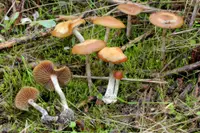
Psilocybe cyanescens, commonly called wavy cap, is a wood-loving mushroom rather than a traditional green plant. It forms dense clusters of small, caramel-brown caps with distinctly wavy, rippled edges as they mature.
This species is native to parts of Europe and North America, especially in cool, moist coastal regions. It often appears in urban landscapes, thriving in wood chips, mulch beds, and decaying woody debris.
Wavy cap can be challenging to cultivate intentionally, as it prefers stable cool temperatures, consistently moist conditions, and lignin-rich woody substrates. Anyone looking into how to care for wavy cap should understand that it is a specialized fungus with specific environmental needs, not a typical houseplant.

Care Difficulty
Hard Care

Light Preference
Partial Shade

Water Requirements
Keep Soil Moist

Temperature Preference
Cool Climate

Hardiness Zone
7–10

Soil Texture
Loamy, Peaty, Organic-rich

Soil pH
Acidic (5.5–6.5), Slightly acidic (6.5–7.0)

Soil Drainage
Moist but well-drained

Fertilization
Minimal (feed rarely)
Scan your plant to receive care tips personalized for your specific plant
Available on iOS and Android
Psilocybe cyanescens prefers cool, shaded woodland-like light conditions rather than direct sun exposure.
This species needs consistently moist but not waterlogged substrate to form healthy fruiting bodies.
This mushroom favors cool conditions and fruits best in mild, moist weather.
This wood-loving fungus needs consistently high ambient humidity to fruit well.
This species prefers a loose, woody substrate rather than true mineral soil.
This species can be grown in containers if the vessel mimics a deep, stable wood-chip bed.
Psilocybe cyanescens is usually grown on nutrient-rich substrates and needs minimal additional fertilization.
Psilocybe cyanescens does not require true pruning, but some hygiene practices support healthy fruiting.
This fungus is typically managed by transplanting colonized substrate rather than traditional repotting.
Psilocybe cyanescens is commonly spread by mycelium transfer rather than by spores in home cultivation.
Outdoor wavy cap beds in temperate climates usually tolerate normal winter conditions with little intervention.

Plant Health Check
Not sure what's wrong with your plant? Check your plant's health inside the app.
Mature fruiting bodies develop strongly undulating cap margins, especially in cool, moist conditions, which is a key field feature that helps distinguish this species from many other small brown mushrooms.
This species fruits abundantly in urban wood chip beds, garden mulches, and landscaped areas, often forming dense clusters where hardwood debris, cool temperatures, and high humidity coincide in autumn.
When the flesh is handled or damaged, it typically bruises blue to blue‑green due to oxidation of its indole alkaloids, a reaction often used by mycologists as a diagnostic field character for this species.

The species was described scientifically only in 1946 from a collection in Kew Gardens, London, yet it is now considered naturalized and spreading in many temperate urban regions, likely aided by the widespread use of shipped wood chip mulches in landscaping.
Yes. This species contains psychoactive and potentially harmful compounds. Ingestion can cause nausea, vomiting, confusion, and other neurological symptoms. Pets are especially vulnerable. Treat it as toxic and prevent access by children and animals at all times.
Keep your plants happy and healthy with plant identification, disease detection, and easy care guidance.

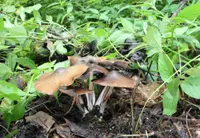
landslide mushroom
Psilocybe caerulescens
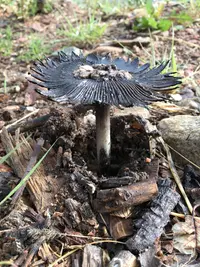
Star-capped Coprinus
Coprinus calyptratus
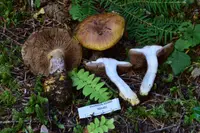
Calonarius cupreorufus
Calonarius cupreorufus
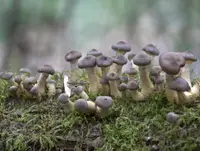
mullet honey fungus
Armillaria cepistipes

stalked puffball-in-aspic
Calostoma cinnabarinum
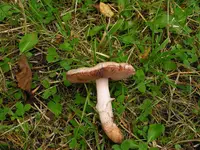
Scaly Wood Mushroom
Agaricus langei
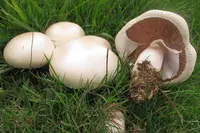
Horse Mushroom
Agaricus arvensis
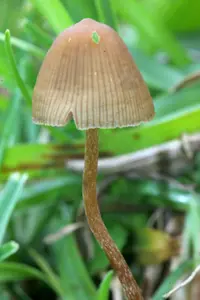
Psilocybe mexicana
Psilocybe mexicana