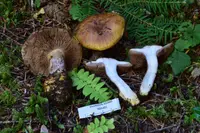
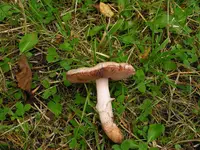
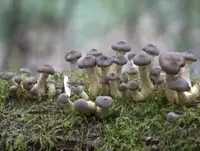
stalked puffball-in-aspic Care (Calostoma cinnabarinum)

Also known as: Gelatinous stalked-puffball, red aspic puffball
stalked puffball-in-aspic

About stalked puffball-in-aspic

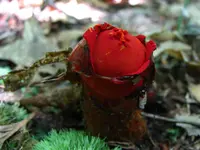
Stalked puffball-in-aspic (Calostoma cinnabarinum) is a small, unusual fungus rather than a true plant, but it is often discussed in plant and mushroom guides. It forms bright red to orange, gelatinous-looking fruiting bodies on a short stalk, giving it a striking, almost ornamental appearance on the forest floor.

This species is typically found in deciduous and mixed forests in eastern North America, often associated with oak and other hardwood trees. It relies on specific tree partners and soil fungi, which makes it difficult to cultivate and limits how to care for stalked puffball-in-aspic in garden or indoor settings.

In nature it prefers moist, shaded, well-drained forest soils with abundant leaf litter and consistent humidity.

Main Plant Requirements

Care Difficulty

Hard Care

Light Preference

Partial Shade

Water Requirements

Keep Soil Moist

Temperature Preference

Cool Climate

Hardiness Zone

5–9

Soil Texture

Loamy, Silty, Organic-rich

Soil pH

Strongly acidic (4.5–5.5), Acidic (5.5–6.5)

Soil Drainage

Moist but well-drained

Fertilization

Minimal (feed rarely)

Get Personalized Care Plan

Scan your plant to receive care tips personalized for your specific plant

Available on iOS and Android

How to Care for the stalked puffball-in-aspic

This mycorrhizal fungus prefers dappled woodland light rather than direct, open sun.

  • Provide bright shade or filtered light under trees, with only 1–2 hours of weak early-morning sun if at all.
  • Aim for conditions similar to a deciduous forest floor, where leaf cover breaks up sun and the site receives 3–6 hours of shifting, indirect light.
  • Protect stalked puffball-in-aspic from strong midday or afternoon sun, which can overheat leaf litter and dry the upper soil layer too fast.

This woodland fungus relies on consistently moist, not waterlogged, soil around its host tree roots.

  • Check the forest or garden soil with a finger and aim for it to feel evenly moist down 3–5 cm, never powder-dry or soupy.
  • Increase moisture in dry spells by gently soaking the leaf-litter layer, then allowing the surface to drain so no standing water remains.
  • Reduce added water during cool, wet seasons; signs of excess include sour smell and slimy litter, while deep cracks and shrinking soil indicate underwatering for Calostoma cinnabarinum.

This species is adapted to mild, temperate woodland temperatures and avoids climatic extremes.

  • Optimal fruiting occurs around 65–80°F (18–27°C), typical of warm, humid late-spring to early-autumn forest conditions.
  • The underground organism tolerates short drops near 25–30°F (-4– -1°C), but visible fruiting bodies are easily damaged by hard frost.
  • In hot periods above 86°F (30°C), shaded, mulched sites stay cooler; deep leaf litter buffers temperature swings between seasons and helps maintain suitable conditions.

This woodland fungus prefers consistently moist air but copes with a moderate humidity range.

  • Aim for 60–80% humidity, similar to shaded forest leaf litter where stalked puffball-in-aspic naturally develops.
  • Tolerates brief dips to 40–50%, but prolonged dry air slows fruiting and can dry outer tissues prematurely.
  • Signs of low humidity include dull, shriveling outer layers and faster cracking; increase humidity with nearby water trays, damp leaf litter, or a covered but ventilated enclosure.

This ectomycorrhizal fungus relies on specific tree partners and decaying litter rather than conventional potting soil.

  • Mimic a loose, well-structured forest floor using a deep layer of leaf litter, fine bark, and native topsoil taken from where Calostoma cinnabarinum naturally occurs.
  • Ensure rapid drainage so water percolates through within seconds; avoid dense, peat-heavy or clayey substrates that stay wet and exclude air.
  • Keep the substrate slightly acidic, around pH 5.0–6.5, which matches typical oak or mixed hardwood forest soils.
  • Improve aeration by mixing in coarse bark fines and small gravel, and avoid compaction or walking on the growing area.

This species is generally unsuitable for containers because it depends on complex mycorrhizal relationships in undisturbed forest soil.

Calostoma cinnabarinum is a mycorrhizal fungus that obtains nutrients through its tree partners and soil, so direct fertilization is usually unnecessary.

Pruning is not relevant for Calostoma cinnabarinum, as it is a fleshy fungus that completes its life cycle and decomposes naturally.

This fungus is rarely cultivated in containers; transplanting focuses on preserving its woodland soil and mycorrhizal partners rather than moving individual fruiting bodies.

  • Attempt moves only when trees are dormant and soil is moist, to limit disturbance.
  • Transplant a generous block of native soil containing fine roots, keeping structure intact.
  • Place the soil block in a similar shaded, acidic, well-drained woodland setting.
  • Water lightly after transplanting, then allow the site to return to natural moisture cycles.

Propagation of Calostoma cinnabarinum is challenging and rarely attempted by home growers because it depends on specific tree roots and soil fungi.

Stalked puffball-in-aspic is naturally cold hardy in its native range and needs no special winter care in the ground.

Care Tips

Host tree selection

Establish this mycorrhizal fungus near young oaks or other native hardwoods in slightly acidic forest soil, since it depends on tree roots rather than standalone cultivation in pots or isolated beds.

Minimal disturbance zone

Mark and leave a 30–50 cm undisturbed buffer around fruiting spots, avoiding raking, digging, or compacting the soil so the underground mycelium remains intact and can fruit reliably each year.

Leaf litter management

Maintain a loose, natural layer of leaf litter 3–5 cm deep over the site, which helps keep the soil cool, moist, and rich in organic matter without smothering emerging fruiting bodies.

Targeted moisture checks

During dry spells, feel the soil 3–5 cm down and spot-water only when it is dry and crumbly, directing water to the root zone of the host tree rather than directly onto visible fruiting bodies.

Site monitoring records

Keep simple notes or photos of when and where fruiting occurs each year, since tracking timing, rainfall, and tree health can guide long-term decisions for caring for stalked puffball-in-aspic in the same area.

Common Pests and Diseases

Mycophagous springtails

These insects feed on fungal fruiting bodies and can rasp away the gelatinous layer and outer tissues. Damage is usually superficial but can distort small or emerging fruiting bodies.

Solution

Minimize excessive surface moisture around fruiting bodies, gently brush or blow away dense clusters, and avoid rich organic debris piles that favor springtail buildup. In outdoor settings they rarely require direct control; in contained culture, improve drainage and air movement to reduce their numbers.

Fungal parasitism

This disease involves other fungi colonizing the outer layers or interior of the puffball, causing discoloration, collapse, or a cottony overgrowth. Symptoms include premature softening, uneven color, and rapid decay of the stalk or head.

Solution

Remove and discard any affected fruiting bodies promptly to reduce spore spread. Avoid disturbing the surrounding soil more than necessary so the underground mycorrhizal network remains stable, and maintain moderate, not waterlogged, surface moisture if attempting controlled cultivation.

Slugs and snails

These pests graze on the gelatinous outer layer and soft tissues, leaving ragged holes or partially eaten fruiting bodies. Activity is greatest in cool, wet conditions under leaf litter.

Solution

Hand-pick slugs and snails during damp evenings, and reduce hiding spots by thinning very dense surface litter while leaving enough cover for the mycorrhizal habitat. Physical barriers such as copper tape or grit rings can help protect small experimental patches in gardens or outdoor culture beds.

Interesting Facts

Jelly-like outer layer

The fruiting body is surrounded by a thick, gelatinous envelope that protects the developing spores and helps the fungus retain moisture in leaf litter and forest soils.

Unique spore release

As the outer jelly erodes, a star-shaped opening forms at the top of the cap, allowing rain drops and air movement to disperse the spores from the inner spore mass.

Mycorrhizal forest partner

This species forms ectomycorrhizal associations with tree roots, especially oaks and other hardwoods, exchanging mineral nutrients from the soil for sugars produced by the host tree.

Botan icon

Did you know?

DNA studies show that this bright red, jelly-encased fungus is more closely related to boletes than to puffballs, despite its puffball-like appearance, and this unexpected relationship helped clarify evolutionary patterns within the order Boletales.

FAQs about stalked puffball-in-aspic

This fungus is not considered an edible mushroom and is generally classified as inedible or of unknown edibility. It should not be collected for food. Leave it in place for observation and ecological value instead.

Grow Healthy Plants with Botan Care

Keep your plants happy and healthy with plant identification, disease detection, and easy care guidance.

Botan plant care app — identify plants on mobile

Explore More Plants