Star-capped Coprinus Care (Coprinus calyptratus)

Star-capped Coprinus

About Star-capped Coprinus

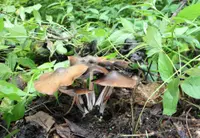
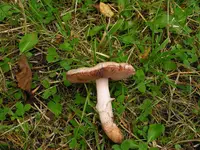
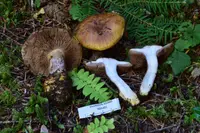
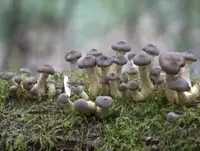
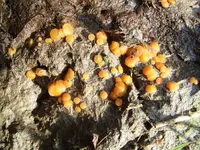
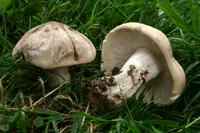
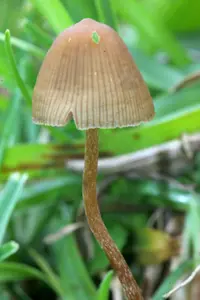
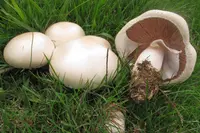
Star-capped Coprinus (Coprinus calyptratus) is a small, short-lived mushroom rather than a leafy houseplant. It produces delicate, pale caps often topped with a ragged, star-like patch of veil remnants, which gives the species its common name.

This fungus typically appears in open, disturbed ground or sandy soils, often in temperate regions with a cool, moist season. It emerges quickly after suitable moisture, then collapses and disappears within a short time.

Because it is a wild, decomposing fungus, it is not commonly cultivated, and information on how to care for Star-capped Coprinus at home is limited. It generally favors moist, organic-rich substrates and locations that are not intensely sunny or extremely dry.

Main Plant Requirements

Care Difficulty

Moderate Care

Light Preference

Partial Shade

Water Requirements

Moderate Water

Temperature Preference

Warm Climate

Hardiness Zone

Unknown

Soil Texture

Loamy, Sandy, Organic-rich

Soil pH

Slightly acidic (6.5–7.0)

Soil Drainage

Well-drained

Fertilization

Minimal (feed rarely)

Get Personalized Care Plan

Scan your plant to receive care tips personalized for your specific plant

Available on iOS and Android

How to Care for the Star-capped Coprinus

This saprobic fungus prefers bright, open conditions similar to sunny grasslands or disturbed soil sites.

  • Provide 4–6 hours of direct morning sun with light or dappled shade in the harsher mid‑afternoon, especially in warmer regions.
  • Allow partial shade (especially afternoon) in summer, as prolonged intense sun can dry the substrate too quickly and reduce fruiting of Star-capped Coprinus.
  • In cooler seasons, choose a spot with as much unobstructed sun as possible so the soil warms during the day, supporting faster mycelium activity.

Coprinus calyptratus grows on nutrient-rich, moist but not waterlogged substrates.

  • Maintain evenly moist soil or organic debris, letting only the top 2–3 cm start to dry before re-wetting; rapid drying suppresses mushroom formation.
  • Ensure very good drainage so excess water runs off; standing water, foul smell, or slimy substrate indicate overwatering and risk of rot.
  • During hotter, windy periods, check moisture daily, while in cool, cloudy weather moisture loss slows, so reduce additions to avoid saturation.

This species fruits best in cool to mild conditions rather than high summer heat.

  • Aim for an active growth and fruiting range of about 50–68°F (10–20°C), which supports steady mycelium development and cap formation.
  • Expect reduced activity below about 40°F (4°C); light frosts can damage emerging fruiting bodies, though buried mycelium often survives short cold spells.
  • Above roughly 77–80°F (25–27°C), fruiting usually declines, especially if the substrate dries quickly, so partial shade and moisture help buffer heat.

Humidity is not a major factor for Coprinus calyptratus, which focuses more on consistently moist substrate than air moisture.

Coprinus calyptratus needs a consistently moist, loose, organic substrate rather than traditional garden soil.

  • Use a fine, organic-rich mix such as well-aged compost blended with shredded leaf mold or coir to mimic decaying plant material.
  • Ensure the substrate stays evenly moist but never waterlogged by mixing in a small amount of coarse sand for drainage.
  • Aim for slightly acidic to neutral conditions around pH 6.0–7.0, avoiding limed or strongly alkaline mixes.
  • Avoid heavy clay, compacted ground, and bark-dominant mixes that dry out quickly or limit oxygen around the developing mycelium.

This species is not well suited to typical ornamental container growing and is better cultivated in shallow trays or beds of decaying organic matter.

This wild saprophytic fungus usually needs no feeding in gardens or naturalized areas.

Pruning is not a care task for Coprinus calyptratus, since the fruiting bodies are short-lived mushrooms, not woody plants.

Transplanting focuses on moving colonized substrate rather than individual fruiting bodies for this fungus.

  • Transplant only during active growth when mycelium is expanding in the substrate and producing mushrooms.
  • Move chunks of colonized soil, wood chips, or compost to a similar moist, organic-rich site.
  • Limit disturbance of the mycelium network; keep pieces intact to reduce stress and re-establishment time.
  • Water the new site gently after moving the substrate to keep it evenly moist but not waterlogged.

Propagation for this species relies on spore dispersal and mycelium spread rather than typical plant techniques.

Outdoor populations of this saprophytic fungus are naturally cold hardy and need no specific winter care.

Care Tips

Use fresh substrate

Prepare a fresh, pasteurized straw or manure-rich substrate for each flush, since this fungus quickly exhausts and contaminates older material and fruits best on newly prepared organic matter.

Control fruiting window

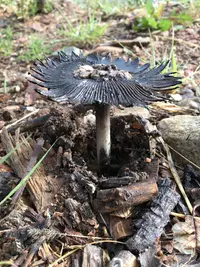
Once primordia (tiny pins) appear, slightly increase airflow and maintain steady moisture on the substrate surface to extend the brief fruiting window before caps liquefy and collapse.

Spore management

Place a removable tray, cardboard sheet, or foil under maturing clusters to catch heavy spore drops and make cleanup easier before the caps deliquesce into ink-like fluid.

Targeted contamination checks

Inspect the substrate edges and underside of trays every 1–2 days for green, black, or strongly musty patches and remove affected sections early to slow competing molds.

Use local manure

For those growing Star-capped Coprinus outdoors, use well-aged local horse or cow manure mixed with straw to mimic its natural habitat and reduce the need for supplemental sterilization equipment.

Common Pests and Diseases

Mycophagous springtails

These insects feed on fungal tissue and can graze emerging fruiting bodies, causing misshapen or aborted caps in cultivation trays or boxes.

Solution

Reduce excessive surface moisture by improving ventilation and allowing the substrate top to almost dry between mistings, then rehydrate more deeply. Remove heavily grazed mushrooms, and if numbers are high, use sticky traps around the fruiting area and clean up all decaying organic debris nearby to lower their population while continuing careful Coprinus calyptratus care.

Sciarid fungus gnats

This pest lays eggs in moist substrates and the larvae tunnel through developing primordia and stems, leading to deformed or collapsing mushrooms.

Solution

Let the upper 0.5–1 cm of substrate dry slightly between waterings, increase airflow, and use yellow sticky traps to capture adults. For persistent problems, drench the substrate surface with a biological control such as Bacillus thuringiensis israelensis, following label directions to target larvae without harming the fungus.

Parasitic Trichoderma

This disease appears as fast-spreading, bright to dull green patches on the substrate that overtake or choke off Coprinus mycelium and abort fruiting bodies.

Solution

Promptly remove and discard any visibly green, contaminated substrate away from other cultures and reduce overall humidity slightly while boosting fresh air exchange. Sterilize or thoroughly disinfect tools, containers, and work surfaces, and restart cultures from clean spawn or a new spore source if contamination is extensive.

Mite infestations

These pests include various soil and storage mites that feed on mycelium and young mushrooms, resulting in pitted, stunted, or partially eaten caps.

Solution

Discard severely infested substrates and clean the growing area, shelving, and containers with hot soapy water. For mild issues, reduce clutter, keep the area dry between flushes, and use fine-mesh screens or seals around vents and lids to limit mite entry, while quarantining any new soil or organic materials before use.

Interesting Facts

Star-like veil patches

Mature caps often show irregular, star-shaped remnants of the universal veil on a pale background, which inspired the English name star-capped coprinus and helps distinguish it from related inkcap species.

Dryland dung specialist

This species is strongly associated with herbivore dung, especially in dry or semi-arid, sandy habitats, and tends to fruit after modest moisture rather than the prolonged wet conditions preferred by many other inkcaps.

Cap surface dimples

The cap commonly develops conspicuous pits or dimples as it expands, a structural feature that, together with its veil pattern, is used by field mycologists to confirm identification.

Botan icon

Did you know?

Unlike many inkcaps that are widespread and frequently encountered, this species has a scattered and rather local distribution in dry open habitats, so it is considered an uncommon find even by experienced field mycologists.

FAQs about Star-capped Coprinus

This fungus is best treated as an outdoor species. It typically appears in nutrient-rich soil or dung in open sites, then collapses quickly. Star-capped Coprinus indoor care is rarely practical because fruiting conditions are hard to replicate.

Grow Healthy Plants with Botan Care

Keep your plants happy and healthy with plant identification, disease detection, and easy care guidance.

Botan plant care app — identify plants on mobile

Explore More Plants