

Soil host selection
When collecting or attempting to grow Russula pseudointegra, focus on sites with suitable mycorrhizal hosts such as oaks or beeches, since the fungus depends on a partnership with these tree roots to fruit reliably.

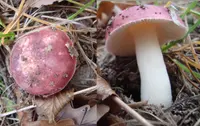
Scarlet brittlegill, Russula pseudointegra, is a gilled mushroom rather than a leafy houseplant or garden perennial. It forms bright red to orange-red caps with pale, brittle gills and a white stem, often breaking cleanly when handled.
This species typically grows on the ground in mixed or broadleaf woodlands, where it lives in symbiosis with tree roots and appears in late summer to autumn. Its specific ecological needs and mycorrhizal lifestyle make it difficult to cultivate intentionally, so information on how to care for scarlet brittlegill in controlled settings is limited.

Care Difficulty
Moderate Care

Light Preference
Partial Shade

Water Requirements
Regular Water

Temperature Preference
Cool Climate

Hardiness Zone
Unknown

Soil Texture
Loamy, Silty, Organic-rich

Soil pH
Acidic (5.5–6.5)

Soil Drainage
Moist but well-drained

Fertilization
Minimal (feed rarely)
Scan your plant to receive care tips personalized for your specific plant
Available on iOS and Android
This mycorrhizal mushroom prefers dappled woodland light rather than open sun exposure.
This wild ectomycorrhizal fungus depends on evenly moist, not waterlogged, forest soil.
This species fruits best in cool to mild woodland conditions typical of late summer to autumn.
Humidity is not a major controllable factor for scarlet brittlegill, which is a wild ectomycorrhizal mushroom rather than a cultivated houseplant.
Russula pseudointegra relies on a living forest soil rather than a constructed potting mix.
This species is not suitable for container growing, as it depends on a mycorrhizal partnership with living tree roots in undisturbed forest soil.
Russula pseudointegra is a wild mycorrhizal fungus that does not benefit from conventional fertilization in gardens or containers.
Russula pseudointegra does not require pruning, since each fruiting body is temporary and the main organism lives hidden in the soil and tree roots.
This fungus is not suited to normal repotting and transplanting because its mycelium depends on living tree roots in forest soil.
Propagation of Russula pseudointegra is specialized and not practical for typical garden or indoor culture, so caring for scarlet brittlegill focuses on conserving its woodland habitat.
This woodland fungus is naturally cold hardy and adapted to winter conditions, so it does not need active winter care from gardeners.

Plant Health Check
Not sure what's wrong with your plant? Check your plant's health inside the app.
This species forms ectomycorrhizal partnerships with broadleaved trees, especially beech (Fagus), exchanging mineral nutrients and water from the soil for sugars from the host tree.
The gills often show a distinctive pale cream to light ochre tone, reflecting its name pseudointegra and helping field mycologists separate it from red Russula species with pure white or strongly yellow gills.
The cap and gill tissue have a distinctly hot, acrid taste when carefully tested by experienced mycologists, which is a key diagnostic character used to distinguish it from some mild-tasting, similar red brittlegills.
This species is generally considered inedible due to its hot, acrid taste and risk of gastrointestinal upset. Identification within the Russula group is difficult, so foraging guides advise against eating it or similar red russulas.
Keep your plants happy and healthy with plant identification, disease detection, and easy care guidance.

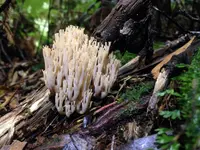
Artomyces austropiperatus
Artomyces austropiperatus
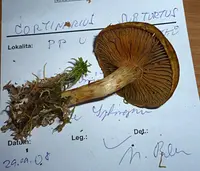
incense webcap
Cortinarius subtortus
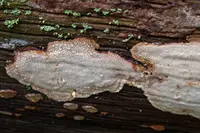
Anthoporia
Anthoporia albobrunnea
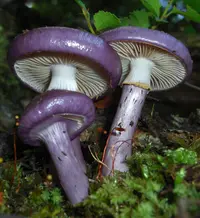
Cortinarius magellanicus
Cortinarius magellanicus
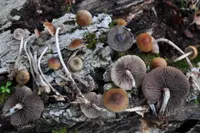
Blue-foot
Psilocybe caerulipes
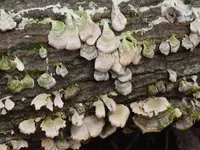
violet-toothed polypore
Trichaptum biforme
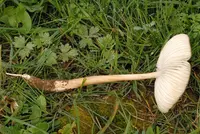
deep root mushroom
Hymenopellis radicata
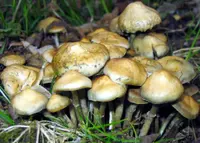
psychedelic ovoid mushroom
Psilocybe ovoideocystidiata