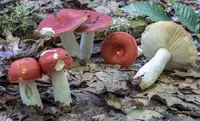
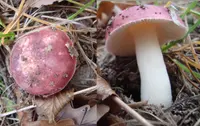
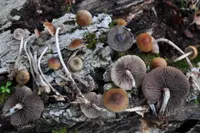
Fir-Cone Mushroom Care (Strobilurus trullisatus)

Also known as: Little Douglas-fir mushrooms
Fir-Cone Mushroom

About Fir-Cone Mushroom

Fir-cone mushroom, Strobilurus trullisatus, is a small saprophytic fungus that grows on decaying conifer cones, especially from fir and spruce trees. It is not a houseplant but sometimes interests people who cultivate specialty fungi or study forest ecosystems.

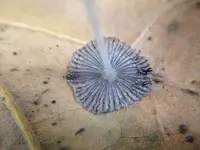
The caps are usually small, pale to light brown, with slender stems clustered tightly around a decomposing cone. It fruits in cool, moist conditions, often in shaded conifer forests.

Strobilurus trullisatus is specialized and can be challenging to maintain outside its natural habitat, so attempts to grow it at home are mostly experimental. Anyone exploring how to care for Fir-Cone Mushroom needs to mimic cool, damp forest-floor conditions with ample conifer cone material.

Main Plant Requirements

Care Difficulty

Hard Care

Light Preference

Shade

Water Requirements

Keep Soil Moist

Temperature Preference

Cool Climate

Hardiness Zone

Unknown

Soil Texture

Organic-rich, Loamy

Soil pH

Acidic (5.5–6.5)

Soil Drainage

Moist but well-drained

Fertilization

Minimal (feed rarely)

Get Personalized Care Plan

Scan your plant to receive care tips personalized for your specific plant

Available on iOS and Android

How to Care for the Fir-Cone Mushroom

This small woodland fungus prefers cool, shaded conditions similar to conifer forest floors.

  • Provide bright shade or dappled light under conifers, avoiding direct midday sun; 1–2 hours of soft morning sun is acceptable in cool climates.
  • Aim for conditions where you can comfortably read but where pine or fir cones cast clear shadows, mimicking a forest understory for Fir-Cone Mushroom.
  • In spring and fall, tolerate slightly more light; in summer, protect from strong afternoon sun to prevent substrate overheating and drying out.

This species relies on consistently moist but not waterlogged conditions around fallen cones and forest litter.

  • Water when the surrounding substrate feels just moist but not saturated; avoid standing water around cones or woody debris.
  • In active fruiting periods, maintain even moisture with light, frequent applications, letting only the top 1–2 cm of litter start to dry before rewetting.
  • Reduce watering during hot, dry spells if drainage is poor, and watch for sour or rotten smells as signs of overwatering and poor aeration.

This fungus prefers cool to mild temperatures typical of shaded conifer forests.

  • Optimal fruiting often occurs around 45–60°F (7–16°C), with mycelium growth tolerating up to about 68°F (20°C) in deep shade.
  • Short exposures down to 32°F (0°C) may be tolerated, but repeated hard frosts below 28°F (-2°C) can damage developing fruiting bodies.
  • Above 70–75°F (21–24°C), especially in dry air or sunlit spots, fruiting usually slows; keep the substrate cool and shaded in summer.

Humidity is not a major control factor for Strobilurus trullisatus compared to moisture in its cone substrate.

This species fruits on well-rotted conifer cones rather than in typical garden soil.

  • Use fully decomposed, moist fir or spruce cones packed loosely in a shallow tray instead of any mineral soil mix.
  • Keep the cone layer evenly moist but never waterlogged, allowing excess water to drain away freely after misting or gentle watering.
  • Maintain a cool, aerated environment around the cones, avoiding compacted leaf litter that blocks air flow and encourages anaerobic rot.
  • Avoid adding lime, heavy compost, or dense potting mixes, which change pH and structure away from the acidic, open cone matrix Strobilurus trullisatus prefers.

This mushroom can be grown in shallow containers if they mimic a cool, moist cone bed.

  • Choose a wide, shallow, rigid tray to spread cones in a single layer so air and moisture distribute evenly around developing clusters.
  • Drill extra side holes just above the base so excess water can escape laterally, preventing stagnant pockets under the cone layer.
  • Elevate the container on slats or mesh to increase underside air movement, which limits overheating and slows bacterial decay of cones when growing Fir-Cone Mushroom.

Strobilurus trullisatus, a small saprophytic mushroom on conifer cones, does not benefit from conventional fertilizing like a typical garden plant.

Pruning is not applicable to Strobilurus trullisatus, since it is a short-lived mushroom fruiting from decaying cones rather than a woody or leafy plant.

This fungus is not suited to conventional repotting, but its habitat can be managed by moving suitable substrate rather than the organism itself.

  • Transplant only by relocating colonized conifer cones or cone-rich forest litter, not by handling individual mushrooms.
  • Choose cool, moist seasons, such as fall or early spring, to move substrate so mycelium stays hydrated.
  • Keep the cone material shaded and avoid direct sun or strong wind during and after relocation to limit drying stress.
  • Place cones on similar soil under compatible conifers and avoid disturbing them further so the mycelium can re-establish.

Propagation of Strobilurus trullisatus is indirect and usually left to natural spore dispersal and gradual spread through mycelium in suitable forest litter.

This species is naturally cold hardy in its native range and needs no special winter care in outdoor forest-like conditions.

Care Tips

Use Aged Cones

Collect fir or spruce cones in late summer and let them weather outdoors for 2–3 months so resins dissipate before using them as the substrate base, which significantly improves colonization success for Strobilurus trullisatus.

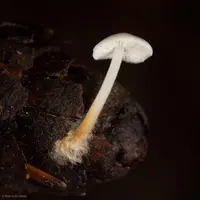
Cone Pre‑Soaking

Before inoculation, soak cones in clean, cold water for 12–24 hours, then drain well so they are fully hydrated but not dripping, creating a stable moisture reservoir that supports steady mushroom development.

Shaded Cone Beds

Prepare shallow outdoor cone beds under established conifers or in consistent dappled shade, covering cones lightly with conifer needles or leaf litter to buffer against drying winds and sudden temperature swings.

Minimal Disturbance Harvest

When picking, cut the mushrooms at the base with a clean blade or pinch gently without tearing out the attached cone tissue, so remaining mycelium can continue fruiting from the same cone cluster across the season.

Successive Cone Rotation

Set up 2–3 small cone groups in slightly different spots each year and refresh the oldest group with new cones, which helps maintain reliable patches and spreads risk from localized pests or environmental stress when growing Fir-Cone Mushroom.

Common Pests and Diseases

Fungal gnat larvae

This pest affects cultivated substrates used to grow Strobilurus, where larvae feed on fine mycelium and slow colonization. Symptoms include patchy, weak growth and soft, disturbed surface mycelium in trays or containers.

Solution

Reduce excess moisture and improve ventilation so the surface of the substrate can dry slightly between misting. Use fine mesh screens on vents, apply yellow sticky traps for adults, and, if needed, drench the substrate with a biological control such as Bacillus thuringiensis israelensis, following label rates for mushroom production.

Green Trichoderma mold

This disease is caused by Trichoderma species that colonize the same cone or woody substrate and outcompete the mushroom mycelium, producing dense white growth that later turns bright to dark green. Symptoms include stalled development of Strobilurus pins and spreading green patches over the substrate.

Solution

Remove and discard heavily colonized cones or substrate to prevent spore spread. For future cycles, sterilize or thoroughly pasteurize conifer cones, maintain good air exchange, avoid overwatering, and separate contaminated containers from healthy ones at the first sign of green mold to protect successful growing Fir-Cone Mushroom.

Bacterial blotch

This disease leads to small, greasy-looking yellow to brown spots on caps, especially under very humid, stagnant air conditions. Symptoms include water-soaked lesions and rapid spoilage of mature fruiting bodies.

Solution

Reduce surface moisture on caps by improving fresh air exchange and avoiding heavy overhead misting, especially when temperatures are above 60°F. Remove blotched mushrooms promptly, keep tools and hands clean, and allow a short drying period after misting so caps do not stay wet for long periods.

Mite infestation

This pest appears when various substrate or mushroom-feeding mites colonize cone piles or trays, leaving pitted caps and damaged gills. Symptoms include tiny moving white or tan dots on substrate surfaces and deformed or chewed fruiting bodies.

Solution

Discard heavily infested cones or blocks, and clean the growing area thoroughly, including shelves and nearby organic debris. Improve hygiene, store fresh cones off the ground, and, if infestation persists, consider introducing predatory mites compatible with mushroom cultivation while keeping humidity and temperature within recommended ranges.

Interesting Facts

Specialist cone decomposer

This species fruits almost exclusively on old, well-rotted Douglas-fir cones on the forest floor, playing a specialized role in breaking down this very specific substrate in conifer forests of western North America.

Early spring fruiting

It typically appears very early in the season, often in late winter to early spring, when temperatures are still low and many other macrofungi are absent, making it one of the first visible decomposers each year.

Delicate but gilled

Despite its tiny, fragile-looking fruitbodies, it produces fully formed gills under the cap and releases abundant microscopic spores, allowing it to rapidly colonize suitable cones scattered across the forest floor.

FAQs about Fir-Cone Mushroom

This species is considered inedible and too small to be of culinary value. Identification within this group is difficult, and confusion with toxic look-alikes is possible, so it should not be collected for eating.

Grow Healthy Plants with Botan Care

Keep your plants happy and healthy with plant identification, disease detection, and easy care guidance.

Botan plant care app — identify plants on mobile

Explore More Plants