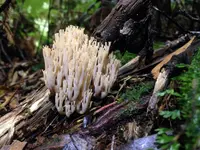
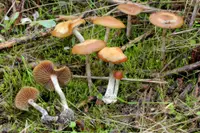
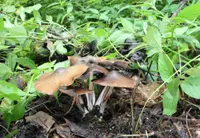
Psilocybe allenii Care

Psilocybe allenii

About Psilocybe allenii

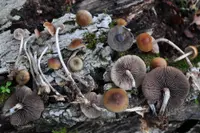
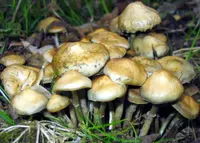
Psilocybe allenii is a saprophytic mushroom species, not a typical houseplant, that fruits from decaying wood and woody mulch in cool, damp conditions. Caps are usually caramel to chestnut brown when moist, fading paler as they dry, with slender, pale stems.

This species is native to the Pacific Northwest of North America, especially coastal regions with mild, wet winters. It often appears in landscaped beds, wood-chip gardens, and similar urban or suburban settings.

Cultivation is considered challenging for beginners, as it requires sterile technique, suitable wood-based substrates, and close control of temperature and humidity. Those who want to learn how to care for Psilocybe allenii generally approach it as an advanced mushroom-growing project rather than a decorative plant.

Main Plant Requirements

Care Difficulty

Hard Care

Light Preference

Partial Shade

Water Requirements

Keep Soil Moist

Temperature Preference

Cool Climate

Hardiness Zone

Unknown

Soil Texture

Loamy, Organic-rich

Soil pH

Acidic (5.5–6.5), Slightly acidic (6.5–7.0)

Soil Drainage

Moist but well-drained

Fertilization

Minimal (feed rarely)

Get Personalized Care Plan

Scan your plant to receive care tips personalized for your specific plant

Available on iOS and Android

How to Care for the Psilocybe allenii

This wood-loving mushroom prefers cool, shaded light rather than direct, intense sun.

  • Provide dappled or filtered light under shrubs, small trees, or woodchip mulch areas, with no more than 1–2 hours of gentle morning sun per day.
  • Avoid strong midday or afternoon sun, which can dry the substrate and damage forming Psilocybe allenii fruiting bodies, reducing both size and yield.
  • In hot, bright seasons, increase shade using leaf litter or additional woodchips to protect the substrate and maintain stable moisture and light levels.

Watering should keep the substrate evenly moist without staying waterlogged.

  • Before watering, check the top 2–4 cm of woodchips or mulch; water only when this layer feels just starting to dry but still slightly cool to the touch.
  • Use slow, gentle watering so moisture soaks through the substrate while excess drains away, since standing water encourages bacterial rot and anaerobic conditions.
  • In hot or windy weather, expect faster drying and more frequent watering, while in cool, wet seasons you may only need to supplement during extended dry spells.

This species fruits best in cool, moist conditions typical of autumn in mild coastal climates.

  • Optimal fruiting occurs around 50–60°F (10–16°C), with mycelium growth possible from about 45–68°F (7–20°C) if moisture is stable.
  • It tolerates brief drops near 32°F (0°C) but repeated hard frosts can damage pins and slow mycelial activity in exposed beds.
  • Sustained heat above 75°F (24°C) dries substrates quickly; in warmer seasons, deeper mulch and shade help buffer temperature swings and protect the colonized layer.

Reliable fruiting requires consistently high humidity for Psilocybe allenii.

  • Aim for 85–95% humidity from primordia formation through harvest, with only brief drops tolerated.
  • Dry air causes caps to crack, edges to curl, and pins to halt or abort, especially near fresh air inlets.
  • Use a humidifier, fine misting, and a moist but not dripping substrate surface to stabilize humidity levels.

Psilocybe allenii forms best on moist, airy, lignin‑rich substrates rather than typical potting soil.

  • Use a wood‑based mix such as hardwood chips, shredded bark, and coarse sawdust, with a texture similar to loose mulch.
  • Ensure free drainage so water moves through quickly but leaves the substrate evenly moist, never waterlogged or compacted.
  • Keep pH slightly acidic to neutral, around 5.5–7.0, avoiding liming agents that push the mix strongly alkaline.
  • Improve aeration and mycelial access to oxygen by mixing in coarse chips, not fine peat or dense garden soil.

This species can be grown in containers, but set up must mimic an outdoor wood‑chip bed.

  • Choose a broad, shallow tub or box that allows a wide chip layer (8–15 cm) instead of a deep, narrow column.
  • Drill many side and bottom holes, then elevate the container so excess water drains freely and air can enter underneath.
  • Use a light‑colored or insulated container outdoors to limit overheating and excessive drying of the upper substrate layer.

This wood-inhabiting fungus gains most nutrients from decomposing hardwood, so extra fertilizer is usually unnecessary for Psilocybe allenii.

As a mushroom-forming fungus rather than a leafy plant, Psilocybe allenii does not require true pruning.

This species is typically managed in outdoor woodchip beds rather than traditional pots, so handling focuses on renewing substrate rather than classic repotting for Psilocybe allenii.

  • Refresh or expand beds when woodchips are largely decomposed, fruiting declines, or colonization appears weak at the surface.
  • Best timing is late summer to early fall, before the main fruiting season, so the mycelium can re-establish.
  • To expand, lift small colonized sections with surrounding chips and place into fresh, moist hardwood chips nearby.
  • Minimize disturbance by keeping mycelium attached to its substrate, handling gently, and maintaining even moisture after moving.

This fungus is usually spread through colonized woodchips rather than conventional plant propagation methods such as cuttings or seeds.

Outdoor beds of this temperate woodland fungus are generally cold hardy and need little structured winter care.

Care Tips

Use mixed hardwood

Prepare outdoor beds with a mix of fresh and partially decomposed hardwood chips from several broadleaf tree species to provide a more stable, long-lasting substrate and staggered nutrient release.

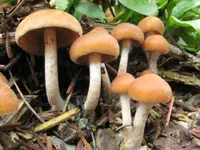
Layered bed renewal

Rather than disturbing old mycelium, top-dress existing beds each fall with 2–5 cm of fresh hardwood chips so the colony can grow upward into new material without being broken apart.

Moisture-retentive cover

After colonization, add a thin layer of leaf litter or coarse bark over the wood chips to slow evaporation, buffer temperature swings, and reduce fruit dehydration during dry or windy weather.

Slugs and snail control

Use physical barriers such as copper tape borders or gritty mulches, and if needed beer traps or hand-picking at dusk, to keep slugs and snails from consuming young fruiting bodies.

Microclimate placement

Site beds on the north or east side of structures, under light shrub cover, or near irrigated ornamental beds to create the cool, consistently moist microclimate favored when growing Psilocybe allenii.

Common Pests and Diseases

Green mold (Trichoderma)

This disease appears as fast‑spreading green patches on colonized substrate or near mushroom pins, often outcompeting the mycelium. Symptoms include stalled growth, patchy colonization, and a dusty green surface layer.

Solution

Remove and discard heavily contaminated trays or blocks, as Trichoderma spores spread easily. For future cycles, use properly pasteurized or sterilized substrate, maintain good fresh air exchange and cleanliness, and avoid handling the substrate with unwashed hands or dirty tools.

Cobweb mold

This disease shows as very fine, grey to whitish, cobweb‑like growth that spreads rapidly over the casing or substrate, sometimes engulfing young mushrooms. Symptoms include a dull, matted surface and rapid collapse or discoloration of pins.

Solution

Immediately increase fresh air exchange and lower humidity slightly to slow spread, then spot‑treat affected areas with a 3% hydrogen peroxide mist, avoiding direct soaking of healthy mycelium. Discard trays that are heavily covered and keep future fruiting areas well ventilated and not overly wet.

Bacterial blotch

This disease causes yellow to dark brown, greasy or water‑soaked spots on mushroom caps, especially in crowded or poorly ventilated conditions. Symptoms include sticky surfaces and distorted or patchy cap development.

Solution

Improve airflow and avoid water sitting on caps by using finer misting and allowing surfaces to dry slightly between humidification cycles. Remove and discard blotched mushrooms promptly, sanitize tools and shelving, and reduce temperature and humidity spikes that create condensation on fruiting bodies.

Fungus gnats

These insects are small, dark flies whose larvae feed in moist substrate, damaging mycelium and increasing the risk of contamination. This pest often appears in warm, humid growing spaces with organic debris and standing water.

Solution

Use fine mesh screens on vents, sticky traps near the grow area, and remove spilled substrate or standing water to break the life cycle. For ongoing issues, apply a biological control such as Bacillus thuringiensis israelensis (BTI) to the substrate surface and rotate crops so spent blocks are removed quickly after harvest; this is a key step in practical Psilocybe allenii care instructions.

Mites

These pests are tiny arthropods that can graze on mycelium and developing pins, leading to poor pinset, deformed mushrooms, and slow colonization. Symptoms include speckling on substrate, uneven growth, and visible moving dots under magnification or close inspection.

Solution

Isolate and remove heavily infested trays, then clean the grow area thoroughly, including racks, walls, and floors. For prevention, store bulk substrates and casing materials sealed, avoid bringing in outdoor compost or soil, and consider introducing predatory mites sourced from reputable suppliers if infestations recur in larger setups.

Interesting Facts

Recently described species

This mushroom was formally described as a distinct species only in 2012, after DNA sequencing showed that West Coast collections previously labeled as Psilocybe cyanescens actually represented a separate lineage.

Strong wood-chip association

It occurs almost exclusively in urban and suburban wood-chip beds and mulched landscaping in coastal California and the Pacific Northwest, and is rarely found in undisturbed native habitats.

Cool-season fruiting pattern

Fruiting typically occurs in late autumn to early winter after the first substantial rains and when temperatures drop, often forming dense clusters that can persist for several weeks in mild, moist conditions.

Botan icon

Did you know?

Genetic and morphological studies indicate that this species is part of a small evolutionary complex closely related to Psilocybe cyanescens, but it lacks the strongly undulating cap margin that characterizes its more famous relative, which helped mycologists recognize it as a distinct taxon.

FAQs about Psilocybe allenii

This mushroom contains psychoactive compounds, including psilocybin, which affect the central nervous system. Ingestion can cause disorientation, nausea, anxiety, or more serious reactions. It is not safe for children, pets, or uninformed users.

Grow Healthy Plants with Botan Care

Keep your plants happy and healthy with plant identification, disease detection, and easy care guidance.

Botan plant care app — identify plants on mobile

Explore More Plants