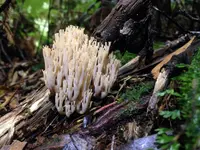
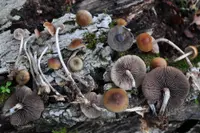
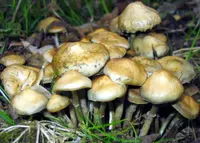
dot lichen Care (Arthonia radiata)

Also known as: Asterisk Lichen
dot lichen

About dot lichen

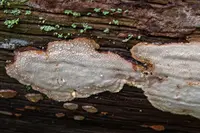
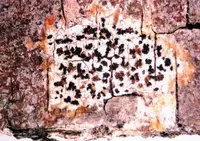
Dot lichen, Arthonia radiata, is a crustose lichen, not a true plant, formed by a partnership between a fungus and photosynthetic algae. It grows tightly attached to smooth bark, often on beech and other deciduous trees, forming pale gray patches dotted with fine, radiating black fruiting lines.

This species occurs mainly in temperate forests of Europe and North America, where air is relatively clean, so its presence often indicates good air quality. It is slow growing and sensitive to pollution and drastic microclimate changes, which makes it challenging to cultivate deliberately. Those who want to learn how to care for dot lichen usually focus on replicating cool, humid, stable conditions on suitable bark rather than traditional soil-based culture.

Main Plant Requirements

Care Difficulty

Hard Care

Light Preference

Partial Shade

Water Requirements

Low Water

Temperature Preference

Cold Hardy

Hardiness Zone

Unknown

Soil Texture

Rocky, Organic-rich

Soil pH

Strongly acidic (4.5–5.5), Acidic (5.5–6.5)

Soil Drainage

Well-drained

Fertilization

Minimal (feed rarely)

Get Personalized Care Plan

Scan your plant to receive care tips personalized for your specific plant

Available on iOS and Android

How to Care for the dot lichen

This crustose lichen prefers cool, shaded woodland light that mimics its natural bark habitat.

  • Provide bright to deep shade with only dappled or short (1–2 hours) early morning sun, avoiding direct midday or afternoon exposure.
  • Choose north- or east-facing woodland edges or tree trunks where light is filtered through canopy leaves most of the day.
  • Protect dot lichen from prolonged full sun, which can desiccate the thallus, while noting that very dense, permanent gloom can slow growth.

This species relies mainly on ambient moisture from rain, fog, and humidity rather than direct watering.

  • In natural or outdoor settings, avoid intentional soaking; instead, allow normal rainfall and occasional mist to hydrate the thallus surface.
  • Ensure the substrate, such as bark or rock, never stays waterlogged, since constant wetness encourages algae and can damage the lichen body.
  • Watch for a brittle, curled surface as a sign of extended dryness and a slimy or darkened surface as a sign of chronic excess moisture rather than strict watering intervals.

This lichen is adapted to cool to mild climates and tolerates a fairly wide outdoor temperature range.

  • Aim for general conditions around 40–70°F (4–21°C), where metabolic activity and slow growth remain most stable.
  • It tolerates brief drops near 20°F (-6°C), but repeated hard freezes with ice formation on the thallus can cause tissue damage over time.
  • Sustained heat above 80–85°F (27–29°C), especially combined with low humidity and direct sun, increases desiccation stress, so prioritize shaded, moist microclimates in summer.

This lichen prefers consistently moist, humid air typical of shaded forest or rock microhabitats rather than dry indoor conditions.

  • Aim for 70–90% humidity by placing specimens in sheltered, naturally damp outdoor spots such as shaded rock faces or tree bark.
  • Dot lichen dries and fades, with edges becoming brittle and pale, when exposed to prolonged humidity below about 50%.
  • Increase local humidity by avoiding direct wind, using nearby moss or leaf litter to hold moisture, and preventing surfaces from baking in full sun.

Arthonia radiata usually anchors to bark or rock rather than true soil, but similar conditions can be mimicked for experimental cultivation.

  • Use a very lean, sandy, mineral-based medium with fine gravel or crushed rock over a thin layer of low-organic substrate.
  • Ensure extremely sharp drainage so water runs through within seconds, preventing any standing moisture around the lichen surface.
  • Keep pH slightly acidic to neutral by using inert materials such as granite grit, washed sand, and a small amount of peat-free, low-nutrient mix.
  • Avoid rich composts, manures, clay-heavy mixes, and fertilizers, which encourage algae and competing plants that can quickly smother the thallus.

This species is not naturally suited to conventional container growing, but small experimental culture on bark or rock in shallow trays is possible.

  • Set bark or rock slabs loosely on a thin gravel layer in a wide, shallow tray so water drains away from the lichen surface immediately.
  • Choose a heavy, low-profile container to resist tipping and keep the microhabitat stable in wind or when moved.
  • Use unglazed clay or other porous materials only beneath the gravel layer to reduce waterlogging while still allowing brief surface moisture after misting.

Arthonia radiata is a lichen that gains nutrients from rain, dust, and its substrate, so it does not need intentional fertilizing in cultivation.

Pruning Arthonia radiata is generally unnecessary and can damage the delicate lichen thallus.

This lichen is usually grown on bark or stone rather than in pots, so focus on careful transplanting if relocation is attempted at all.

  • Move only during mild, stable weather to limit stress and desiccation.
  • Gently lift the lichen with a thin blade, keeping attached bark or substrate intact where possible.
  • Place onto a new, similar substrate with matching light and moisture exposure.
  • Mist lightly for a short period after moving to support reattachment, avoiding waterlogging.

Propagation of Arthonia radiata is slow and specialized, mainly attempted by researchers rather than home growers.

Dot lichen is highly cold hardy and normally requires no special winter care when established on outdoor bark or rock.

Care Tips

Substrate selection

Attach thalli only to stable, naturally textured bark or untreated wood with no preservative chemicals, since smooth or treated substrates prevent proper anchoring and long-term colonization.

Airflow management

Maintain steady, gentle air movement around colonies by avoiding enclosed terrariums or tightly sealed glass, as stagnant air encourages mold and algal overgrowth on the lichen surface.

Moisture pulsing

Provide brief, light misting followed by thorough drying rather than constant dampness, imitating natural wet-dry cycles that support healthy symbiosis between fungus and alga when growing dot lichen.

Pollution avoidance

Keep colonies away from traffic emissions, smoke, and household aerosols such as strong cleaners or fragrances, because Arthonia radiata is sensitive to airborne pollutants that can gradually kill thalli.

Companion control

Periodically remove mosses, algae, or aggressive lichens that overgrow the same bark surface, using a soft brush or wooden pick, so the dot lichen retains access to light, air, and space to expand.

Common Pests and Diseases

Sulfur dioxide injury

Symptoms include bleaching, gray patches, or death of lichen tissue on exposed bark where air pollution is high. This disease results from atmospheric sulfur dioxide damaging the symbiosis between the fungal and algal partners.

Solution

Reduce or avoid exposure to polluted air by selecting sites away from industrial emissions and heavy traffic corridors, and monitor local air quality data if trying to grow Arthonia radiata. There is no direct cure for damaged thalli, so focus on relocating substrate (such as small branches) to cleaner air and supporting recolonization in low-pollution areas.

Nitrogen deposition stress

Symptoms include loss of thalli, reduced coverage, and local disappearance in areas with high nitrogen from agriculture or traffic. This disease process is caused by chronic nutrient enrichment that disrupts the lichen’s nutrient balance and associated microalgae.

Solution

Limit exposure to ammonia and nitrate sources by avoiding placement on trees near fertilized fields, animal housing, or heavily fertilized lawns. Long-term management relies on reducing nitrogen inputs in the local environment; existing stressed thalli are unlikely to recover, so conservation efforts should emphasize cleaner, low-nitrogen sites for future colonization.

Soot and dust smothering

Symptoms include dark sooty films or heavy dust that physically cover the lichen surface and block light, causing fading and dieback of the thallus. This problem is common on bark near roads, chimneys, or urban construction zones.

Solution

Move affected branches or logs to a cleaner, less dusty location and gently rinse with clean water to remove loose particulates without scrubbing. Prevent further buildup by avoiding placement directly beside roads or vents, since long-term survival depends on sustained access to light and clean air rather than repeated cleaning.

Bark microfungi overgrowth

This disease appears as dark, scattered fungal spots or films that overgrow or border the lichen, sometimes leading to fragmentation and decline of the lichen patches. This condition arises when opportunistic bark fungi take advantage of stressed or shaded Arthonia radiata thalli.

Solution

Improve light and airflow around the host tree or branch by reducing dense shading and excessive moisture retention. Avoid chemical fungicides on the bark; instead, prioritize better site conditions that favor healthy lichen growth, and, if necessary, transfer small, healthy fragments to nearby bark with similar pH and texture but better exposure.

Grazing by lichen-feeding invertebrates

This pest pressure shows as irregular bite marks, scraped patches, or thinning edges of lichen thalli caused by small snails, slugs, or lichen-feeding mites. This damage can slow growth and increase vulnerability to desiccation and secondary fungi on already stressed colonies.

Solution

Manually remove visible snails or slugs from host trees and nearby crevices and reduce damp refuges such as dense moss at the lichen’s base. In small-scale conservation or display settings, encourage drier, well-ventilated bark surfaces and limit the use of broad-spectrum insecticides, which can disrupt the delicate community around the lichen without reliably stopping targeted grazing.

Interesting Facts

Preference for smooth bark

This lichen strongly favors the smooth bark of young hardwoods such as maple, beech, and dogwood, where its dark radiating lines show clearly against pale bark.

Radiating spore pattern

Under a microscope, its spores are borne in elongated sacs (asci) aligned with the black, radiating fruiting lines, giving the thallus a distinctive starburst or wheel-like pattern that inspired the name radiata.

Indicator of stable forests

Populations are often most abundant in long-undisturbed, humid woodlands, so its presence can help signal relatively stable, mature forest conditions with moderate air quality.

Botan icon

Did you know?

Arthonia radiata is one of the earliest formally described members of its genus, having been published by Carl Linnaeus in the 18th century, which makes it a historically important reference species in lichen taxonomy.

FAQs about dot lichen

This lichen grows very slowly, often only fractions of a millimeter per year. Growth depends on stable humidity, clean air, and consistent substrate. Any disturbance, pollution, or prolonged drying can almost stop expansion for long periods.

Grow Healthy Plants with Botan Care

Keep your plants happy and healthy with plant identification, disease detection, and easy care guidance.

Botan plant care app — identify plants on mobile

Explore More Plants