Host material choice
Attach the lichen to rough, inert surfaces like unsealed bark, cork, or natural rock rather than treated wood or metal, which can leach chemicals and inhibit growth.

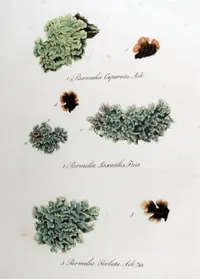
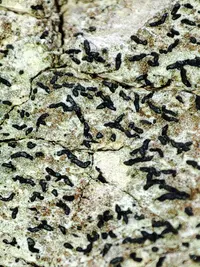
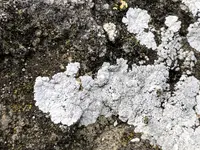
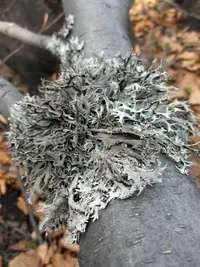
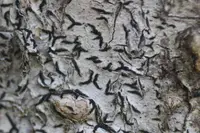
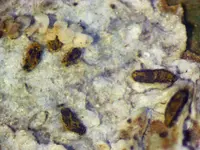
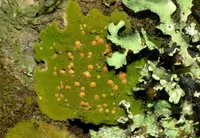
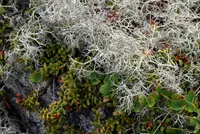
Black stone flower, Parmotrema perlatum, is a leafy lichen rather than a true plant. It forms loose, curled, gray-green lobes that dry to dark, brittle flakes. In nature it usually grows on rocks or tree bark in cool, moist, and clean-air environments, especially in mountainous and forested regions. It is often harvested as a dried spice in South Asian cooking. As a lichen, it grows slowly and is sensitive to air pollution and prolonged dryness, which makes it more challenging to cultivate. Indoor growers who care for Black Stone Flower generally focus on providing steady humidity, gentle air flow, and indirect light.

Care Difficulty
Moderate Care

Light Preference
Partial Shade

Water Requirements
Low Water

Temperature Preference
Cool Climate

Hardiness Zone
Unknown

Soil Texture
Rocky, Organic-rich

Soil pH
Strongly acidic (4.5–5.5), Acidic (5.5–6.5)

Soil Drainage
Well-drained

Fertilization
Minimal (feed rarely)
Scan your plant to receive care tips personalized for your specific plant
Available on iOS and Android
This lichen prefers soft, indirect light and is adapted to bright but not harsh sun.
Water needs are low but strongly linked to natural rainfall patterns and rapid surface drying.
This species is relatively cold hardy but grows best in mild, stable conditions.
This lichen prefers consistently moist air and reacts quickly to very dry conditions.
Parmotrema perlatum usually anchors to bark or rock, so it does not need conventional potting soil.
This species can be kept in shallow containers mainly as a mounted lichen display rather than a rooted potted plant.
This lichen grows naturally on low-nutrient surfaces and normally does not need fertilizing, even in cultivation.
Parmotrema perlatum needs very little pruning, mainly for tidiness and to manage spread on its host surface.
This lichen is usually grown attached to bark, rocks, or wood pieces, so care focuses on transplanting rather than true repotting.
Propagation of this lichen is slow but feasible by transferring small fragments to suitable new substrates.
This hardy lichen tolerates normal outdoor winter conditions in most temperate climates and usually needs no special care.

Plant Health Check
Not sure what's wrong with your plant? Check your plant's health inside the app.
This species is easily recognized by its pale, almost white, finely powdery lower surface, which contrasts sharply with the dull green to gray upper surface of the lobes. That powdery coating consists of tiny crystals and loose fungal tissue that help reflect light and reduce water loss.
It produces characteristic lichen substances such as atranorin and stictic acid, secondary metabolites that help protect the thallus from UV radiation and grazing invertebrates. These compounds also play an important role in modern chemical identification of the species using thin-layer chromatography.
This foliose lichen tends to occur most abundantly in areas with relatively low atmospheric pollution, especially low sulfur dioxide. Its presence in quantity on tree bark and rocks is often used by lichenologists as a field indicator of good local air quality.

In parts of South Asia, dried thalli of this species are traded as a culinary spice known as black stone flower or kalpasi, where their smoky, earthy aroma contributes background complexity to some traditional meat and gravy dishes.
Growth is very slow. Lichen thalli usually expand only a few millimeters per year, depending on moisture, clean air, and stable surfaces. Visible patches can take many years to form and thicken, so patience is essential.
Keep your plants happy and healthy with plant identification, disease detection, and easy care guidance.