Select suitable hosts
Attach thallus fragments only to rough-barked, long-lived branches (such as oak or fruit trees) that have good air movement and are not heavily shaded by dense canopies.

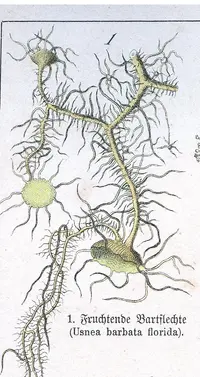
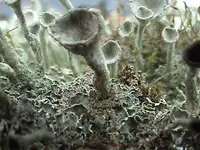
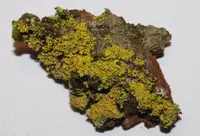
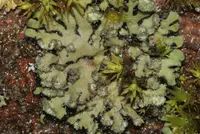
Florida beard lichen (Usnea florida) is a fruticose lichen, not a true plant, formed by a partnership between a fungus and photosynthetic algae. It typically hangs in soft, branched tufts that resemble tiny gray-green beards. In nature it grows on tree bark in clean, humid air, mainly in parts of Europe and other temperate regions, and is sensitive to air pollution. Its slow growth, need for constant gentle air flow, and preference for stable humidity make it challenging to keep in typical home conditions. Those who want to care for Florida beard lichen should aim to mimic cool, bright, moist woodland air and avoid heavy handling.

Care Difficulty
Hard Care

Light Preference
Partial Shade

Water Requirements
Low Water

Temperature Preference
Cool Climate

Hardiness Zone
Unknown

Soil Texture
Rocky, Organic-rich

Soil pH
Acidic (5.5–6.5)

Soil Drainage
Well-drained

Fertilization
Minimal (feed rarely)
Scan your plant to receive care tips personalized for your specific plant
Available on iOS and Android
This lichen relies on bright, gentle light and exposure to fresh, humid air rather than intense direct sun.
Usnea florida absorbs water directly through its surface, so moisture in the air and brief wetting matter more than heavy soaking.
This lichen tolerates a fairly wide temperature range but performs best in cool to mild, humid conditions with good air movement.
Humidity strongly influences the health and growth of Florida beard lichen, which relies on moist air rather than roots.
Usnea florida does not root in soil and instead anchors loosely to bark or twigs, so substrate choice focuses on support and airflow, not nutrition.
This species is not truly suited to conventional container growing, but it can be displayed in containers as long as it stays elevated and free from standing moisture.
Usnea florida is a lichen that obtains nutrients from rain, air, and its substrate, so it should not be fertilized.
Pruning Usnea florida is limited to gentle thinning or removal for health or aesthetic reasons.
This lichen is not a true potted plant, so transplanting focuses on moving small fragments to a new host surface.
Propagation of Usnea florida is possible but slow and should be done carefully and in small quantities.
Usnea florida is naturally cold hardy in its range and usually needs no specific winter care.

Plant Health Check
Not sure what's wrong with your plant? Check your plant's health inside the app.
This lichen is native to humid, oceanic parts of western and central Europe, where it grows mainly in areas with clean air and frequent fog, especially near coasts and river valleys.
It is highly sensitive to sulfur dioxide and other air pollutants, so its presence often indicates relatively unpolluted, high-quality air in a woodland or hedgerow.
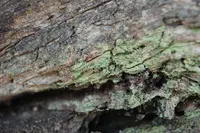
It grows as an epiphyte on the bark of trees such as oaks and other broadleaf species, anchoring to the surface without taking nutrients from the host tree itself.
This lichen performs far better outdoors, attached to bark or branches in clean, humid air. Indoors, stagnant air, dust, and low humidity usually cause decline. Florida beard lichen indoor care is only realistic in controlled terrarium-style setups.
Keep your plants happy and healthy with plant identification, disease detection, and easy care guidance.