Substrate selection
Mount the lichen on rough, unsealed stone, bark, or old wood rather than smooth or painted surfaces, as its tiny attachment structures grip best on porous, slightly textured material.

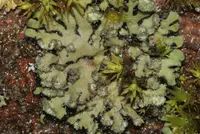
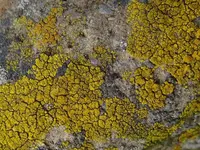
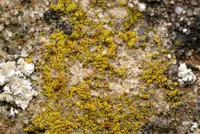
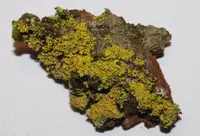
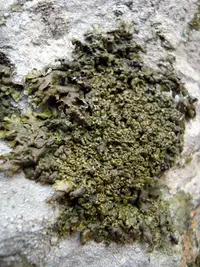
Wreath lichen, Phaeophyscia orbicularis, is a common foliose lichen, not a true plant, formed by a partnership between a fungus and photosynthetic algae. It grows as flat, round rosettes with small, overlapping gray to brown lobes that often form dense patches.
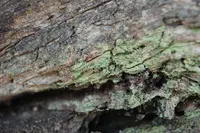
This lichen commonly occurs on tree bark, rocks, and old walls in temperate regions with relatively clean air. It is naturally hardy and slow growing, so it is not demanding but also not fast to establish.
For those who want to care for wreath lichen at home, it generally prefers bright, indirect light, good air circulation, and a stable, slightly moist but well-drained surface.

Care Difficulty
Easy Care

Light Preference
Partial Shade

Water Requirements
Low Water

Temperature Preference
Cold Hardy

Hardiness Zone
3–9

Soil Texture
Rocky, Sandy, Loamy

Soil pH
Slightly acidic (6.5–7.0), Neutral (7.0)

Soil Drainage
Well-drained

Fertilization
Minimal (feed rarely)
Scan your plant to receive care tips personalized for your specific plant
Available on iOS and Android
This lichen thrives in bright outdoor conditions with steady, indirect light exposure.
This epiphytic lichen depends on ambient moisture rather than routine soil watering.
This hardy lichen tolerates a wide temperature range in outdoor habitats.
This lichen tolerates a broad humidity range but grows best in consistently moist air.
Phaeophyscia orbicularis is not rooted in soil and usually grows on bark, rocks, or similar hard substrates.
This species can be kept in shallow containers mainly for display or observation rather than conventional potted growth.
Phaeophyscia orbicularis, a nutrient-efficient lichen, normally grows on trees, rocks, and walls without added fertilizer.
Phaeophyscia orbicularis needs almost no pruning, since each thallus is small and self-limiting.
This lichen is usually left in place; moving or transplanting it often damages the thallus and host surface.
Propagation of Phaeophyscia orbicularis is slow and specialized, so intentional multiplication is rarely practical at home.
This lichen is very cold hardy and needs no special winter care in typical outdoor conditions.

Plant Health Check
Not sure what's wrong with your plant? Check your plant's health inside the app.
This lichen commonly grows on tree bark, rocks, and even old concrete or roofing materials, showing a high tolerance to slightly elevated urban pollution compared with many more sensitive lichens.
Its gray‑brown, often olive‑tinged lobes are small, rounded, and closely attached to the substrate, forming neat circular rosettes that help distinguish it from similar foliose lichens.
The species often becomes more abundant in areas with elevated nitrogen, such as near farmland or cities, so its presence and vigor can indicate long-term nutrient enrichment of the local environment.

Unlike many lichens that sharply decline near towns, this species has expanded its range in parts of Europe and North America over recent decades, correlating with changing air quality and nitrogen deposition patterns documented in lichen monitoring studies.
Growth is slow. In suitable conditions, thalli typically expand only a few millimeters per year. This modest growth rate is normal for many lichens and reflects their adaptation to low-nutrient, often harsh environments.
Keep your plants happy and healthy with plant identification, disease detection, and easy care guidance.