Choose stable substrate
Mount the lichen on long-lasting, slightly rough materials such as bark slabs or untreated cork so the fine holdfasts can anchor securely and are not disturbed by frequent crumbling or decay of the base.

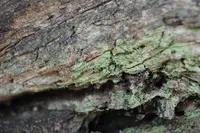
Needle lichen, Chaenotheca chlorella, is a tiny, upright lichen that grows as fine, matchstick-like stalks topped with small, dark fruiting bodies. It is not a true plant but a partnership between a fungus and microscopic algae.
This species typically occurs on old bark, decaying wood, and occasionally rocks in cool, humid forests, often in shaded, undisturbed sites. It develops slowly and depends on clean air, so it is sensitive to pollution and handling.
Because of its delicate structure and specific humidity and substrate needs, it is challenging to cultivate indoors or move successfully from nature. Those who care for needle lichen usually focus on preserving its natural habitat rather than growing it actively in containers.

Care Difficulty
Hard Care

Light Preference
Shade

Water Requirements
Keep Soil Moist

Temperature Preference
Cool Climate

Hardiness Zone
Unknown

Soil Texture
Rocky, Organic-rich

Soil pH
Strongly acidic (4.5–5.5)

Soil Drainage
Moist but well-drained

Fertilization
Minimal (feed rarely)
Scan your plant to receive care tips personalized for your specific plant
Available on iOS and Android
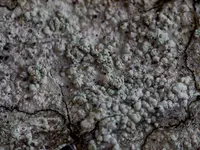
This crustose lichen prefers cool, shaded forest conditions with very limited direct sun exposure.
This lichen relies on periodic surface moisture rather than deep soil watering.
This species is adapted to cool to mild outdoor conditions with good tolerance of seasonal variation.
This lichen prefers cool, consistently moist air rather than typical indoor room conditions.
Chaenotheca chlorella grows best on firm, stable, low-nutrient substrates rather than conventional potting soil.
This species can be maintained in shallow containers mainly as a display for a colonized stone or bark piece.
Chaenotheca chlorella usually grows on nutrient-poor bark and does not benefit from added fertilizer.
Pruning is not suitable for Chaenotheca chlorella, as its tiny fruiting stalks and crust are easily damaged.
This lichen is best left where it establishes, so repotting or transplanting is rarely appropriate.
Propagation of Chaenotheca chlorella is specialist work and not a routine task for home growers.
This lichen is naturally cold hardy and needs no special winter care in typical outdoor conditions.

Plant Health Check
Not sure what's wrong with your plant? Check your plant's health inside the app.
This species primarily grows on old bark and resin-rich wounds of coniferous trees, especially spruce and fir, making it a good indicator of long‑continuity forest habitats.
It contains a specific unicellular green alga as its photobiont, and the unusually vivid green of its tissue inspired the epithet chlorella, referring to its algal associate.
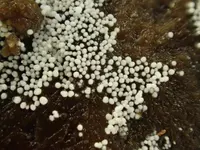
It forms very small, stalked fruiting bodies that look like tiny pins with powdery heads, a growth form typical of pin lichens but with distinctive lemon‑green to yellowish coloration in this species.

This species is often used in lichenological studies as part of indicator sets for assessing forest naturalness and continuity, helping conservation biologists identify woodlands that have remained relatively undisturbed for long periods.
This species grows very slowly, often only fractions of a millimeter to a few millimeters per year. Growth rate depends on stable moisture, clean air, and undisturbed substrate. Even under good conditions, visible expansion takes several years.
Keep your plants happy and healthy with plant identification, disease detection, and easy care guidance.