giant puffball Care (Calvatia gigantea)

giant puffball

About giant puffball

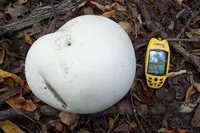
The giant puffball, Calvatia gigantea, is a large saprophytic fungus, not a leafy plant. It grows from soil or decaying organic matter as a smooth white globe. Mature specimens can reach impressive sizes, often standing out in open lawns, pastures, and woodland edges across temperate regions of North America and Europe.

This species fruits seasonally rather than growing year-round and completes its life cycle by releasing masses of brown spores. Young, firm, pure-white interiors are considered edible by many foragers, which encourages some growers to experiment with how to care for giant puffball at home. It generally prefers nutrient-rich, undisturbed soil with moderate moisture and partial sun to light shade.

Main Plant Requirements

Care Difficulty

Moderate Care

Light Preference

Partial Shade

Water Requirements

Regular Water

Temperature Preference

Cool Climate

Hardiness Zone

4–8

Soil Texture

Loamy, Silty, Organic-rich

Soil pH

Slightly acidic (6.5–7.0), Neutral (7.0)

Soil Drainage

Moist but well-drained

Fertilization

Minimal (feed rarely)

Get Personalized Care Plan

Scan your plant to receive care tips personalized for your specific plant

Available on iOS and Android

How to Care for the giant puffball

Calvatia gigantea forms best in open sites with consistent, indirect natural light.

  • Provide 3–6 hours of gentle morning sun with dappled or light shade in the afternoon to prevent drying of the substrate.
  • Allow partial shade under sparse trees or along woodland edges; dense, full shade greatly reduces fruiting of the giant puffball.
  • Avoid full, exposed midday sun in dry, open fields, which can overheat and desiccate developing fruiting bodies, especially in late summer.

Calvatia gigantea relies on evenly moist, not saturated, soil to form healthy fruiting bodies.

  • Ensure the top 2–5 cm of soil in the upper layer of the habitat remains slightly moist, especially during active growth after summer–fall rains.
  • Encourage good drainage with loose, organic-rich soil; prolonged puddling, foul odor, or soft, collapsing tissue indicates overwatering or waterlogging.
  • Watch for deep soil cracking, very dry leaf litter, and slow or aborted fruiting as signs of insufficient moisture, especially during hot, windy weather.

This species fruits best in mild conditions typical of late summer to early fall.

  • Aim for peak fruiting in temperatures around 60–75°F (16–24°C), which support stable soil moisture and mycelium activity.
  • Tolerates cool conditions down to about 40°F (4°C), but hard freezes can damage young fruiting bodies and stop development.
  • Handles brief heat up to about 85°F (29°C) if soil stays moist and shaded; prolonged heat waves combined with dry soil sharply reduce fruiting.

Humidity is not a major factor for Calvatia gigantea, which naturally develops in open, outdoor conditions.

Calvatia gigantea develops best in loose, well-aerated soil that mimics open pasture or meadow conditions.

  • Use a loamy, crumbly texture created from roughly 50% native soil and 50% well-rotted compost to provide structure and nutrients.
  • Ensure rapid drainage by avoiding heavy clay; if soil is dense, mix in coarse sand or fine gravel at 20–30% volume.
  • Aim for slightly acidic to neutral pH (6.0–7.0), avoiding strongly acidic or alkaline conditions that limit nutrient availability and fungal activity.
  • Avoid waterlogged, compacted, or highly fertilized ground, which can suppress the fungus and reduce the chance of fruiting.

This species is generally unsuitable for container growing, as it relies on extensive underground mycelium spread in open soil.

Calvatia gigantea is a saprophytic fungus that usually does not need fertilizer when growing in naturally rich soil or organic debris.

  • If soil is very poor, incorporate a thin layer of well-rotted compost into the top 2–5 cm before the growing season.
  • Avoid synthetic balanced NPK fertilizers, which can disrupt soil fungal communities and favor competing plants.
  • Do not apply fertilizer directly onto developing puffballs, as high nutrient contact can attract molds and bacteria.
  • Focus on maintaining leaf litter or wood chips that break down slowly, providing steady nutrition without concentrated feeding.

Pruning Calvatia gigantea is rarely needed and is limited to hygienic removal of fruiting bodies rather than shaping growth.

  • Cut overmature, collapsing, or moldy puffballs at the base with a clean knife to limit unwanted spore spread near pathways or lawns.
  • Remove damaged or pest-attacked fruiting bodies promptly to reduce disease reservoirs in the area.
  • Leaving a few healthy, mature puffballs to break down naturally maintains spore dispersal and future populations.
  • Disinfect cutting tools with alcohol if used on diseased material to avoid transferring pathogens in garden settings.

Calvatia gigantea is not a container species; management focuses on careful transplanting of colonized soil rather than classic repotting.

  • Transplant only when a site will be disturbed, moving intact chunks of colonized soil or turf rather than bare mycelium.
  • Best timing is late fall or early spring, when soil is moist and temperatures are cool, to reduce shock and drying.
  • Dig wide and shallow to keep mycelial mats as undisturbed as possible, then replant at the same depth in similar soil.
  • Water the new site gently to settle soil, then keep evenly moist but not saturated for several weeks while the fungus re-establishes.

Reproducing Calvatia gigantea is done mainly through spore-based methods, and reliable control is limited compared with vegetative plant propagation.

  • Collect mature puffballs when interior tissue has turned olive-brown and powdery, indicating viable spores.
  • In fall, crumble a portion of the spore mass over short grass or bare, low-competition soil rich in organic matter.
  • Lightly rake or brush spores into the top 0.5–1 cm of soil and water to ensure good contact without waterlogging.
  • Maintain the area evenly moist during cool seasons; fruiting may take 1–3 years and is impossible to guarantee.

Calvatia gigantea is cold hardy in temperate climates and needs almost no dedicated winter care once established in the ground.

  • Mycelium in soil tolerates typical winter frosts across much of the US without added insulation.
  • A light mulch of leaves or grass clippings can stabilize soil moisture and temperature but is usually optional.
  • Container-grown experiments benefit from moving pots to an unheated garage or cold frame to prevent repeated freeze–thaw in the root zone.

Care Tips

Establish a spore bed

When cutting a mature puffball, place the emptied outer rind back on the soil surface to protect and lightly mark the colonized area for future fruitings.

Use spore slurry

To expand a colony, blend overripe puffball tissue with non-chlorinated water and a small amount of clean soil, then pour the slurry over several shaded, undisturbed grassy spots with similar conditions to the original site.

Minimize ground disturbance

Avoid tilling, heavy foot traffic, or frequent mowing over known fruiting areas, since giant puffballs rely on an extensive underground mycelium that is easily damaged by compaction and soil disruption.

Time mowing carefully

In lawns where fruiting is expected, delay mowing or raise the mower height in late summer–fall so that young puffballs are not shredded before you can harvest or observe them.

Retain partial thatch

When managing turf, leave a thin layer of grass thatch and avoid overly aggressive dethatching in areas where growing giant puffball is desired, as the mycelium benefits from slowly decomposing organic matter near the soil surface.

Common Pests and Diseases

Mucor mold

This disease develops on aging or damaged puffballs, turning the white interior into soft, gray or blackish, cottony growth. Symptoms include rapid collapse of the fruiting body and an unpleasant, musty odor.

Solution

Remove and discard any soft, graying, or collapsing puffballs promptly, and avoid eating specimens that are not firm and pure white inside. To limit spread in a yard or mushroom bed, collect old fruiting bodies before they break down, and keep surrounding organic debris thinned to reduce constantly wet, stagnant conditions that favor mold growth.

Bacterial soft rot

This disease causes the flesh to become water-soaked, slimy, and foul-smelling, often starting from wounds or areas in contact with soggy soil. Symptoms include rapid liquefaction of tissues and attraction of flies and other scavengers.

Solution

Discard any soft or foul-smelling puffballs and avoid handling or stepping on developing specimens to reduce wounding. In areas used for growing giant puffball, improve drainage, avoid heavy irrigation, and remove decaying plant material that can harbor rot-causing bacteria.

Slug and snail feeding

These pests rasp shallow pits and holes into the outer surface, sometimes tunneling deep into the interior and leaving slime trails and frass. This pest activity can quickly render the fruiting body unsuitable for consumption.

Solution

Hand-pick slugs and snails in the evening, use beer traps or simple barriers such as copper tape around small cultivation beds, and reduce hiding spots like boards or dense groundcover near the puffballs. Harvest firm, clean specimens early, as soon as they reach usable size, to stay ahead of feeding damage.

Fungus gnat larvae

These insects lay eggs in moist organic material, and the larvae may tunnel into puffballs, creating internal channels that discolor the flesh and promote secondary decay. Symptoms include small entry holes and a spongy or mottled interior when cut open.

Solution

Harvest young puffballs promptly once they are firm and fully white inside, and avoid leaving cut or damaged specimens in place. In small cultivation plots, reduce excess moisture, remove decaying organic matter near the mushrooms, and if needed, cover developing puffballs with fine mesh to block adult gnats from laying eggs.

Interesting Facts

Unusual single fruitbody

This fungus typically forms one very large, round fruitbody rather than many small mushrooms, often appearing as a smooth white ball sitting directly on the ground without a stem or gills.

Edible only when white

It is considered a choice edible species, but only when the interior flesh is uniformly firm and pure white; once it begins to yellow, olive, or turn powdery, it should not be eaten.

Massive spore production

A single mature fruitbody can contain many trillions of microscopic spores, which are released as the interior tissue breaks down into a brown dust that disperses on air currents and by physical disturbance.

Botan icon

Did you know?

The species has been documented reaching sizes comparable to a large watermelon or even a small exercise ball, with some verified fruitbodies weighing several kilograms and attracting local attention when they appear in open fields or lawns.

FAQs about giant puffball

The species is edible only when young, firm, and pure white inside. Discard any specimen that is yellowing, browning, soft, or shows structures resembling a gilled mushroom. Correct identification by an expert is strongly recommended before eating.

Grow Healthy Plants with Botan Care

Keep your plants happy and healthy with plant identification, disease detection, and easy care guidance.

Botan plant care app — identify plants on mobile

Explore More Plants