Select suitable substrate
Attach thalli only to stable, uncoated, silica-rich stone or old bark that does not shed or flake, since this crustose lichen needs a firm, chemically compatible surface to establish over several years.

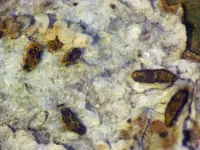
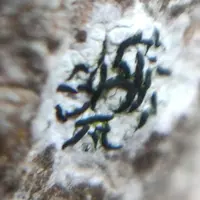
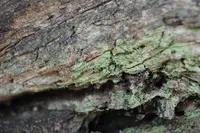
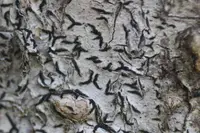
Scribble lichen, Alyxoria ochrocheila, is a crustose lichen that forms thin, tightly attached patches on bark or wood rather than growing as a leafy or bushy plant. Its name comes from the fine, dark, pencil-like fruiting lines that look like scribbles on the surface.
This lichen is typically found on tree trunks and branches in temperate regions, especially in relatively clean, stable environments. It grows slowly and depends on undisturbed bark, good air quality, and consistent humidity, which makes it challenging to cultivate or care for Scribble lichen in typical home conditions.
In nature, it prefers stable light, moderate moisture, and bark or wood surfaces instead of soil.

Care Difficulty
Hard Care

Light Preference
Partial Shade

Water Requirements
Low Water

Temperature Preference
Cool Climate

Hardiness Zone
Unknown

Soil Texture
Rocky, Sandy

Soil pH
Acidic (5.5–6.5), Slightly acidic (6.5–7.0)

Soil Drainage
Well-drained

Fertilization
Minimal (feed rarely)
Scan your plant to receive care tips personalized for your specific plant
Available on iOS and Android
Alyxoria ochrocheila is a crustose lichen that relies on stable, moderate light rather than intense direct sun.
Water needs for Alyxoria ochrocheila focus on humidity and brief wetting rather than prolonged saturation.
This lichen tolerates a wide temperature range but stays most active in cool to mild conditions.
This crustose lichen prefers cool, consistently moist air and struggles in dry indoor conditions.
This bark-dwelling lichen does not grow in conventional potting soil but needs a stable, mineral-rich surface.
This species is not well suited to traditional container culture but can be maintained on mounted substrates placed in shallow trays.
Alyxoria ochrocheila is a lichen that gains nutrients from its substrate and air deposits, so added fertilizer is not recommended.
Alyxoria ochrocheila does not require intentional pruning, but limited hygiene work can be useful in managed settings.
This lichen is normally substrate-bound on bark or rock, so transplanting is rare and primarily experimental.
Alyxoria ochrocheila spreads mainly by natural fragmentation and spore release, so intentional propagation is slow and uncertain.
This lichen is naturally cold hardy and typically requires no special winter care in outdoor conditions across most temperate climates.

Plant Health Check
Not sure what's wrong with your plant? Check your plant's health inside the app.
This crustose lichen is most often found on smooth bark of deciduous trees, especially on beech and other hardwoods in temperate Europe, showing a clear preference for relatively stable, undisturbed bark surfaces.
Its fruiting bodies (ascomata) typically have a pale ochre to yellowish margin around the dark disc, a color combination that helps distinguish it from many otherwise similar bark-dwelling lichens.
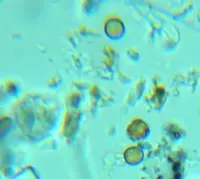
The species is identified reliably by its 3-septate, elongate spores seen under a microscope, along with characteristic chemical reactions in the thallus used in professional Alyxoria ochrocheila care and taxonomic work.
Growth is very slow. This lichen typically adds only fractions of a millimeter to a few millimeters per year, depending on moisture, air quality, and light. Expect colonies to take many years to become visibly larger.
Keep your plants happy and healthy with plant identification, disease detection, and easy care guidance.