Choose stable substrate
Attach the lichen to a stable, nonfriable rock with a rough surface such as sandstone or basalt so the thallus can anchor securely and is not dislodged by wind or handling.

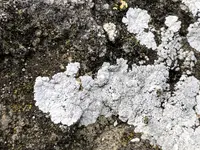
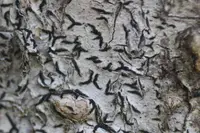
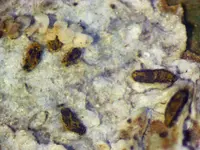
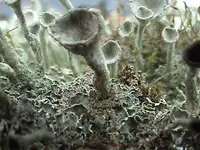
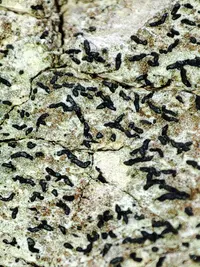
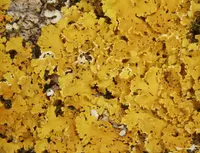
Caloplaca teicholyta is a crustose lichen, not a typical leafy plant. It forms thin, flat patches tightly attached to rocks or old walls. The surface often shows dull orange, gray, or brown tones, with a slightly powdery or cracked texture.
This lichen occurs mainly in temperate regions, especially on calcareous stone in relatively clean, well-lit environments. It grows slowly and is sensitive to heavy air pollution or frequent disturbance, which makes it challenging to maintain in artificial settings. Anyone wanting to learn how to care for Caloplaca teicholyta should focus on stable light, low nutrient levels, and a dry, well-ventilated surface that mimics its natural rock habitat.

Care Difficulty
Moderate Care

Light Preference
Full Sun

Water Requirements
Low Water

Temperature Preference
Cool Climate

Hardiness Zone
Unknown

Soil Texture
Rocky, Sandy

Soil pH
Slightly acidic (6.5–7.0), Neutral (7.0)

Soil Drainage
Well-drained

Fertilization
Minimal (feed rarely)
Scan your plant to receive care tips personalized for your specific plant
Available on iOS and Android
This crustose lichen prefers bright, open conditions that mimic exposed rock surfaces.
This saxicolous lichen is drought-adapted and relies mainly on natural rainfall and humidity.
This species is adapted to exposed conditions with wide natural temperature swings.
This crustose lichen tolerates wide humidity swings and usually does not need active humidity management in cultivation.
For cultivation, provide a mineral, rock-like substrate rather than typical potting soil.
This species is not well suited to conventional container growing and is best maintained on outdoor rocks or masonry surfaces, even when moved or displayed in trays or shallow dishes.
This crustose lichen usually grows on nutrient-poor rock and Caloplaca teicholyta does not benefit from added fertilizer in cultivation.
This lichen does not require active pruning, as its crustose thallus naturally maintains size and form.
In cultivation, this lichen is usually managed by repositioning its host rock rather than true repotting.
Propagation of this saxicolous lichen is specialized and generally not attempted by home growers.
This species is naturally cold hardy in exposed habitats and usually needs no special winter care.

Plant Health Check
Not sure what's wrong with your plant? Check your plant's health inside the app.
This crustose lichen specializes on calcareous, often vertical rock faces, especially shaded limestone walls and cliffs, rather than the more typical sunny exposed habitats favored by many other Caloplaca species.
Unlike many bright orange Caloplaca relatives, this species forms a pale gray to whitish crustose thallus with relatively small, orange to rust-colored apothecia (disk-like fruiting bodies) that create a subtle, bicolored pattern on rock surfaces.
It is considered ecologically specialized, occurring in cool, humid, often upland or montane sites in parts of Europe and North America, where stable, low-nutrient, base-rich rock surfaces are available and atmospheric pollution levels are relatively low.
This crustose lichen spreads slowly across rock or bark surfaces by spore dispersal and marginal expansion. It usually forms small to medium patches and is not considered aggressive in typical garden or natural settings.
Keep your plants happy and healthy with plant identification, disease detection, and easy care guidance.