Select stable substrate
Attach thalli only to long-lasting, non-crumbly stone, old unpainted concrete, or unglazed clay so the lichen can colonize for many years without losing its anchoring surface.

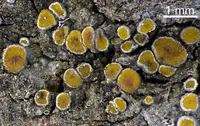
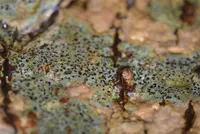
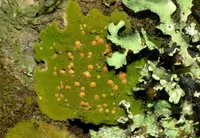
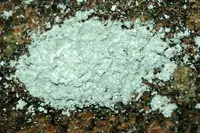
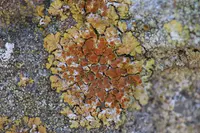
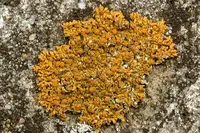
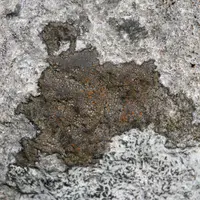
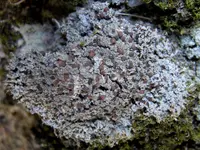
Gray-rimmed firedot lichen, Caloplaca cerina, is a crustose lichen, not a true plant, formed by a partnership between a fungus and photosynthetic algae. It typically appears as flat, closely attached patches with grayish rims and orange to yellow disks scattered across bark, rocks, or old wood.
This lichen occurs widely in temperate regions, especially in Europe and North America, often in clean or moderately clean air. It grows slowly and tends to establish where competition is low and surfaces remain relatively undisturbed.
Because it relies on natural colonization by spores and very specific microclimates, it is not easy to cultivate deliberately, so care for Gray-rimmed firedot lichen focuses on preserving existing colonies. It usually prefers stable, well-lit sites with moderate moisture and unpolluted air.

Care Difficulty
Moderate Care

Light Preference
Full Sun

Water Requirements
Low Water

Temperature Preference
Cold Hardy

Hardiness Zone
3–9

Soil Texture
Rocky, Sandy

Soil pH
Neutral (7.0), Slightly alkaline (7.0–7.5)

Soil Drainage
Well-drained

Fertilization
Minimal (feed rarely)
Scan your plant to receive care tips personalized for your specific plant
Available on iOS and Android
This saxicolous lichen prefers bright, open conditions with consistent exposure to natural light.
This crustose lichen relies on ambient moisture and does not need conventional watering once established outdoors.
This lichen is broadly cold hardy and tolerates a wide temperature range when attached to stable outdoor surfaces.
This lichen prefers dry, well-ventilated air and does not need elevated humidity.
This crustose lichen grows directly on rock, bark, or man-made surfaces and does not use soil in the usual plant sense.
This species can be kept on inert surfaces within containers, but the container mainly serves as a support and microhabitat, not as a soil pot.
Caloplaca cerina, commonly known as Gray-rimmed firedot lichen, gains nutrients mainly from rain, dust, and its substrate, so it does not need added fertilizer.
Caloplaca cerina requires almost no active pruning, since it is a crustose lichen firmly attached to bark, rock, or other hard surfaces.
This lichen is usually left undisturbed, but limited transplanting is possible for scientific, educational, or specialist horticultural use.
Propagation of Caloplaca cerina is slow and usually left to natural dispersal, so intentional methods are limited and specialized.
Caloplaca cerina is naturally cold hardy in most temperate climates and requires no special winter care beyond stable site conditions.

Plant Health Check
Not sure what's wrong with your plant? Check your plant's health inside the app.
The gray-rimmed firedot lichen often shows tiny orange apothecia (fruiting bodies) with a pale to grayish margin on its thallus, a color pattern that helps distinguish it from many other orange Caloplaca species under a hand lens.
This species frequently colonizes nutrient-enriched bark and man-made substrates such as fence posts, indicating environments influenced by nitrogen-rich dust, fertilizers, or urban pollution.
Caloplaca cerina occurs on both bark and rock in temperate regions, showing a relatively wide tolerance for substrate pH and microclimate compared with many more specialized crustose lichens.
Growth is slow, usually only fractions of a millimeter to a few millimeters per year, depending on light, moisture, and air quality. It is common for a colony to take many years to become visually noticeable.
Keep your plants happy and healthy with plant identification, disease detection, and easy care guidance.