tiny firedot lichen Care (Calogaya pusilla)

tiny firedot lichen

About tiny firedot lichen

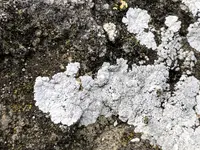
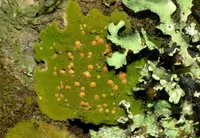
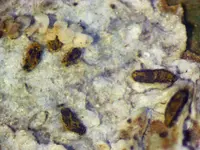
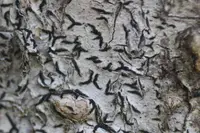
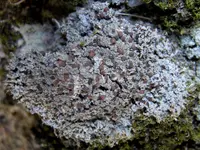
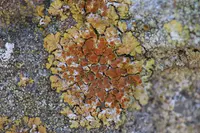
Tiny firedot lichen (Calogaya pusilla) is a crustose lichen, not a true plant, formed by a partnership between a fungus and photosynthetic algae. It grows as a thin, flat crust dotted with tiny, bright orange fruiting bodies that resemble specks of paint.

This species commonly colonizes sun-exposed rocks, walls, and other hard, mineral-rich surfaces in dry, open habitats across temperate regions. It grows slowly and is sensitive to heavy shading and pollution, which makes it more challenging to maintain in artificial settings. Those planning to care for tiny firedot lichen should know it prefers stable surfaces, good light, and consistent but not excessive moisture.

Main Plant Requirements

Care Difficulty

Moderate Care

Light Preference

Full Sun

Water Requirements

Low Water

Temperature Preference

Cool Climate

Hardiness Zone

Unknown

Soil Texture

Rocky, Sandy

Soil pH

Slightly alkaline (7.0–7.5), Alkaline (7.5–8.5)

Soil Drainage

Well-drained

Fertilization

Minimal (feed rarely)

Get Personalized Care Plan

Scan your plant to receive care tips personalized for your specific plant

Available on iOS and Android

How to Care for the tiny firedot lichen

This crustose lichen prefers cool, bright outdoor exposure with stable light rather than deep shade.

  • Provide 4–6 hours of direct to lightly filtered sun, ideally morning sun with some protection from intense mid-afternoon exposure on hot, dry sites.
  • Tolerates partial shade, but growth and color of tiny firedot lichen become dull in locations with less than 2–3 hours of sun or consistently heavy shade.
  • On exposed rock or bark, strong summer sun combined with hot, dry winds can desiccate tissues; slight shelter from southwest sun helps reduce stress.

This saxicolous lichen is adapted to natural wet–dry cycles rather than frequent, heavy watering.

  • In cultivation, allow the substrate surface to dry completely and remain dry for several days before misting lightly, imitating brief rain or fog events.
  • Use very well-drained, mineral-based substrate or bare rock so water runs off quickly; standing moisture or constantly damp surfaces encourage rot and algae.
  • Signs of excess moisture include soft, darkened thalli and green film, while very pale, brittle patches indicate prolonged drought beyond what Calogaya pusilla usually tolerates.

This lichen is cold hardy and tolerates a broad outdoor temperature range when light and moisture are appropriate.

  • Optimal active growth often occurs in cool, moist periods around 40–60°F (4–16°C), especially in autumn and spring when evaporation is lower.
  • It generally survives winter lows near 5–15°F (-15–-9°C) on stable rock or bark surfaces, provided freeze–thaw cycles are not combined with constant surface ice.
  • Heat tolerance extends to about 85–95°F (29–35°C) if humidity is moderate and the substrate is not heat-reflective; prolonged higher temperatures increase desiccation stress.

This lichen prefers cool, dry to moderately dry air and does not need raised humidity.

  • Target 30–50% humidity, similar to exposed rocks or walls in open air.
  • Tolerates drier indoor air; stress shows as bleaching, cracking, or powdery, easily crumbling thalli on tiny firedot lichen.
  • Improve conditions by increasing air movement, avoiding enclosed terrariums, and keeping surrounding surfaces free of constant moisture.

This species naturally grows on rock or bark, so any soil used should mainly mimic a mineral, fast‑draining crust rather than a typical potting base.

  • Use a very gritty mix: 60–80% coarse sand or fine gravel with a small amount of low‑nutrient, sieved mineral topsoil.
  • Ensure extreme drainage; the mix should drain in seconds and never stay visibly wet on the surface.
  • Aim for neutral to slightly alkaline conditions (around pH 6.5–7.5), adding a pinch of crushed limestone if local materials are acidic.
  • Avoid peat‑heavy, organic‑rich, or compact mixes, which stay damp too long and can kill Calogaya pusilla by suffocation and rot.

This lichen can be grown in shallow containers only as a display surface on rock chips or bark rather than as a rooted plant.

  • Choose a wide, shallow tray with multiple drainage holes so water runs off quickly and does not pool under the substrate.
  • Fill the container mainly with flat stones or coarse gravel, using only a thin mineral dusting to anchor fragments.
  • Tilt the container slightly or raise one edge to encourage runoff, simulating the way rain drains from natural rock faces.

Calogaya pusilla, or tiny firedot lichen, normally grows on nutrient-poor bark or rock and does not need added fertilizer.

Calogaya pusilla naturally maintains its form and generally does not require structural pruning.

This lichen is usually grown in situ on bark, rocks, or outdoor displays, so handling should be minimal and very gentle.

  • Avoid frequent transplanting; move only if the substrate will be lost or disturbed, such as removed bark or crumbling stone.
  • Transplant during mild, stable weather in spring or fall to reduce moisture stress and temperature shock.
  • Lift the entire host fragment (bark or rock) instead of peeling lichen off, keeping the thallus and surface intact.
  • Place the original substrate onto a new support with similar light and moisture, then mist lightly to settle any dust and gaps.

Calogaya pusilla is slow-growing and propagation is specialized, usually handled by researchers or advanced enthusiasts.

Calogaya pusilla is naturally cold hardy in most temperate climates and typically needs no special winter care.

Care Tips

Select stable substrates

Attach thalli only to hard, non-calcareous, long-lasting surfaces like stable rock, unglazed fired clay, or inert masonry to avoid chemical changes and movement that can break or bury the lichen over time.

Mimic natural airflow

Place mounted pieces where they receive regular, gentle air movement (for example near but not directly in front of a vent or open window) to keep surfaces dry between moisture events and reduce mold growth on the substrate.

Use rainwater rinses

Periodically mist or rinse the lichen lightly with collected rainwater or low-mineral water to wash off dust and pollutants that can block light and gas exchange, then allow it to dry fully before the next moisture event.

Limit handling contact

Handle only the substrate edges and avoid touching the lichen surface, since skin oils and mechanical pressure can crush the tiny lobes and reduce future growth.

Monitor with magnification

Inspect the lichen with a hand lens or phone macro lens every few months to track color, new apothecia (fruiting discs), and edge growth, which provides a much better indication of success when growing tiny firedot lichen than overall size changes alone.

Common Pests and Diseases

Air pollution damage

Symptoms include fading or bleaching of thalli, dead patches, and loss of the normal orange color near roads or urban/industrial areas. This condition reflects sensitivity of the lichen’s algae and fungal tissues to sulfur dioxide, nitrogen oxides, and other airborne pollutants.

Solution

Relocation is the only practical measure; move substrate pieces colonized by tiny firedot lichen to cleaner air with lower traffic and away from chimneys or vents, then allow several months to a few years for partial recovery and new growth. Avoid using lawn chemicals, pressure washing, or solvent-based paints close to the lichen colony, as these add additional chemical stress.

Nutrient enrichment

Symptoms include unusually fast, coarse growth with duller color, sometimes accompanied by invasion of mosses or algae that overgrow the lichen. This condition is often caused by fertilizer drift, pet urine, or runoff from nutrient-rich surfaces above the colony.

Solution

Reduce or stop fertilizer use and avoid spraying nutrients or wetting agents on surfaces that support the lichen. Rinse affected rock or bark gently with clean water during dry weather, then keep the area low-nutrient and allow competition from mosses or algae to be manually reduced by careful mechanical removal with a soft brush once dry.

Overgrowth by mosses

Symptoms include orange discs and crusts becoming partly or fully hidden beneath green moss cushions, particularly in humid, shaded, or nutrient-enriched sites. This competition reduces light and gas exchange, which can slowly kill the lichen.

Solution

Manually lift or tease away small moss tufts with tweezers or a soft brush when the substrate is dry, taking care not to scrape off the lichen crust. After removal, keep the site drier and less nutrient-enriched by improving light exposure where possible and avoiding nearby watering or fertilizing that keeps the surface constantly moist.

Algal overgrowth

Symptoms include a thin, green, slippery film that develops over the orange lichen surface after long periods of shade and constant moisture. This film blocks light to the lichen’s own algae and can weaken or kill the thallus over time.

Solution

Increase light and air movement where possible by lightly pruning shading vegetation or improving exposure, and allow the surface to dry between wet periods. If needed, use a soft, dry brush to gently disturb heavy algal film during a dry spell, avoiding hard scrubbing that would detach the lichen itself.

Invertebrate grazing

This pest pressure comes from small snails, slugs, and some mites that feed on lichen tissue, leaving irregular bite marks, scraped areas, or missing patches. Damage is usually localized but can be significant on small colonies or in damp, shaded microhabitats where grazers are abundant.

Solution

Limit moisture accumulation around the colony by reducing dense groundcover and avoiding regular overhead watering on stone or bark that hosts the lichen. Hand-pick visible snails and slugs, use physical barriers such as copper tape on small garden structures, and avoid broad-spectrum insecticides that can disrupt the micro-ecosystem around the lichen.

Interesting Facts

Orange crust specialist

This species forms a very thin, bright orange crust (crustose thallus) that adheres tightly to sun‑exposed rocks, especially calcareous or base‑rich substrates in dry open habitats.

Nitrogen and sulfur tolerant

It is known as a nitrophilous and somewhat pollution‑tolerant lichen, often occurring where there is moderate enrichment by nitrogen compounds and resisting levels of airborne sulfur that would exclude more sensitive lichens.

Chemically distinctive pigments

The thallus typically contains characteristic anthraquinone pigments that give the intense orange coloration and can be detected by standard lichen chemical spot tests, helping lichenologists distinguish it from similar orange crustose species.

FAQs about tiny firedot lichen

This species grows extremely slowly, often only fractions of a millimeter per year. Visible expansion of a colony can take many years, especially in dry or nutrient-poor sites, so patience is essential when growing tiny firedot lichen.

Grow Healthy Plants with Botan Care

Keep your plants happy and healthy with plant identification, disease detection, and easy care guidance.

Botan plant care app — identify plants on mobile

Explore More Plants