


Host selection
Establish this lichen on stable, long-lived, low-bark trees or rocks with similar existing lichens, as it anchors and spreads better on substrates that do not shed bark or erode quickly.

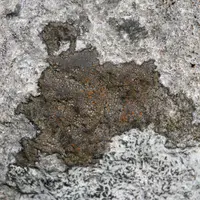
Blastenia crenularia is a crustose lichen, not a typical leafy houseplant. It forms thin, crust-like patches tightly attached to rock or bark surfaces. The thallus, or main lichen body, is usually pale to orange-toned, with tiny fruiting discs that give it a speckled appearance.
This species naturally occurs in temperate regions, especially on exposed stones and old walls where air circulation is good. It tends to be slow-growing and quite specialized in its habitat needs, so it is not commonly cultivated. For anyone attempting to care for Blastenia crenularia, it generally prefers clean air, stable surfaces, and natural outdoor light rather than typical pot or soil conditions.

Care Difficulty
Moderate Care

Light Preference
Partial Shade

Water Requirements
Moderate Water

Temperature Preference
Warm Climate

Hardiness Zone
Unknown

Soil Texture
Loamy

Soil pH
Slightly acidic (6.5–7.0)

Soil Drainage
Well-drained

Fertilization
Minimal (feed rarely)
Scan your plant to receive care tips personalized for your specific plant
Available on iOS and Android
This lichen prefers bright, open conditions but is sensitive to extreme, prolonged heat and glare.
This saxicolous lichen relies on periodic surface moisture rather than deep or constant watering.
This species copes with a broad temperature range but has limits to intense cold and heat.
This lichen tolerates a broad humidity range but grows best in consistently moist air.
Blastenia crenularia grows on bark or rock rather than in soil, so substrate texture and drainage are more important than conventional potting mixes.
This species can be maintained in containers only as an experimental or display substrate culture rather than a conventional potted plant.
This lichen-like species usually grows on nutrient-poor substrates and generally does not need supplemental feeding in cultivation.
Pruning needs for Blastenia crenularia are minimal and mainly hygiene-based when grown in managed settings.
Transplanting focuses on moving the host substrate, since this species naturally anchors to bark, rock, or other firm surfaces.
Propagation of this lichen is specialized and typically left to natural dispersal rather than routine home methods.
This species is naturally cold hardy across a wide temperate range and usually needs no special winter care.

Plant Health Check
Not sure what's wrong with your plant? Check your plant's health inside the app.
The orange apothecia of this crustose lichen show finely notched, or crenulate, margins, a feature reflected in the species name crenularia and used as a key character in its identification by lichenologists.
This species typically grows tightly attached to siliceous rock surfaces, forming a thin, crust-like thallus that withstands exposure, desiccation, and temperature fluctuations in open habitats.
Blastenia crenularia is a lichenised ascomycete fungus that lives in symbiosis with a photosynthetic partner (usually a green alga), allowing it to produce its own food while colonizing nutrient-poor substrates.
This lichen grows very slowly, often only fractions of a millimeter per year. Growth rate depends on substrate stability, moisture availability, air quality, and light. It is not suitable for situations where rapid coverage is expected.
Keep your plants happy and healthy with plant identification, disease detection, and easy care guidance.

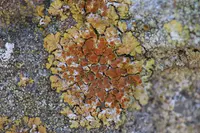
tiny firedot lichen
Calogaya pusilla
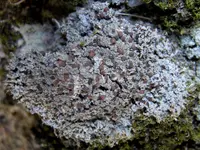
Six-celled Moss Dot Lichen
Bilimbia sabuletorum
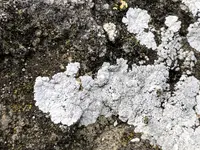
Caloplaca teicholyta
Caloplaca teicholyta
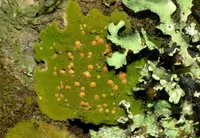
coenogonium lichen
Coenogonium implexum
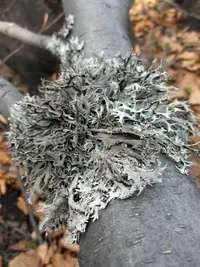
tree moss
Pseudevernia furfuracea
witch's hair lichen
Alectoria ochroleuca
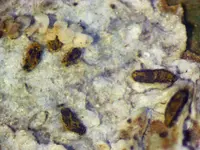
Scribble lichen
Alyxoria ochrocheila
Black Stone Flower
Parmotrema perlatum