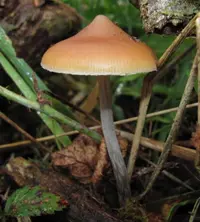
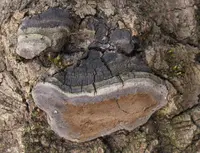
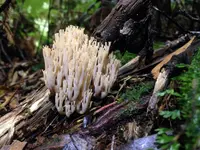
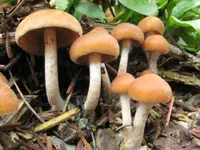
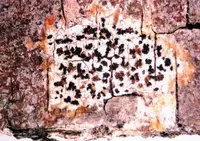
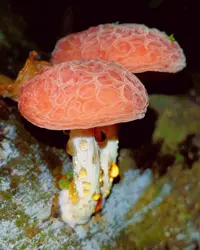
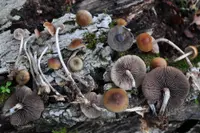
Bark Mycena Care (Mycena corticola)

Bark Mycena

About Bark Mycena

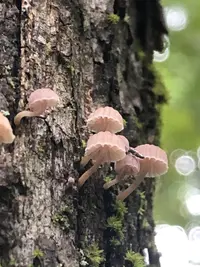
Bark Mycena (Mycena corticola) is a tiny wood-inhabiting fungus, not a leafy houseplant. It produces delicate, bell-shaped caps on very thin stems directly on tree bark. Colonies often appear in moist, shaded forests, especially on decaying hardwoods in temperate regions. The fruiting bodies are short-lived and strongly tied to cool, damp conditions. Because it is a specialized decomposer that needs consistently humid, bark-like substrates, it is challenging to maintain indoors or in typical garden settings. Those interested in how to care for Bark Mycena usually focus on recreating natural woodland conditions with stable moisture, shade, and undisturbed, decaying wood surfaces.

Main Plant Requirements

Care Difficulty

Hard Care

Light Preference

Shade

Water Requirements

Keep Soil Moist

Temperature Preference

Cool Climate

Hardiness Zone

Unknown

Soil Texture

Organic-rich, Peaty

Soil pH

Acidic (5.5–6.5)

Soil Drainage

Moist but well-drained

Fertilization

Minimal (feed rarely)

Get Personalized Care Plan

Scan your plant to receive care tips personalized for your specific plant

Available on iOS and Android

How to Care for the Bark Mycena

This small saprophytic fungus prefers low, forest-like light rather than direct sun.

  • Provide bright shade or dappled light under trees or shrubs, with no more than 1–2 hours of weak morning sun and 0 hours of direct afternoon sun.
  • Aim for 6–10 hours of indirect daylight; Bark Mycena fruiting bodies often appear on shaded bark where light is filtered through canopy leaves.
  • Excessive sun dries the substrate and aborts caps, while very deep shade combined with dense cover can reduce fruiting; adjust by thinning overhead foliage slightly if needed.

This bark-dwelling fungus depends on consistently moist, not soggy, substrate around its host wood.

  • Maintain evenly moist bark or decaying wood; allow only the top 2–3 mm of surface to start drying before re-wetting, rather than following a fixed calendar schedule.
  • Use loose, well-drained, high-organic matter material around Mycena corticola so excess water drains away while humidity near the bark stays high.
  • Signs of overwatering include sour smell, slimy substrate, and mold growth, while underwatering shows as brittle, dry bark and shriveled or absent fruiting bodies, especially in warm, windy weather.

This species thrives in cool to mild conditions typical of shaded woodland environments.

  • Optimal fruiting occurs around 50–68°F (10–20°C), with steady cool temperatures encouraging more stable development on bark and decaying wood.
  • It tolerates down to about 32°F (0°C) in dormant or non-fruiting phases, but repeated hard freezes below this can damage mycelium near the surface.
  • Heat above 77–82°F (25–28°C), especially combined with low humidity, causes rapid drying of the substrate and shorter-lived caps, so provide extra shade and moisture buffering during hot, dry periods.

This wood-inhabiting fungus needs consistently moist, humid air to fruit well in cultivation.

  • Aim for 70–90% humidity in the fruiting space, using a greenhouse tent or humidity dome over the substrate.
  • Tolerates brief dips to 50–60%, but caps dry, crack, and abort if exposed to prolonged dry air or direct airflow.
  • Increase humidity with frequent fine misting of the chamber walls and by adding open trays of water near, not on, the substrate for Bark Mycena.

This species grows on bark and woody debris rather than mineral soil, so the focus is on a loose, woody substrate.

  • Use a mix based on fine hardwood chips, shredded bark, and decayed wood, mimicking loose forest litter rather than compact soil.
  • Ensure rapid drainage so water runs through freely; the substrate must stay moist but never waterlogged or submerged.
  • Keep pH slightly acidic to neutral, around 5.5–7.0, by using untreated hardwood materials and avoiding limed products.
  • Improve aeration by blending in coarse bark pieces or a small amount of perlite, and avoid dense composts or clay-containing mixes that hold stagnant water.

This fungus can be grown in containers if they are set up as shallow woody-substrate beds rather than traditional plant pots.

  • Choose a broad, shallow tray that allows the woody substrate to spread in a thin layer for better gas exchange around developing fruiting bodies.
  • Drill side ventilation holes above the substrate line to prevent stale, saturated air at surface level while still retaining overall humidity.
  • Use a rigid, non-flexing container so the colonized woody block remains stable and undisturbed when moved or misted during Mycena corticola care.

This bark-dwelling fungus relies mainly on decaying wood and usually does not need added fertilizer for healthy development.

Mycena corticola does not require pruning because the fruiting bodies are short-lived and decompose naturally.

This species is not suited to normal pot culture and is best left on its natural host bark rather than transplanted.

  • Avoid transplanting clusters, as moving them off their original bark usually disrupts the delicate mycelium network.
  • If studying specimens, gently remove only a small bark section and keep it in a cool, moist container for short-term observation.
  • Maintain the original bark moisture and avoid direct sun or strong airflow to limit drying and stress.
  • Discard containers after observation, since long-term growing Bark Mycena on moved bark is rarely successful.

Propagation of this fungus is specialized and mainly of interest for scientific or advanced hobby work, not routine home culture.

Outdoor colonies typically overwinter without intervention and do not require special winter care.

Care Tips

Use bark slabs

Establish cultures on pieces of partially decomposed hardwood bark instead of loose chips, as this mimics the fungus’s natural substrate and keeps moisture and airflow more stable.

Pre‑soak substrate

Before inoculation, soak the bark in clean, dechlorinated water for 12–24 hours, then drain thoroughly so it is evenly damp but not dripping, which supports fast colonization and reduces contamination.

Create humidity tent

After the bark is colonized, place it under a clear plastic dome or loose plastic bag with several air holes to maintain high humidity while still allowing gas exchange during fruiting.

Stage light exposure

Keep colonizing bark in low light, then introduce gentle, indirect light once white mycelium is well established, as this shift can help trigger uniform fruiting when growing Bark Mycena.

Rotate bark pieces

Rotate and slightly reposition bark sections every few weeks to expose new micro-surfaces, which can encourage more evenly distributed fruiting bodies over time.

Common Pests and Diseases

Mold contamination

This disease appears as fuzzy white, gray, or green growth that spreads quickly across the fruiting bodies and substrate. Symptoms include collapsing caps and a cottony coating on stems or bark surfaces around the fungus.

Solution

Remove and discard all visibly contaminated material, then lower humidity slightly, increase fresh air exchange, and avoid overhead misting that keeps caps constantly wet. For ongoing setups, sterilize or replace substrate and hard surfaces, and handle cultures with clean tools to prevent reintroduction of competing molds.

Mite infestation

These insects are tiny, often barely visible specks that move over the substrate and fruiting bodies, sometimes leaving a rough or pitted surface on caps. This pest can slow or distort growth and may carry other microorganisms onto the colony.

Solution

Isolate the affected culture, physically remove heavily infested material, and reduce excess moisture while maintaining adequate humidity for the fungus. Clean the growing area thoroughly, use fine mesh barriers where possible, and if needed introduce predatory mites from reputable biological control suppliers rather than using broad-spectrum chemicals.

Bacterial blotch

This disease causes slimy, wet-looking spots or streaks on caps and stems that may take on a yellowish or brownish tinge. Symptoms include soft, water-soaked tissue that breaks down rapidly in very humid, stagnant air conditions.

Solution

Remove and discard affected fruiting bodies, then increase air movement and reduce surface wetness by stopping direct spraying on caps. Clean trays and tools with a mild disinfectant, and in future maintain high humidity with indirect moisture (such as humidity trays or fogging at a distance) instead of direct water on the mushrooms.

Interesting Facts

Bark-dwelling specialist

This species is strongly associated with the bark of living broadleaf trees, especially oaks, where it forms small clusters directly on the trunk rather than on fallen wood or soil.

Tiny, pale fruitbodies

The caps are very small, usually only a few millimeters wide, with a pale grayish to whitish color that makes the mushrooms easy to overlook against lichen and bark textures.

Microscopic identification traits

Reliable identification typically requires microscopy, as the spores and specialized sterile cells on the gills (cystidia) show distinctive shapes that separate it from similar bark-inhabiting Mycena species.

FAQs about Bark Mycena

This species spreads locally through spores and short mycelial growth on suitable bark, but it is not considered aggressive or smothering. It usually appears in small, scattered clusters where decaying bark and consistent humidity are present.

Grow Healthy Plants with Botan Care

Keep your plants happy and healthy with plant identification, disease detection, and easy care guidance.

Botan plant care app — identify plants on mobile

Explore More Plants