Host tree monitoring
Inspect the host tree’s bark and canopy every 1–2 months for cracks, dieback, or cankers so that any Biscogniauxia marginata infection is detected early and branches can be removed before structural failure occurs.

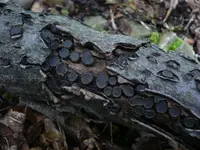
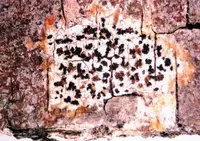
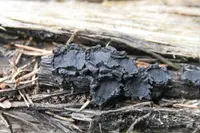
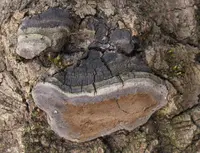
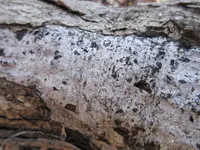
Biscogniauxia marginata is not a typical ornamental plant but a wood-inhabiting fungus that colonizes dead or weakened tree branches and trunks. It forms dark, crust-like patches on bark surfaces, often blending with the wood.
This species occurs mainly in warm, humid regions, especially in tropical and subtropical forests where host trees are abundant. It functions as a decomposer, breaking down woody tissue and contributing to nutrient cycling.
Gardeners usually do not intentionally grow or care for Biscogniauxia marginata, but understanding its presence helps assess tree health. It favors moist, shaded conditions on stressed or already declining wood.

Care Difficulty
Moderate Care

Light Preference
Partial Shade

Water Requirements
Moderate Water

Temperature Preference
Warm Climate

Hardiness Zone
Unknown

Soil Texture
Loamy

Soil pH
Slightly acidic (6.5–7.0)

Soil Drainage
Well-drained

Fertilization
Minimal (feed rarely)
Scan your plant to receive care tips personalized for your specific plant
Available on iOS and Android
This fungus prefers low to moderate light levels similar to shaded forest conditions.
Moist but not waterlogged conditions support the most stable development of this fungus.
Temperature control helps keep this wood-inhabiting fungus stable and less prone to rapid decline.
This fungus is not grown as a house or ornamental plant, so specific indoor humidity management is unnecessary.
Biscogniauxia marginata is a pathogenic wood-inhabiting fungus, so standard horticultural potting soil preparation is not applicable.
This wood-decaying fungus is not suitable for container growing or intentional cultivation.
This wood-decay fungus is not cultivated as an ornamental plant, so Biscogniauxia marginata does not require or benefit from deliberate fertilization in gardens or containers.
As a pathogenic fungus forming fruiting bodies on host wood, Biscogniauxia marginata itself is not pruned, but host trees may be managed to limit damage.
This species is a wood-inhabiting fungus, so care focuses on limiting spread rather than repotting or transplanting.
Intentional propagation of this pathogenic fungus is not recommended and is generally avoided in managed landscapes.
This fungus is cold hardy on host wood and does not require intentional winter care, but host trees benefit from general stress reduction.

Plant Health Check
Not sure what's wrong with your plant? Check your plant's health inside the app.
This species is a known xylariaceous fungus that colonizes and decays woody tissues, contributing to the breakdown of dead branches and trunks in forest ecosystems.
It can live quietly inside healthy plant tissues as an endophyte, then under stress conditions of the host, such as drought or injury, it may shift to a pathogenic phase and cause canker or dieback.
Its mature fruiting bodies, called stromata, form hard, charcoal-like crusts on bark and wood, a typical feature of many Biscogniauxia species that helps protect reproductive structures from environmental stress.
This species is a wood-decaying fungus rather than a typical ornamental plant. It is not known as a deliberate food source and should be kept away from pets or children to prevent accidental ingestion or allergic reactions.
Keep your plants happy and healthy with plant identification, disease detection, and easy care guidance.