Cryosophila warscewiczii Care

Cryosophila warscewiczii

About Cryosophila warscewiczii

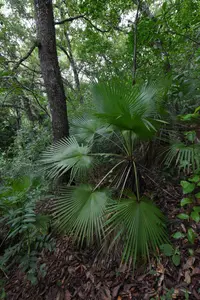
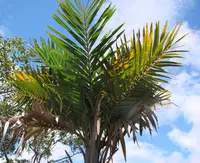
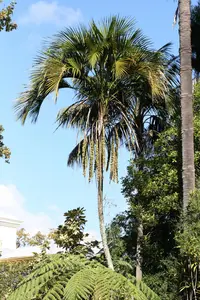
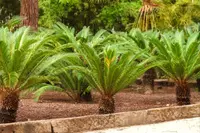
Cryosophila warscewiczii is a small to medium understory palm native to humid forests of Central America. It typically forms a single slender trunk topped with an airy crown of fan-shaped leaves.

The leaf undersides often appear pale or whitish, giving the plant a distinctive two-tone look. Growth is usually slow, which makes it easier to manage in sheltered gardens or large indoor spaces.

This palm prefers warm, stable conditions, filtered light, and evenly moist but well-drained soil. With the right sheltered, humid environment, it is reasonably straightforward to care for Cryosophila warscewiczii.

Main Plant Requirements

Care Difficulty

Hard Care

Light Preference

Partial Shade

Water Requirements

Regular Water

Temperature Preference

Tropical / Frost Sensitive

Hardiness Zone

10–11

Soil Texture

Loamy, Sandy, Organic-rich

Soil pH

Acidic (5.5–6.5), Slightly acidic (6.5–7.0)

Soil Drainage

Moist but well-drained

Fertilization

Light (every 4–6 weeks)

Get Personalized Care Plan

Scan your plant to receive care tips personalized for your specific plant

Available on iOS and Android

How to Care for the Cryosophila warscewiczii

This palm prefers bright, filtered light that mimics an understory tropical forest habitat.

  • Provide 3–5 hours of gentle morning sun with dappled or bright open shade the rest of the day, avoiding harsh midday sun.
  • Site Cryosophila warscewiczii under high tree canopy, shade cloth (40–60%), or on the east side of buildings to prevent leaf scorch.
  • In summer, protect from reflected heat and intense afternoon sun; in cooler months, slightly increase exposure to maintain compact growth.

This species prefers consistently moist but not saturated soil around its root zone.

  • Water when the top 3–5 cm of soil feel dry, aiming to re-wet the root zone evenly without creating standing water.
  • Use deep, infrequent watering that drains freely; sandy or loamy soil with organic matter helps prevent root rot while retaining some moisture.
  • In hot, dry periods, expect faster drying and possible leaf tip browning from underwatering; in cool seasons, reduce frequency and watch for yellowing, limp fronds as a sign of excess moisture.

This palm thrives in warm, frost-free conditions with only modest seasonal variation.

  • Aim for 70–85°F (21–29°C) for active growth, with brief highs up to 90–95°F (32–35°C) tolerated if soil moisture and shade are adequate.
  • Protect from cold; growth slows below 60°F (16°C) and damage is likely near 40°F (4°C), with freezing temperatures quickly injuring foliage.
  • In regions with cool winters, plant in a sheltered microclimate, such as near a south-facing wall, to buffer temperature swings and cold winds.

This species prefers moderately humid air and reacts if conditions are very dry.

  • Aim for 50–70% humidity to support healthy fronds and steady growth.
  • Tolerates brief dips to 35–40%, but prolonged dry air causes brown tips and crisping edges.
  • Increase humidity with grouped plants, a nearby humidifier, or a wide pebble tray that allows evaporation beneath the pot.

This palm requires loose, moist, and well-drained soil that mimics a forest floor.

  • Use a mix of 40% peat or coco coir, 30% fine bark, and 30% perlite or coarse sand for structure and drainage.
  • Target slightly acidic to neutral pH around 6.0–7.0 to keep nutrients available and roots active.
  • Organic matter such as composted bark improves moisture retention while keeping air spaces around the roots.
  • Avoid heavy clay, compacted mixes, or pots that stay waterlogged, which quickly lead to root rot in Cryosophila warscewiczii.

This palm can adapt to container culture when given a stable, well-drained setup.

  • Select a deep, heavy pot that resists tipping as the crown becomes tall and somewhat top-heavy.
  • Choose a container material with moderate porosity, such as thick terracotta, to reduce waterlogging but prevent extreme drying.
  • Raise the pot slightly on feet or blocks so drainage holes stay clear and runoff exits quickly instead of pooling under the base.

This understory palm grows slowly and needs modest feeding in cultivation.

  • Use a balanced liquid fertilizer around 10-10-10, diluted to 1/4–1/2 strength, for Cryosophila warscewiczii in active growth.
  • Feed every 4–6 weeks in spring and summer only, on already moist soil.
  • Skip fertilizer in autumn and winter, when growth is minimal.
  • Organic compost or a mild slow-release palm fertilizer can be used sparingly once per growing season.

Pruning needs are light and focus mainly on cleanliness and safety for this palm.

  • In late winter or early spring, remove only dead, yellowing, or broken fronds close to the trunk without cutting living tissue.
  • Trim brown leaflet tips with clean, sharp scissors, following the natural shape to reduce visual damage.
  • Avoid removing green fronds, as this reduces photosynthesis and slows growth of Cryosophila warscewiczii.
  • Disinfect pruning tools with alcohol before and after use to limit disease spread.

This palm dislikes frequent disturbance, so transplant only when clearly necessary.

  • Repot or transplant when roots circle the pot, emerge from drainage holes, or growth becomes noticeably slow.
  • Plan moves for late spring to early summer, when soil is warm and recovery is faster.
  • Typically shift to a container 1–2 in wider every 2–3 years, using a free-draining, organic-rich mix.
  • Water thoroughly before and after moving, keep roots shaded, and minimize root disturbance to limit stress on Cryosophila warscewiczii.

Propagation is usually done from seeds and requires warmth and patience.

  • Use fresh, cleaned seeds, as older seeds lose viability quickly.
  • Sow in a sterile, well-draining mix, just covered, and maintain 75–85°F with high humidity for several weeks to months.
  • Provide bright, indirect light and consistently moist, not waterlogged, substrate during germination.
  • Once seedlings produce several true leaves, pot individually and continue standard Cryosophila warscewiczii care instructions.

This tropical palm is sensitive to cold and needs protection in regions with cool winters.

  • Avoid exposure to frost; growth declines below about 50°F and tissue damage occurs near freezing.
  • For in-ground plants, apply a 5–8 cm mulch layer around the root zone, keeping it off the trunk.
  • Move container plants indoors or into a greenhouse before cold nights, giving bright, indirect light and slightly drier soil.

Care Tips

Protective trunk skirt

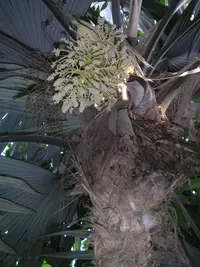
Leave the old, dry leaf bases on the lower trunk where space allows, as this natural skirt helps protect the soft stem from sunburn and physical damage, especially in young plants.

Careful root disturbance

When repotting or planting out, handle the root ball very gently and avoid breaking large roots, since this palm is slow to re-establish if the root system is heavily disturbed.

Wind exposure management

Site the plant where it receives some wind shelter or install temporary windbreak fabric for the first 1–2 years, as persistent strong winds shred the large fronds and slow overall growth.

Understory companion planting

Plant low, non-competitive groundcovers around the base to shade the root zone and reduce soil moisture swings, but keep a clear mulch ring of 10–15 cm around the trunk to prevent rot.

Cold event preparation

In regions with occasional cool snaps, prepare in advance by having frost cloth or breathable fabric ready to wrap the crown during short cold events, which can significantly reduce damage when growing Cryosophila warscewiczii near its minimum temperature tolerance.

Common Pests and Diseases

Palm aphids

This pest feeds on the undersides of fronds, sucking sap and causing yellowing, curling, and sticky honeydew that can lead to sooty mold on Cryosophila warscewiczii. Infestations are most common on soft new growth in warm, sheltered conditions.

Solution

Rinse fronds thoroughly with a strong but controlled stream of water, then spot-treat colonies with insecticidal soap or a light horticultural oil, ensuring full coverage of the undersides of leaves. Improve air movement and avoid excess nitrogen fertilization, which encourages soft, aphid-prone growth.

Scale insects

These insects appear as small, fixed bumps on leaf stalks and lower frond surfaces, gradually weakening the palm and causing patchy yellowing. Honeydew and sooty mold may develop on heavily infested plants.

Solution

Gently scrape or wipe individual scales off with a cotton pad dipped in isopropyl alcohol, then treat remaining populations with repeated applications of horticultural oil, focusing on stems and leaf bases. Reduce plant stress by maintaining stable moisture, avoiding overfertilization, and giving the plant bright, filtered light.

Spider mites

This pest thrives in warm, dry indoor air, causing fine stippling, dull fronds, and in severe cases, webbing between leaf segments. Symptoms include gradual bronzing and premature frond decline, especially on plants kept in low humidity.

Solution

Increase humidity around the plant, then wash both sides of the fronds with lukewarm water, using a soft cloth to remove mites and webbing. For persistent infestations, apply insecticidal soap or a miticide labeled for palms at 7–10 day intervals, making sure to reach the midrib grooves and leaflet bases.

Pink rot

This disease, caused by the fungus Gliocladium (now Nalanthamala) vermoesenii, produces brown, water-soaked lesions at the base of young fronds that may show salmon-pink spore masses. Affected spear leaves and emerging fronds often collapse or fail to open properly.

Solution

Remove and discard all infected fronds and spear tissue, keeping cuts dry and clean, and avoid overhead watering that keeps the crown wet. Improve drainage and airflow, keep the crown area as dry as possible, and in severe or valuable specimens, use a systemic fungicide labeled for palm pink rot as a preventative on new growth.

Leaf spot

This disease causes scattered tan to dark-brown spots or streaks on leaflets, sometimes with yellow halos, which can coalesce and reduce photosynthesis. Symptoms include faster decline of older fronds under persistently humid, shaded conditions.

Solution

Prune and discard the most affected fronds to remove inoculum, and water at the soil level rather than over the foliage to keep leaves dry. Provide better air circulation and slightly brighter filtered light, and if spotting progresses, apply a copper-based or other palm-safe fungicide according to label directions as part of broader Cryosophila warscewiczii care instructions.

Interesting Facts

Spiny root armor

This palm produces unusual root spines that grow upward along the trunk, forming a dense, defensive armor that protects it from herbivores and physical damage in its native forests.

Understory shade specialist

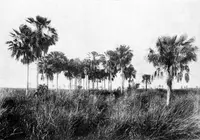
In the wild it grows as an understory palm in moist tropical forests from southern Mexico to Central America, adapted to low, filtered light rather than full sun exposure.

White-backed foliage

The leaves are green on top but often show a pale, almost whitish underside due to a thin layer of waxy or scaly tissue, which helps diffuse light in its shaded habitat and gives the crown a distinctive two-tone appearance.

Botan icon

Did you know?

The genus name Cryosophila refers to the pale, frosted look of the leaves and trunk, and C. warscewiczii is one of the best-known species showing this effect, which historically made it a subject of interest in early Central American palm collections and botanical gardens.

FAQs about Cryosophila warscewiczii

This palm grows slowly to moderately, often adding only 10–20 cm of trunk height per year under good conditions. Seedlings and juveniles establish root systems first, so visible height increase is quite gradual during early years.

Grow Healthy Plants with Botan Care

Keep your plants happy and healthy with plant identification, disease detection, and easy care guidance.


Botan plant care app — identify plants on mobile

Explore More Plants