Deep root mulching
Maintain a 5–8 cm ring of pine bark or leaf litter over the root zone, keeping it 3–5 cm away from stems, to stabilize soil moisture and mimic its native sandy pine flatwoods habitat.

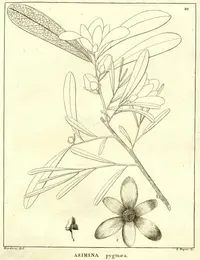
Dwarf pawpaw, Asimina pygmaea, is a small, deciduous shrub in the custard apple family, native to sandy habitats of the southeastern United States. It usually stays low and compact, often forming clumps rather than a single tall trunk.
The plant bears narrow leaves and distinctive maroon to purple spring flowers that are followed by small, fleshy fruits in suitable conditions. Its natural adaptation to dry, nutrient-poor, acidic soils makes it relatively tough once established but slow growing.
It prefers sun to light shade, moderate moisture, and well-drained, sandy soil, which guides how to care for Dwarf pawpaw in gardens or native plant landscapes.

Care Difficulty
Moderate Care

Light Preference
Full Sun

Water Requirements
Regular Water

Temperature Preference
Warm Climate

Hardiness Zone
8–10

Soil Texture
Sandy, Loamy, Organic-rich

Soil pH
Strongly acidic (4.5–5.5), Acidic (5.5–6.5)

Soil Drainage
Moist but well-drained

Fertilization
Minimal (feed rarely)
Scan your plant to receive care tips personalized for your specific plant
Available on iOS and Android
This small native shrub prefers bright, gentle light that mimics an open pine flatwoods edge.
This species prefers consistently moist, sandy soil but not prolonged saturation.
This subtropical shrub handles a range of outdoor temperatures but grows best with warm, stable conditions.
This species prefers moderate outdoor humidity and usually does not need special humidity management.
Asimina pygmaea grows best in loose, moist, slightly acidic, well-drained soil that still holds organic matter.
This species can be grown in containers, but pots must closely mimic its naturally sandy, free-draining habitat.
Asimina pygmaea is a slow-growing native that needs only light, targeted feeding in reasonably fertile soil.
Asimina pygmaea generally needs minimal pruning, mainly to maintain health and structure.
This species is usually grown in the ground; transplanting young Asimina pygmaea plants demands care due to its sensitive taproot.
Asimina pygmaea is most reliably propagated from seed, though it can be slow and requires specific conditions.
This species is fairly cold hardy in its native range and usually needs only modest winter attention in the ground.

Plant Health Check
Not sure what's wrong with your plant? Check your plant's health inside the app.
This species is naturally restricted to dry, nutrient-poor sandy habitats in the coastal plain of Florida, where it forms low, shrubby colonies among scrub and sandhill vegetation.
It produces small, elongated fruits only a few centimeters long that resemble tiny versions of common pawpaw, with similar creamy pulp but typically far less flesh and many large seeds.
Its nodding, maroon to purple flowers have thick, waxy petals and a faint, sometimes yeasty odor that attracts beetles rather than bees, reflecting an ancient pollination syndrome shared with magnolia relatives.

Genetic and floral studies indicate that this dwarf Florida endemic represents one of the more specialized lineages within the pawpaw genus, adapted to fire-influenced, open pine and scrub systems where few other tree-sized Annonaceae can survive long term.
Flowering is often reduced by juvenile age, poor cross-pollination, insufficient winter chill, or stress from transplanting and drought. Having more than one genetically different plant nearby and keeping roots undisturbed usually improves bud formation and fruit set.
Keep your plants happy and healthy with plant identification, disease detection, and easy care guidance.