threelobe beggarticks Care (Bidens tripartita)

Also known as: Trifid Bur-marigold, Three-parted Beggarticks, Three-pronged beggarticks, Leafy-bracted Beggarticks, Three-part Beggarticks
threelobe beggarticks

About threelobe beggarticks

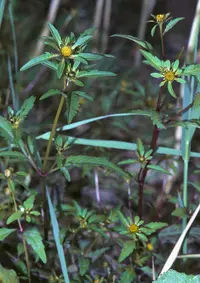
Threelobe beggarticks (Bidens tripartita) is an annual herb in the daisy family, often found in wet ditches, pond edges, and other marshy ground. It tends to form loose, upright clumps with branched stems and narrow, three-lobed leaves.

The small yellowish flower heads are not very showy but produce numerous barbed seeds that cling to clothing and animal fur. It is native to much of Europe and Asia and has naturalized widely in North America.

This species grows easily in disturbed, moist to wet soils with full sun to light shade, which can make how to care for threelobe beggarticks straightforward in suitable conditions.

Main Plant Requirements

Care Difficulty

Easy Care

Light Preference

Full Sun

Water Requirements

Aquatic

Temperature Preference

Cool Climate

Hardiness Zone

3–9

Soil Texture

Loamy, Silty, Organic-rich

Soil pH

Acidic (5.5–6.5), Slightly acidic (6.5–7.0)

Soil Drainage

Waterlogged tolerant

Fertilization

Minimal (feed rarely)

Get Personalized Care Plan

Scan your plant to receive care tips personalized for your specific plant

Available on iOS and Android

How to Care for the threelobe beggarticks

Bidens tripartita thrives in open, bright conditions typical of moist meadows and stream margins.

  • Provide 6–8 hours of direct sun daily; morning sun plus light afternoon shade reduces stress in hot summers.
  • Plant in a position that can tolerate light partial shade, but expect fewer flowers and leggier stems if sun drops below 4–5 hours.
  • In very hot regions, protect threelobe beggarticks from harsh late-afternoon sun to limit leaf scorch and moisture loss.

This species prefers consistently moist soil, reflecting its natural wetland habitats.

  • Aim for soil that stays evenly moist; in garden beds, allow only the top 1–2 cm to dry slightly before the next deep soak.
  • During hot, dry weather, monitor closely for wilting, dull leaves, or drooping stems, which indicate the need for more frequent watering.
  • Avoid standing water in compacted soils; yellowing, soft stems or a sour smell around roots suggest overwatering and poor drainage.

This annual performs best in mild to warm conditions and dislikes frost.

  • Optimal growth occurs around 65–80°F (18–27°C), which supports strong vegetative growth and steady flowering.
  • Plants tolerate brief cool spells down to about 40°F (4°C), but hard frost near 32°F (0°C) usually kills above-ground growth.
  • In hot periods above 90°F (32°C), flowering may slow; maintain soil moisture and, if possible, provide slight afternoon shade to reduce heat stress.

Humidity is rarely critical for Bidens tripartita, which tolerates a broad range of outdoor conditions.

Bidens tripartita prefers consistently moist, fine-textured soil with high organic content.

  • Use a loamy or silty soil rich in organic matter such as compost or well-rotted leaf mold.
  • Aim for slightly acidic to neutral pH, roughly 6.0–7.0, for optimal nutrient availability.
  • Ensure moisture retention but avoid stagnant water by combining heavier garden soil with some coarse sand.
  • Avoid compacted, airless, or very sandy soils that dry out rapidly and restrict root development.

This species can grow in containers if moisture and stability are carefully managed.

  • Choose a deep pot to allow its relatively extensive root system to anchor and access moisture evenly.
  • Use a heavy or wide-based container to prevent tipping as stems elongate and foliage mass increases.
  • Group containers together or set the pot inside a larger cachepot to slow surface evaporation during hot, windy periods.

Bidens tripartita is a fast-growing annual that benefits from light feeding on poor soils but often manages without fertilizer on richer ground.

  • Use a balanced liquid fertilizer (for example 10-10-10) at 1/2 strength for container or nutrient-poor plantings.
  • Feed every 3–4 weeks during the main growing season if growth appears pale or weak.
  • Incorporate compost into the topsoil instead of frequent liquid feeding for more natural nutrition.
  • Stop feeding in late summer to early fall so plants can complete their life cycle without soft, weak growth.

Pruning Bidens tripartita helps manage spread, control height, and keep stands tidy.

  • Best time for shaping cuts is late spring to mid-summer when plants are actively growing.
  • Remove dead, damaged, and badly crowded stems with clean hand pruners or sharp scissors.
  • Pinch or shear stem tips lightly to encourage bushier growth and more flowering shoots.
  • Cut back spent flowering stems before seeds mature if limiting self-seeding is desired.

Bidens tripartita is usually grown in ground or naturalized, so care focuses on transplanting seedlings rather than routine repotting.

  • Transplant young plants in spring after frost when seedlings have 2–4 true leaves.
  • Move plants if roots begin circling small cell trays or growth slows despite good moisture.
  • Handle the root ball gently, keeping soil intact, and water thoroughly after planting to reduce stress.
  • Space plants so roots can expand freely, avoiding the need for frequent disturbance later in the season.

Bidens tripartita is most commonly propagated from seed, which germinates readily in suitable conditions.

  • Sow fresh seeds in spring after frost, either directly in soil or in trays under bright light.
  • Use a light, well-drained seed mix and keep it evenly moist until germination.
  • Maintain temperatures around 65–75°F for faster, more uniform sprouting.
  • Thin or prick out seedlings once they have several true leaves, avoiding root damage during handling.

Bidens tripartita is an annual in most climates, so individual plants die back with hard frost and need no complex winter care.

  • Plant completes its life cycle by fall, leaving seeds that may overwinter in soil.
  • In cold regions, allow some seed heads to remain if natural reseeding is desired.
  • Mulch lightly only if aiming to protect soil structure and seed bank, not the parent plants.

Care Tips

Timely Deadheading

Remove spent flower heads before seeds form to extend the blooming period and prevent excessive self-seeding in surrounding beds or wetlands.

Seed Containment Strategy

In small gardens, place low mesh edging or fine netting around stands in late summer to catch the clinging seed heads and reduce unwanted spread while still allowing natural reseeding where desired.

Moisture Buffer Mulch

Apply a thin (2–3 cm) layer of fine bark or leaf mulch around the base to stabilize soil moisture and reduce mud splash that can spread fungal spores onto the foliage.

Rotational Bed Planning

Rotate planting areas every 2–3 years, especially in damp sites, to lower disease pressure and avoid buildup of soilborne pathogens associated with repeated cultivation in one spot.

Wildlife-Friendly Zoning

When caring for threelobe beggarticks near paths or outdoor seating, site the plants slightly away from high-traffic areas so the barbed seeds are less likely to cling to clothing and animal fur.

Common Pests and Diseases

Powdery mildew

This disease often appears on dense stands of plants growing in warm, dry conditions with poor air movement. Symptoms include white, powdery patches on leaves and stems that can reduce vigor and seed production.

Solution

Remove and destroy heavily infected plant material and avoid overhead watering to keep foliage dry. Thin or space plants to improve airflow and, if needed, apply a sulfur or potassium bicarbonate fungicide according to label directions as part of Bidens tripartita care instructions.

Rust

This disease shows as small yellow spots on upper leaf surfaces and orange to brown pustules on the undersides. Infected leaves may yellow and drop early, weakening the plant and reducing stand density.

Solution

Promptly remove and dispose of affected leaves and plant debris to reduce the source of spores. Improve spacing and airflow, avoid prolonged leaf wetness, and where infestations are severe, use a labeled rust fungicide in rotation to limit resistance development.

Aphids

These insects cluster on young shoots and flower stalks, sucking sap and excreting sticky honeydew that can attract sooty mold. Heavy populations stunt growth and may distort developing flower heads.

Solution

Wash colonies off stems and leaves with a firm stream of water and encourage natural predators such as lady beetles by avoiding broad-spectrum insecticides. For persistent infestations, treat young growth with insecticidal soap or a light horticultural oil, ensuring thorough coverage of undersides of leaves.

Leaf miners

These insects create pale, winding tunnels inside the leaves as larvae feed between the leaf surfaces. Damage reduces the photosynthetic area and can make foliage unattractive or prone to secondary infection.

Solution

Pinch off and discard mined leaves as soon as trails are noticed to remove larvae before they mature. In larger plantings, use floating row covers to prevent egg-laying by adult flies and, if necessary, apply a systemic insecticide specifically labeled for leaf miners, following local regulations.

Leaf spot

This disease presents as small brown to dark purple spots on leaves, sometimes with lighter centers, which can merge into larger dead areas. Severe infections cause premature leaf drop and reduce overall plant vigor.

Solution

Collect and destroy fallen and affected leaves to lower the level of infectious spores and avoid watering foliage late in the day. Rotate planting locations when possible, increase spacing for better airflow, and use a copper- or chlorothalonil-based fungicide if cultural measures do not keep the disease in check.

Interesting Facts

Mudflat colonization strategy

This annual species produces vast numbers of small, barbed achenes that readily adhere to animal fur and clothing, allowing it to rapidly colonize newly exposed mudflats and disturbed wet soils along rivers and ponds.

Indicator of nutrient enrichment

Dense stands often occur in wet sites enriched with nitrogen and phosphorus, so its presence can indicate eutrophication, a condition where excess nutrients accumulate in aquatic or semi-aquatic habitats.

Barbed seed morphology

The fruits carry 2–4 stiff awns with tiny backward-facing barbs, an adaptation known as epizoochory that is specialized for long-distance transport on passing animals and humans.

Botan icon

Did you know?

Pollen from this species has been used in palynology, the study of pollen grains, to help reconstruct past wetland environments and flooding patterns in river valleys, because its presence in sediment cores reliably signals shallow, nutrient-rich freshwater conditions.

FAQs about threelobe beggarticks

Young leaves and shoots are traditionally used as a wild vegetable or herbal tea in some regions, usually cooked to reduce bitterness. Only harvest from clean, uncontaminated sites and avoid areas exposed to pollutants, road runoff, or pesticides.

Grow Healthy Plants with Botan Care

Keep your plants happy and healthy with plant identification, disease detection, and easy care guidance.

Botan plant care app — identify plants on mobile

Explore More Plants