Weighted planting strips
Anchor stems with inert lead-free plant weights or ceramic rings at the base to keep the plant upright and rooted in place, especially in tanks with strong water movement.

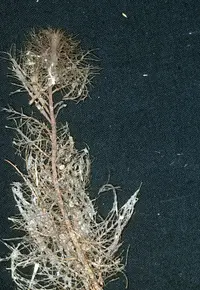
Myriophyllum heterophyllum, commonly called twoleaf watermilfoil, is an aquatic perennial often used in ponds, water gardens, and aquariums. It forms dense, feathery submerged foliage with emergent stems that rise above the water surface.
This species is native to parts of North America, where it grows in still or slow-moving freshwater such as lakes, reservoirs, and quiet streams. It spreads quickly in suitable conditions, which makes it useful for providing cover for fish but also means it can become invasive outdoors.
It prefers full sun to light shade, consistently wet or submerged conditions, and nutrient-rich substrates. Learning how to care for twoleaf watermilfoil starts with controlling its growth and preventing unwanted spread beyond its intended area.

Care Difficulty
Moderate Care

Light Preference
Full Sun

Water Requirements
Aquatic

Temperature Preference
Cold Hardy

Hardiness Zone
4–9

Soil Texture
Sandy, Loamy, Organic-rich

Soil pH
Acidic (5.5–6.5), Slightly acidic (6.5–7.0)

Soil Drainage
Waterlogged tolerant

Fertilization
Minimal (feed rarely)
Scan your plant to receive care tips personalized for your specific plant
Available on iOS and Android
This submerged aquatic plant needs stable, bright conditions for dense, healthy growth.
Myriophyllum heterophyllum is a rooted aquatic plant that depends on consistent, oxygenated water rather than soil moisture cycles.
This species prefers cool to moderately warm water and is sensitive to hard frost and extreme heat swings.
This aquatic species depends on consistent high humidity around emergent foliage and water surface.
This plant prefers saturated, soft, organic-rich substrate rather than typical potting soil.
This species is suitable for containers when grown in water-filled tubs, ponds, or aquaria.
This aquatic species grows in nutrient-rich water but responds well to modest, targeted feeding in controlled ponds or tanks.
Pruning keeps Myriophyllum heterophyllum dense, prevents surface matting, and maintains healthy growth in ponds or aquaria.
This species is usually grown rooted in pond substrate or contained baskets, so care focuses on gentle transplanting rather than frequent repotting.
Myriophyllum heterophyllum is commonly propagated vegetatively, which is more reliable than seed for home growers.
In much of its range this aquatic plant is cold hardy and overwinters in ponds with minimal intervention.

Plant Health Check
Not sure what's wrong with your plant? Check your plant's health inside the app.
This species can hybridize with some native North American watermilfoils, such as Myriophyllum pinnatum, which makes genetic identification and management of invasive populations more complicated for researchers and conservation agencies.
It spreads efficiently through stem fragments that break off and root, so a small piece moved by boats, fishing gear, or water currents can start a new population far from the original site.
In lakes and slow-moving rivers, it often forms thick underwater stands with a surface canopy that shades out native aquatic plants and alters habitat structure for fish and invertebrates.

This plant is listed as a prohibited or restricted invasive aquatic species in several US states, and in some regions even the sale, transport, or possession of live material is regulated because of its documented ability to rapidly dominate and disrupt freshwater ecosystems.
This species is highly invasive in many North American water bodies. It forms dense underwater mats that outcompete native plants, reduce oxygen levels, and interfere with recreation. Always follow local regulations and never release unwanted material into natural waterways.
Keep your plants happy and healthy with plant identification, disease detection, and easy care guidance.