Control Plant Spread
Regularly lift and thin out dense mats with a rake or net so they only cover about 50–70% of the water surface, which helps prevent oxygen depletion and keeps the remaining plants vigorous.


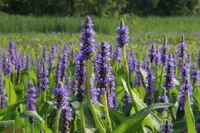
Common water hyacinth, Pontederia crassipes, is a free-floating aquatic perennial often grown in ponds, water gardens, and outdoor containers. It forms dense mats of glossy, rounded leaves held on bulbous, spongy leaf stalks that help it float. In warm conditions it produces attractive lavender to pale violet flower spikes above the foliage. Native to tropical South America, it has naturalized widely in warm regions and can become highly invasive outdoors. It grows very fast, which makes it easy to establish but requires regular control and removal. Those who want to learn how to care for common water hyacinth should know it prefers full sun, warm water, and nutrient-rich conditions.

Care Difficulty
Easy Care

Light Preference
Full Sun

Water Requirements
Aquatic

Temperature Preference
Tropical / Frost Sensitive

Hardiness Zone
9–11

Soil Texture
Silty, Organic-rich

Soil pH
Slightly acidic (6.5–7.0), Neutral (7.0)

Soil Drainage
Waterlogged tolerant

Fertilization
Light (every 4–6 weeks)
Scan your plant to receive care tips personalized for your specific plant
Available on iOS and Android
Pontederia crassipes grows fastest in strong light typical of open, sunny ponds or lakes.
This free‑floating aquatic relies on constant access to standing water rather than traditional soil watering.
This tropical floater thrives in warm water and air and declines quickly in cold or freezing conditions.
This floating aquatic species needs constant water contact rather than specific air humidity, so ambient humidity is rarely limiting.
This species grows best with roots submerged in waterlogged, organic-rich substrate rather than conventional potting soil.
This species is suitable for container growing in outdoor ponds, tubs, or water features.
This floating aquatic plant grows vigorously and usually needs only modest feeding in contained ponds or tubs.
Pruning helps manage Pontederia crassipes growth, maintain water quality, and encourage fresh foliage and flowers.
Management focuses on thinning and relocating plants rather than traditional repotting, since this species grows free-floating or in shallow baskets.
New plants are most often produced by vegetative offsets rather than from seed.
This tropical floating species is highly frost-sensitive and needs protection in cool climates with freezing winters.

Plant Health Check
Not sure what's wrong with your plant? Check your plant's health inside the app.
Common water hyacinth reproduces mainly through stolons, forming dense floating mats from genetically identical daughter plants in a short time under warm, nutrient-rich conditions.
Its swollen leaf petioles and spongy roots contain aerenchyma, a tissue with large air spaces that keeps the plant buoyant and able to float even when supporting dense foliage.
The roots absorb dissolved nutrients such as nitrogen and phosphorus very efficiently, which helps explain both its invasiveness and its experimental use in small-scale wastewater polishing systems.
In some tropical regions this species has been recorded forming floating mats thick enough to support the weight of small animals or a person briefly standing, illustrating how densely its interlocking roots and shoots can pack together on the water surface.
Poor flowering usually comes from low light, cool water, crowding, or nutrient-poor conditions. Ensure warm water, long bright days, and moderate nutrients. Remove old, dense rosettes so younger plants receive space, light, and water movement.
Keep your plants happy and healthy with plant identification, disease detection, and easy care guidance.