Sea Bindweed Care (Calystegia soldanella)

Also known as: Beach Morning-Glory, seashore false bindweed, Shore Bindweed
Sea Bindweed

About Sea Bindweed

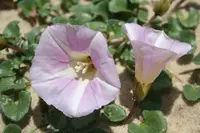
Sea bindweed, Calystegia soldanella, is a low-growing, salt-tolerant perennial often found on sandy beaches and coastal dunes. It forms spreading mats with thick, round to kidney-shaped leaves.

In late spring and summer, it produces funnel-shaped, pale pink to white flowers that open in sun and close in dull weather. Its creeping habit makes it useful for stabilizing very free-draining, sandy soils.

This species is adapted to full sun, wind, and salt spray, so it is generally tough if those conditions are met. Gardeners who want to care for Sea Bindweed should provide poor, sandy soil and avoid overwatering or rich fertilizers.

Main Plant Requirements

Care Difficulty

Moderate Care

Light Preference

Full Sun

Water Requirements

Moderate Water

Temperature Preference

Cool Climate

Hardiness Zone

6–9

Soil Texture

Sandy, Loamy, Organic-rich

Soil pH

Slightly acidic (6.5–7.0), Neutral (7.0)

Soil Drainage

Moist but well-drained

Fertilization

Minimal (feed rarely)

Get Personalized Care Plan

Scan your plant to receive care tips personalized for your specific plant

Available on iOS and Android

How to Care for the Sea Bindweed

This coastal perennial thrives in bright, open sites with strong light and cool roots.

  • Aim for 6–8 hours of direct sun, ideally morning to early afternoon, with some protection from harsh late-afternoon sun in hot inland areas.
  • Sea Bindweed tolerates light partial shade, but flowering and compact growth improve with more sun exposure, especially in cooler coastal climates.
  • In summer, monitor for leaf scorch in exposed, sandy sites; in cloudy or high-latitude seasons, ensure plants are not shaded by taller vegetation.

This dune-adapted species prefers slightly dry, fast-draining conditions rather than constant moisture.

  • Water only when the top 3–5 cm of sandy or gritty soil is dry, then soak thoroughly so water drains quickly away from the roots.
  • During the main growing season, watch foliage: dull, limp leaves suggest underwatering, while yellowing and soft stems can indicate overwatering or poor drainage.
  • In winter or cool, wet periods, reduce watering sharply and rely more on rainfall, as Calystegia soldanella is prone to root problems in saturated soils.

This coastal plant prefers mild, maritime conditions and tolerates a moderate temperature range.

  • Optimal growth occurs around 60–75°F (16–24°C), with best performance in areas that avoid very hot, dry inland summers.
  • Mature plants usually tolerate short dips to about 25°F (-4°C), but repeated hard frosts below this can damage stems and reduce spring regrowth.
  • In heat waves above 85–90°F (29–32°C), provide mulch to keep roots cool and reduce stress from hot, reflective sand or rock surfaces.

Humidity is rarely critical for this coastal species if soil moisture is appropriate.

  • Accepts a wide range of ambient humidity, roughly 30–70%, provided the root zone does not dry out completely.
  • Tolerates dry air better than dry soil; prolonged drought with hot, desiccating winds may scorch leaf edges.
  • Sea Bindweed shows humidity or moisture stress through wilting, dull leaves, and crispy margins rather than lush, turgid foliage.

This dune plant prefers very free-draining, sandy substrates that stay aerated even after heavy rain.

  • Use a sandy or sandy-loam mix, such as 50–70% sharp sand with the rest light garden loam and a small amount of compost.
  • Ensure rapid drainage; soil should drain within a few minutes after watering, with no standing water around the roots.
  • Aim for slightly acidic to neutral pH, around 6.0–7.0, which suits Calystegia soldanella in most outdoor conditions.
  • Avoid compacted clay, heavy peat-based mixes, or sites where water collects, as poor aeration encourages root rot and weak growth.

This species can be grown in containers outdoors if the pot mimics its naturally sandy, fast-draining root environment.

  • Choose a wide, shallow container to accommodate its spreading roots and stems without forcing them into tight vertical space.
  • Select a heavy or weighted pot in windy sites so trailing or scrambling growth does not tip the container over.
  • Fill the container with a very sandy, gritty mix so water runs through quickly, preventing the root zone from remaining saturated.

This coastal perennial usually needs minimal feeding, especially in sandy, nutrient-poor soils where it naturally thrives.

  • If growth is weak in poor soil, apply a light dressing of compost in early spring to support new shoots.
  • Use a diluted balanced NPK liquid fertilizer at 1/4–1/2 strength every 4–6 weeks during active growth if leaves yellow.
  • Avoid fertilizing in fall and winter when growth slows or plants are dormant to prevent soft, frost-prone tissue.
  • For Sea Bindweed in containers, consider a slow-release balanced fertilizer in spring, following label rates carefully.

Pruning Calystegia soldanella is mainly done to manage spread and keep plants healthy and tidy.

  • Cut back dead, damaged, or winter-burned stems in early spring using clean, sharp hand pruners.
  • Trim back overly long or crowded runners after flowering to control spread and maintain a compact mat.
  • Lightly thinning dense areas improves air flow, reducing risk of fungal problems and supporting leaf quality.
  • Avoid cutting into the root system; instead, focus on above-ground stems that are weak or poorly placed.

This species is more often transplanted in the ground than repotted, as it naturally forms a spreading coastal groundcover.

  • Transplant in early spring or early fall when temperatures are mild and plants are not under heat stress.
  • Move plants when roots circle the pot, growth stalls, or the mat becomes congested in a small container.
  • Lift with a wide root ball, keep roots shaded and moist, and replant at the same depth in well-drained sandy soil.
  • Water thoroughly after transplanting, then keep soil lightly moist for 1–2 weeks to limit transplant shock.

Calystegia soldanella is commonly propagated by division, root cuttings, or seeds, depending on growing conditions and goals.

  • Divide established clumps in early spring, keeping several buds and roots per division, then replant immediately.
  • Take 5–8 cm root cuttings in late winter, lay horizontally in sandy mix, and keep slightly moist until shoots form.
  • Sow fresh seeds in fall or early spring; a brief cold period can improve germination of this coastal species.
  • Provide bright light, good drainage, and moderate moisture to support strong root and shoot development in young plants.

This coastal perennial is fairly cold hardy in temperate climates and usually needs only light winter care in the ground.

  • In regions colder than its normal range, apply a 5–8 cm mulch layer over the root zone after the first hard frost.
  • Allow top growth to die back naturally; the underground structures carry the plant through winter.
  • For container-grown plants, move pots to a sheltered, unheated area where soil stays just above freezing and drains well.

Care Tips

Sand stabilization

Lightly mound clean, coarse sand around the crown after storms or heavy rain to re-cover exposed roots and help the plant re-anchor in loose coastal soil.

Low-profile training

Pin or peg young stems gently to the soil surface with biodegradable clips or bent wire to encourage a dense, low mat that better stabilizes dunes and suppresses weeds.

Salt and wind acclimation

When planting away from the shore, gradually expose plants to stronger wind and light salt spray over 2–3 weeks to build tougher foliage and reduce transplant shock.

Targeted weed control

Remove taller, fast-growing weeds by hand or with a narrow hoe before they shade runners, taking care not to disturb the shallow stolons that spread just under the surface.

Monitoring natural spread

Use shallow edging or buried root barriers 10–15 cm deep to confine lateral runners where necessary, while allowing open sections where growing Sea Bindweed is desired for groundcover.

Common Pests and Diseases

Leaf miners

This pest creates pale, winding tunnels inside the leaves, which can lead to browning and premature leaf drop, especially on young coastal plants.

Solution

Remove and dispose of heavily mined leaves to reduce the larval population, and encourage natural predators by avoiding broad-spectrum insecticides; if damage is severe, use a targeted, systemic insecticide labeled for leaf miners, applied according to local regulations and label directions.

Aphids

These insects cluster on young shoots and flower buds, sucking sap and causing distortion, sticky honeydew, and sometimes sooty mold on foliage.

Solution

Spray affected stems and leaves with a strong stream of water to knock off colonies, then treat remaining clusters with insecticidal soap or a light horticultural oil, repeating weekly until populations are low and new growth appears clean.

Powdery mildew

This disease forms a white, powdery coating on leaves and stems, which can cause yellowing and reduced vigor, especially when plants grow in dense, sheltered patches away from strong sea breezes.

Solution

Remove and discard heavily infected leaves to improve airflow, then apply a sulfur or potassium bicarbonate-based fungicide if needed, while also thinning or spacing stems so foliage dries quickly after dew or irrigation.

Rust

This disease shows as orange to brown pustules on the undersides of leaves, sometimes leading to yellow spotting on the upper surfaces and early leaf drop in stressed plants.

Solution

Cut off and dispose of affected leaves to limit spore spread, avoid overhead watering, and improve air circulation; if outbreaks recur, apply a rust-labeled fungicide in early spring on susceptible patches, following label instructions.

Interesting Facts

Sand-binding specialist

This coastal vine spreads with shallow but extensive rhizomes that help stabilize loose dune sand and reduce erosion along shorelines where it grows.

Salt and spray tolerant

The leaves have a thick, waxy cuticle and fleshy texture that reduce water loss and allow the plant to tolerate salt-laden winds and occasional seawater splash on exposed beaches.

Pollinator-friendly blooms

Its pale pink, funnel-shaped flowers open mainly in sunny conditions and are visited by bees and other insects that can navigate the narrow floral tube to reach nectar and transfer pollen.
Botan icon

Did you know?

This species often forms part of the foredune pioneer vegetation, meaning it is among the first plants to colonize newly formed or disturbed coastal sand, creating conditions that allow less hardy dune plants to establish later.

FAQs about Sea Bindweed

This species spreads steadily by creeping stems and underground rhizomes, especially in sandy, open soil. It can form dense mats, so use edging, buried barriers, or containers if garden space or nearby plants need protection.

Grow Healthy Plants with Botan Care

Keep your plants happy and healthy with plant identification, disease detection, and easy care guidance.

Botan plant care app — identify plants on mobile

Explore More Plants