


Early framework training
Install a strong trellis, pergola, or wires before planting and loosely tie young stems with soft ties, directing 2–3 main leaders along the structure so the vine develops a stable, easy-to-manage framework over time.

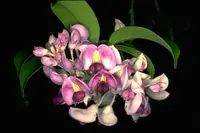
Native wisteria (Austrocallerya megasperma) is a vigorous evergreen climber from eastern Australia, valued for its dense foliage and cascading flower clusters. It twines strongly, so it needs a sturdy support such as a pergola, arbor, or fence.
The plant typically produces long racemes of lilac to purple pea-like flowers, followed by large seed pods. Its fast growth and heavy wood can make it demanding in small spaces but useful for covering structures.
In nature it grows in coastal rainforests and moist woodlands, so it prefers reasonably fertile, well-drained soil with regular moisture and good light. Understanding this natural habitat helps guide how to care for Native Wisteria in gardens and larger outdoor spaces.

Care Difficulty
Moderate Care

Light Preference
Partial Sun

Water Requirements
Moderate Water

Temperature Preference
Warm Climate

Hardiness Zone
9–11

Soil Texture
Sandy, Loamy, Organic-rich

Soil pH
Acidic (5.5–6.5), Slightly acidic (6.5–7.0)

Soil Drainage
Moist but well-drained

Fertilization
Minimal (feed rarely)
Scan your plant to receive care tips personalized for your specific plant
Available on iOS and Android
This vigorous climber prefers bright, direct light with some protection during the hottest part of the day.
This species prefers consistently moist, well-drained soil rather than extremes of dryness or saturation.
This subtropical climber thrives in mild, frost-free conditions with warm summers.
This vigorous climber grows well in typical outdoor humidity but benefits from slightly moist air in dry regions.
Austrocallerya megasperma prefers deep, moist, well-drained soil with good structure to support vigorous root and vine growth.
This species can be grown in large containers outdoors, but only with careful attention to support and root space.
Austrocallerya megasperma responds well to light, balanced feeding but can manage in poor soils once established.
Pruning helps keep Austrocallerya megasperma manageable and supports flowering on strong, well-lit growth.
This vigorous climber is usually grown in the ground, so focus on careful transplanting rather than frequent repotting.
Austrocallerya megasperma is most often propagated by semi-hardwood cuttings or seed when working with cultivated plants.
This species is best suited to mild, frost-free climates and needs some attention in colder areas.

Plant Health Check
Not sure what's wrong with your plant? Check your plant's health inside the app.
This species is a woody liana native to subtropical and tropical rainforests of eastern Australia, where it scrambles through the canopy rather than growing as a free-standing tree or shrub.
Its foliage serves as a natural larval host for the Richmond birdwing butterfly (Ornithoptera richmondia), an iconic Australian swallowtail with a restricted range, making the vine important in conservation plantings.
It produces pendulous clusters of pea-shaped, often violet to mauve flowers with a strong, sweet fragrance, reflecting its placement in the legume family (Fabaceae).
The seeds of this vine are enclosed in large, woody pods and are buoyant, allowing them to disperse via water along rainforest creeks and floodplains, which helps the species colonize new areas in riparian habitats.
This vine is moderately fast-growing, often extending 1–3 m per year once established. Growth accelerates in warm, frost-free climates with reliable moisture and a strong support, and slows in cooler or drought-prone conditions.
Keep your plants happy and healthy with plant identification, disease detection, and easy care guidance.

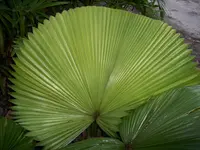
Licuala peltata
Licuala peltata
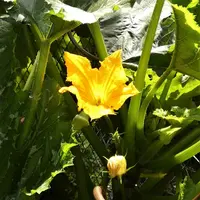
Cucurbita pepo var. giromontiina
Cucurbita pepo var. giromontiina
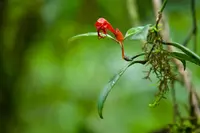
Aeschynanthus hookeri
Aeschynanthus hookeri
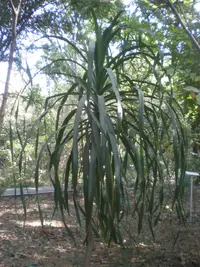
Beaucarnea goldmanii
Beaucarnea goldmanii
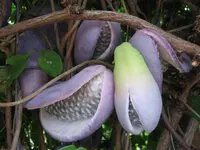
chocolate vine
Akebia quinata
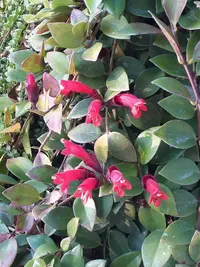
Aeschynanthus acuminatus
Aeschynanthus acuminatus
Alpinia formosana
Alpinia formosana
Jade vine
Strongylodon macrobotrys