Beaucarnea goldmanii Care

Beaucarnea goldmanii

About Beaucarnea goldmanii

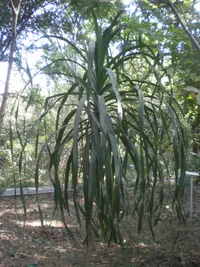
Beaucarnea goldmanii is a caudiciform shrub or small tree known for its swollen, bulb-like base that stores water and its narrow, arching leaves. It belongs to the Asparagaceae family and is related to the popular ponytail palm, though it is a distinct species.

This species is native to dry, rocky habitats in Mexico, where it endures strong sun and limited rainfall. Its drought tolerance and slow growth make it a long-lived, low-maintenance specimen when placed in bright light and a freely draining, gritty soil mix.

Because it adapts well to container culture and forgives occasional missed watering, many growers find it relatively straightforward to care for Beaucarnea goldmanii.

Main Plant Requirements

Care Difficulty

Moderate Care

Light Preference

Full Sun

Water Requirements

Low Water

Temperature Preference

Warm Climate

Hardiness Zone

9–11

Soil Texture

Sandy, Loamy, Rocky

Soil pH

Slightly acidic (6.5–7.0), Neutral (7.0)

Soil Drainage

Well-drained

Fertilization

Minimal (feed rarely)

Get Personalized Care Plan

Scan your plant to receive care tips personalized for your specific plant

Available on iOS and Android

How to Care for the Beaucarnea goldmanii

This dryland species prefers bright light and tolerates strong sun when acclimated.

  • Provide 6–8 hours of direct sun daily outdoors, ideally with morning sun and light afternoon shade in very hot, low-humidity climates.
  • Young or recently moved Beaucarnea goldmanii benefits from 2–4 weeks of filtered light or partial shade while leaves adapt, then gradually increase sun exposure.
  • Watch for pale, stretching leaves (too little light) or crisp brown patches on the sunniest side (sun scorch) and adjust position seasonally as sun angles change.

This caudiciform tree stores water in its swollen base and prefers dry intervals between soakings.

  • Water thoroughly, then allow the top 3–5 cm of soil to dry before watering again; in hot, actively growing periods this may mean roughly every 7–14 days in very free-draining ground.
  • In cooler months or when growth slows, extend dry periods; some established plants in arid climates may only need deep watering every few weeks if rainfall is low.
  • Use sharply draining, sandy or gritty soil so excess water runs off quickly; yellowing soft leaves, a mushy base, or sour odor indicate overwatering, while crispy leaf tips and wrinkling suggest underwatering.

This species prefers warm, arid conditions but copes with a moderate temperature range when kept dry.

  • Aim for 70–90°F (21–32°C) during active growth; short heat spikes up to 100°F (38°C) are tolerated if soil drains well and roots are not waterlogged.
  • Protect from cold below 40°F (4°C); brief dips to 35°F (2°C) may be survived if the plant is completely dry, but freezing causes tissue damage and potential death.
  • In regions with cool winters, shift plants to a sheltered, frost-free location and keep much drier, then gradually reintroduce higher moisture and full sun as temperatures rise in spring.

This species copes well with typical indoor humidity and rarely needs special adjustments.

  • Target 30–50% humidity; it stays healthy in most heated or air‑conditioned homes.
  • Dry air is usually tolerated, but very hot, drafty spots can increase leaf tip browning slightly.
  • If leaf tips brown and curl while soil moisture is correct, move the plant away from hot drafts rather than adding extra humidity.

Beaucarnea goldmanii prefers a very free‑draining, mineral‑lean substrate that mimics arid, rocky habitats.

  • Use a gritty, sandy mix such as 50–70% inorganic materials (pumice, coarse sand, small gravel, or perlite) combined with cactus potting mix.
  • Aim for a slightly acidic to neutral pH around 6.0–7.0, which supports nutrient uptake without encouraging excess leaf growth.
  • Ensure water drains through in seconds, not minutes; if it pools, increase coarse particles or reduce peat and compost content.
  • Avoid dense, peat‑heavy or clay‑based media that stay wet for long periods, as this encourages root and caudex rot.

This species adapts very well to container culture, including long‑term growth in large pots.

  • Choose a heavy, stable pot such as thick terracotta or stone to counterbalance the swollen base and prevent tipping in wind or on balconies.
  • Select a pot with a wide footprint rather than extra depth so the caudex can broaden while roots occupy the upper substrate layer.
  • Keep the container raised on feet or pot risers so drainage holes stay clear and runoff water leaves the saucer quickly after irrigation.

Nutrient needs are modest, so focus on light, controlled feeding during active growth.

  • Use a balanced, diluted liquid fertilizer (for example 10-10-10 at 1/4–1/2 strength) for Beaucarnea goldmanii in spring and summer.
  • Apply every 4–6 weeks only when the plant is actively growing and soil is slightly moist.
  • Skip feeding in fall and winter to respect its semi-dormant phase and prevent weak, etiolated growth.
  • Avoid heavy compost or rich slow-release pellets that can retain excess salts around the caudex roots.

Pruning needs are minimal and focus on cleanliness and safety rather than reshaping the plant.

  • Best time for light work is late spring to midsummer, when healing is fastest for Beaucarnea goldmanii.
  • Use clean, sharp bypass pruners to remove dead, diseased, or damaged leaves and spent flower stalks.
  • Trim only completely brown leaf tips, keeping the living green tissue to maintain photosynthesis and vigor.
  • Avoid cutting into the woody caudex or trunk since this can scar permanently and slow growth.

Container or landscape plants prefer stability, so repot or transplant only when clear stress signs appear.

  • Check for roots circling the pot, emerging from drainage holes, or noticeably slowed growth as signals to move Beaucarnea goldmanii.
  • Plan repotting or transplanting in late spring, using a very well-drained, gritty mix and a only slightly larger container.
  • Repot every 4–6 years at most, keeping the caudex high and avoiding burying it deeper than before.
  • Minimize root stress by watering 1–2 days before work, handling the root ball gently, and shading the plant for about 1 week afterward.

Propagation is possible but slow and usually carried out by experienced growers rather than casual owners.

  • Seed is the standard method; sow fresh seeds in late spring in a warm (75–80°F), bright, shaded location.
  • Use a sterile, gritty seed mix, keep it just barely moist, and provide good air movement to limit damping-off disease.
  • Offsets or basal pups, if present, can be divided carefully with a sterile knife and rooted in sandy substrate.
  • Maintain consistent warmth, low to moderate moisture, and bright indirect light for many months while young plants establish.

Cold sensitivity means winter conditions need some planning, especially for container or marginal-climate plantings.

  • Beaucarnea goldmanii is best kept above 40°F; prolonged exposure near freezing can damage foliage and young tissue.
  • Move container plants indoors or into a bright, frost-free greenhouse before the first hard frost.
  • In the ground, apply a dry mulch layer around the root zone while keeping the caudex exposed and free from wet mulch contact.
  • Reduce winter watering sharply so the soil stays mostly dry, lowering rot risk in cool conditions.

Care Tips

Container sizing strategy

Use a deep, heavy pot only 2–4 in wider than the caudex to stabilize the plant and avoid excess wet substrate, and step up just one size every 3–5 years rather than frequent repotting.

Rock mulch protection

Add a thin topdressing of coarse gravel or small stones around the base to keep the caudex dry at the surface, reduce fungus gnat activity, and improve airflow at the soil line.

Root health checks

During rare repots, trim only clearly dead or mushy roots with sterilized tools, then allow the root zone to air-dry for several hours before replanting to lower the risk of rot.

Gradual light hardening

When moving the plant outdoors or closer to strong light, increase exposure over 7–14 days to prevent leaf scorch, rotating the pot weekly so the trunk develops evenly and remains upright.

Low-maintenance pest monitoring

Inspect the leaf bases and caudex crevices monthly for scale or mealybugs and wipe with a cloth lightly moistened with diluted alcohol or insecticidal soap at the first sign of pests to simplify long-term Beaucarnea goldmanii care.

Common Pests and Diseases

Scale insects

This pest feeds on the plant’s sap, often clustering along the caudex, lower stem, and leaf bases, causing yellowing and weakened growth.

Solution

Wipe affected areas with a cotton pad dipped in 70% isopropyl alcohol and repeat weekly until no new insects appear, then maintain lower humidity and avoid overcrowding to reduce reinfestation risk; insecticidal soap or a horticultural oil spray can be used for heavier infestations, ensuring full coverage of crevices on the swollen stem.

Mealybugs

These insects hide in leaf bases and between offsets, producing white cottony clusters that weaken the plant and cause distorted new growth.

Solution

Remove visible clusters with a cotton swab dipped in 70% isopropyl alcohol, then apply insecticidal soap or a light horticultural oil spray to the leaf bases and around the caudex, repeating every 7–10 days until new growth emerges clean; isolating the plant during treatment helps prevent spread to other succulents when caring for Beaucarnea goldmanii.

Spider mites

This pest thrives in warm, dry indoor air, causing fine webbing, speckled leaves, and a dull, dusty appearance on the narrow foliage.

Solution

Rinse foliage thoroughly with a strong but gentle stream of lukewarm water to dislodge mites, then apply insecticidal soap to both upper and lower leaf surfaces and repeat every 5–7 days; raising humidity slightly and improving air movement helps limit reinfestation while keeping the soil dry between waterings.

Soft rot (bacterial)

This disease causes water-soaked, mushy spots on the caudex or lower stem, often with a foul odor and rapid tissue collapse after overwatering or cold, wet conditions.

Solution

Cut out all soft, discolored tissue with a sterile knife, allow the wounded area to dry and callus in a warm, airy spot, then replant in a fast-draining, gritty mix; reduce watering, avoid water sitting in the caudex crown, and keep the plant above ~55°F to prevent recurrence.

Leaf spot (fungal)

This disease produces small brown or tan spots with darker margins on older leaves, usually after prolonged moisture on foliage or poor air circulation around the rosette.

Solution

Remove and discard heavily spotted leaves, then improve spacing and airflow and avoid wetting the leaves during watering; if spots continue to spread, apply a labeled copper or sulfur-based fungicide according to directions, making sure excess moisture can evaporate quickly from the plant’s crown area.

Interesting Facts

Restricted Mexican range

This species is native to a limited area of dry forests and rocky slopes in Oaxaca, Mexico, where it grows in shallow, well-drained soils and experiences pronounced dry seasons.

Massive water-storing base

Like its close relatives, it forms a swollen trunk base (caudex) that stores water, but in this species the caudex can become especially large and irregularly shaped with age, helping it survive long droughts in its native habitat.

Late-blooming adult stage

Plants typically need to reach substantial age and size in the wild before producing tall, branched flower stalks with many small, cream-colored flowers that are pollinated by insects attracted to their nectar.

FAQs about Beaucarnea goldmanii

Brown leaf tips usually result from underwatering, low humidity, or accumulated salts from fertilizer and hard tap water. Check soil moisture, flush the pot occasionally, and avoid frequent small feedings or letting the root zone stay bone-dry.

Grow Healthy Plants with Botan Care

Keep your plants happy and healthy with plant identification, disease detection, and easy care guidance.

Botan plant care app — identify plants on mobile

Explore More Plants