Tank water management
Keep the central rosette (tank) filled with fresh, low-mineral water and flush it thoroughly every 2–3 weeks to prevent salt buildup, mosquito larvae, and bacterial slime.

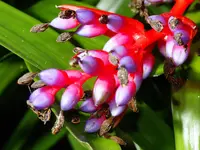
Aechmea weilbachii is a tropical bromeliad native to Brazil, where it grows as an epiphyte on trees in warm, humid forests. It forms a stiff rosette of narrow, arching leaves that can be lightly spined at the edges. From the center, it produces tall flower spikes with colorful bracts and long-lasting blooms, followed by decorative berries. This species stays relatively compact, which makes it suitable for containers and indoor displays. It is considered moderately easy to grow when its basic needs are met, and understanding how to care for Aechmea weilbachii helps keep it healthy in typical home conditions.

Care Difficulty
Moderate Care

Light Preference
Bright Indirect Light

Water Requirements
Moderate Water

Temperature Preference
Tropical / Frost Sensitive

Hardiness Zone
10–11

Soil Texture
Sandy, Loamy, Organic-rich

Soil pH
Acidic (5.5–6.5)

Soil Drainage
Well-drained

Fertilization
Light (every 4–6 weeks)
Scan your plant to receive care tips personalized for your specific plant
Available on iOS and Android
This bromeliad prefers bright, gentle light that mimics dappled forest conditions.
Watering should keep the central cup filled while allowing the potting mix to dry slightly between waterings.
This species thrives in consistently warm, frost-free conditions.
This bromeliad prefers moderately humid air and benefits from stable indoor humidity.
This species grows best in a very airy, fast-draining, organic-rich mix that mimics epiphytic conditions.
This bromeliad is well-suited to container growing due to its compact root system and rosette form.
This bromeliad benefits from light feeding during its active warm-season growth but does not need heavy fertilization.
Pruning focuses on hygiene and shaping rather than size control in this slow-growing bromeliad.
This species grows slowly and rarely needs frequent repotting, but timely transplanting keeps it stable and healthy.
Propagation relies mainly on offsets, which form naturally around the mother rosette after flowering.
This tropical bromeliad is frost-tender and needs mild, protected conditions in winter.

Plant Health Check
Not sure what's wrong with your plant? Check your plant's health inside the app.
This species is naturally found in Brazilian restinga, a coastal scrub habitat on sandy, nutrient-poor soils, where it often grows as an epiphyte on trees or on exposed rock outcrops.
In its native range, the long tubular pink to purple flowers supply abundant nectar and are regularly visited and pollinated by hummingbirds, which are attracted by both the color and flower shape.
The bright pink to reddish inflorescence bracts can remain colorful for several months, outlasting the individual flowers and providing an extended display that helps attract pollinators over time.

This species belongs to the subgenus Lamprococcus, which is characterized by glossy, often vividly colored inflorescences, and Aechmea weilbachii has been used as a parent in hybridization to pass on its long, arching, brightly colored flower spikes in ornamental bromeliad breeding.
Flowering often fails when the plant is immature, lacks sufficient light, or has not experienced a slight, safe drop in temperature. Old rosettes bloom once, then die back, so only well-developed offsets will flower.
Keep your plants happy and healthy with plant identification, disease detection, and easy care guidance.