laurel clockvine Care (Thunbergia laurifolia)

Also known as: Blue trumpet vine
laurel clockvine

About laurel clockvine

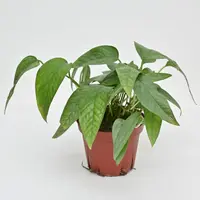
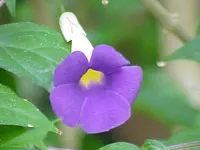
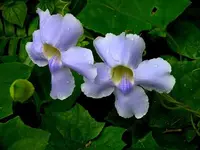
Laurel clockvine, Thunbergia laurifolia, is a vigorous tropical vine grown for its lush foliage and hanging clusters of tubular blue to lavender flowers. It often climbs fences, trellises, or pergolas and can form a dense green screen in warm climates.

This species is native to Southeast Asia, where it grows in humid, sunny locations. In gardens it is considered fast-growing and relatively tough, but it needs warmth and space to climb.

It is generally easy to grow when given bright light, regular moisture, and well-drained soil. Understanding how to care for laurel clockvine helps control its strong growth and keep flowering consistent.

Main Plant Requirements

Care Difficulty

Moderate Care

Light Preference

Full Sun

Water Requirements

Regular Water

Temperature Preference

Tropical / Frost Sensitive

Hardiness Zone

10–11

Soil Texture

Sandy, Loamy, Organic-rich

Soil pH

Acidic (5.5–6.5), Slightly acidic (6.5–7.0)

Soil Drainage

Moist but well-drained

Fertilization

Moderate (every 2–4 weeks)

Get Personalized Care Plan

Scan your plant to receive care tips personalized for your specific plant

Available on iOS and Android

How to Care for the laurel clockvine

This vigorous vine grows best with strong light and some protection from harsh afternoon sun.

  • Provide 6–8 hours of sun daily, with morning or late-afternoon sun and light midday shade, especially in hot summers.
  • Tolerate partial shade (around 4 hours of direct sun) but expect fewer flowers and more leafy growth on laurel clockvine.
  • In hot climates, use filtered light or dappled shade during peak midday hours to prevent leaf scorch and dry, crispy margins.

This fast-growing climber prefers evenly moist, well-drained soil rather than extremes of wet or dry.

  • Water when the top 3–5 cm of soil feel dry, soaking the root zone deeply, then allow excess water to drain away fully.
  • Reduce frequency in cooler seasons when growth slows, but do not allow the soil to dry out completely for long periods.
  • Watch for yellowing, soft leaves as a sign of overwatering and wilted, curling leaves with dry soil as a sign of underwatering in Thunbergia laurifolia.

This tropical vine thrives in warm, frost-free conditions typical of USDA zones 9–11.

  • Aim for 70–90°F (21–32°C) for strongest growth and flowering, with consistent warmth from late spring through early fall.
  • Protect from cold below 40°F (4°C), since foliage is damaged by light frost and the plant may die back if temperatures reach freezing.
  • During heat waves above 95°F (35°C), provide extra shade and soil moisture to limit stress, flower drop, and leaf scorch.

This vine prefers moderately high humidity but adapts to many home conditions if not kept too dry.

  • Aim for 50–70% humidity, as very dry air slows growth and encourages spider mites.
  • Crisping leaf edges, stalled new shoots, and frequent mite activity indicate humidity stress.
  • Increase humidity with a nearby humidifier, grouped plants, or a pebble tray, rather than frequent misting.

This species performs best in loose, airy, moisture-retentive but sharply drained soil.

  • Use a mix of roughly 50% peat- or coir-based potting mix, 25–30% compost, and 20–25% perlite or coarse sand for structure and drainage.
  • Aim for slightly acidic to neutral pH (6.0–7.0) to support nutrient uptake in Thunbergia laurifolia.
  • Structure soil so excess water drains within a few seconds of watering while the root zone stays lightly moist, not soggy.
  • Avoid compacted clay, poorly drained sites, or heavy mixes without coarse particles, which promote root rot and weak growth.

This vigorous climber is well suited to container growing outdoors in warm climates.

  • Choose a wide, deep, and heavy container to counterbalance tall, twining vines and prevent tipping in wind.
  • Select thick-walled clay or concrete if extra moisture loss and weight are needed to stabilize rapid top growth.
  • Position a sturdy trellis or rail firmly anchored in the container so stems can climb without pulling the pot off balance.

Thunbergia laurifolia responds well to moderate feeding during its active growing season.

  • Use a balanced liquid or water-soluble fertilizer (for example 10-10-10 or 20-20-20) diluted to 1/2 strength every 2–4 weeks in spring and summer.
  • Alternatively, apply a slow-release balanced granular fertilizer at the start of the growing season following label rates.
  • Supplement with a thin layer of compost over the root zone to improve soil structure and microbial activity.
  • In fall and winter, when growth slows, reduce feeding to very light applications every 6–8 weeks or pause entirely for laurel clockvine.

Thoughtful pruning keeps Thunbergia laurifolia vigorous, flowering well, and within bounds.

  • Plan main pruning for late winter or early spring before strong new growth begins.
  • Remove dead, diseased, or damaged stems first, then thin crowded vines to improve airflow and light penetration.
  • Shorten overly long or wayward shoots to control size and encourage branching and more flower-bearing tips.
  • Use clean, sharp bypass pruners and make cuts just above a node to promote healthy regrowth.

This vigorous climber is more often transplanted outdoors than kept long term in small containers.

  • Plan transplanting or upsizing containers in spring, when new growth starts and stress recovery is fastest.
  • Check for roots circling the pot, emerging from drainage holes, or declining vigor as signs that a larger container or in-ground spot is needed.
  • Move to a pot 1–2 in wider or an open, well-drained soil bed, keeping the root ball intact and planting at the same depth.
  • Water thoroughly after transplanting, shade from intense sun for 3–5 days, and maintain even moisture until strong new growth resumes.

Thunbergia laurifolia is commonly propagated from softwood or semi-ripe cuttings and seeds.

  • Take 8–12 in softwood or semi-ripe stem cuttings in late spring or summer, cutting just below a node and removing lower leaves.
  • Dip cut ends in rooting hormone, then insert into a moist, free-draining mix such as 1:1 perlite and peat or coco coir.
  • Maintain 70–80°F, high humidity, and bright indirect light; provide bottom heat if possible to speed rooting.
  • Sow fresh seeds in warm conditions, barely covered, keeping the medium evenly moist until germination in 2–4 weeks.

This tropical vine is frost-tender and needs protection in climates with cold winters.

  • In USDA zones below 10, grow in containers or lift young plants so they can overwinter in a bright, frost-free space above 50°F.
  • Where planted in mild climates, apply 5–8 cm of organic mulch around the root zone, keeping it slightly away from stems.
  • Before expected frost, reduce watering, remove weak or soft new growth, and avoid high-nitrogen fertilizer that encourages tender shoots.
  • If a light frost occurs, cut back blackened stems in late winter and allow new shoots to arise from surviving basal growth.

Care Tips

Early trellis training

Install a sturdy trellis or wire support before rapid spring growth, then loosely tie young vines every 20–30 cm to guide them upward and prevent a tangled, wind‑damaged mass later in the season.

Seasonal hard cutback

In mild climates, cut back older vines to 30–60 cm above ground at the end of winter to renew growth, reduce woody congestion, and increase flowering on vigorous new shoots.

Root zone mulching

Apply a 5–8 cm layer of organic mulch around but not touching the stems to keep roots cool, reduce weed competition, and stabilize soil moisture during hot periods.

Targeted pest scouting

Inspect the undersides of leaves and soft shoot tips every 1–2 weeks for aphids, whiteflies, or spider mites, and treat localized outbreaks early with a directed blast of water or a labeled insecticidal soap.

Container refresh cycle

For plants in large pots, replace the top 5–8 cm of exhausted potting mix with fresh, high‑quality mix each spring and gently loosen circling surface roots to support long‑term growing laurel clockvine in containers.

Common Pests and Diseases

Spider mites

This pest is common on sun-exposed vines and causes fine stippling, leaf bronzing, and webbing on tender shoots and undersides of leaves.

Solution

Rinse foliage thoroughly with a strong but gentle water spray, focusing on leaf undersides, and repeat every few days; in persistent cases, apply insecticidal soap or horticultural oil, and increase humidity and airflow to reduce stress that favors mites.

Aphids

These insects cluster on young shoots, buds, and flower stalks, sucking sap and causing curling, distortion, and sticky honeydew that can lead to sooty mold.

Solution

Prune heavily infested shoot tips, wash remaining colonies off with water, and if needed use insecticidal soap or a light horticultural oil, making sure to cover all soft new growth where aphids concentrate.

Whiteflies

This pest often builds up on dense, leafy sections of the vine, with adults flying up in small clouds when disturbed and nymphs feeding on leaf undersides, causing yellowing and reduced vigor.

Solution

Use yellow sticky traps to monitor and reduce adults, then treat leaf undersides with repeated applications of insecticidal soap or horticultural oil, and thin overly dense growth to improve light and air penetration.

Powdery mildew

This disease appears as white, powdery patches on leaves and young stems, leading to yellowing, leaf distortion, and premature leaf drop, especially in warm days with cool, humid nights.

Solution

Remove and discard affected leaves, increase spacing and airflow around the vine, avoid wetting foliage late in the day, and if needed apply a targeted fungicide labeled for powdery mildew on ornamentals following label directions.

Leaf spot

Symptoms include small water-soaked or brown lesions on leaves that can enlarge and merge, leading to tattered foliage in warm, humid weather or under frequent overhead watering.

Solution

Remove and destroy badly affected leaves, switch to watering at soil level, improve air movement around the plant, and in recurring cases use a copper-based or other labeled ornamental fungicide as part of broader Thunbergia laurifolia care instructions.

Interesting Facts

Vigorous tropical climber

This species is a fast-growing woody vine capable of extending many meters in a single growing season in warm, humid climates, where it can quickly cover trellises, fences, or trees.

Year-round flowering potential

In frost-free regions with high light and consistent moisture, it can produce its large lavender-blue, bell-shaped flowers over much of the year rather than in a short seasonal flush.

Escaped ornamental status

Originally introduced outside its native Southeast Asia as an ornamental, it has naturalized and is considered invasive in parts of tropical Africa, the Caribbean, and Pacific islands, where it can smother native vegetation.

Botan icon

Did you know?

In some regions this vine is studied for its remarkable tolerance of polluted environments, including its ability to grow vigorously and maintain foliage near roadsides and industrial areas, making it of interest for urban greening and phytoremediation research.

FAQs about laurel clockvine

This species is a vigorous twining vine that climbs by wrapping its flexible stems around supports such as trellises, fences, and wires. Without vertical support, it sprawls over nearby plants or the ground, forming a dense tangle.

Grow Healthy Plants with Botan Care

Keep your plants happy and healthy with plant identification, disease detection, and easy care guidance.

Botan plant care app — identify plants on mobile

Explore More Plants