bush clockvine Care (Thunbergia erecta)

Also known as: Bush Thunbergia, King's-mantle
bush clockvine

About bush clockvine

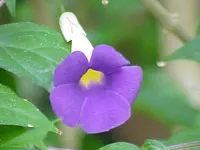
Bush clockvine, Thunbergia erecta, is a tropical flowering shrub or vine valued for its showy, tubular blooms, usually deep purple with a yellow throat. It has a compact, bushy habit when pruned, or can be trained on supports for a looser, climbing form.

This species is native to West Africa and is often grown in warm climates as a landscape or patio plant. It prefers bright light, moderate moisture, and well-drained soil, which makes it moderately easy to grow if basic needs are met.

Gardeners who learn how to care for bush clockvine often choose it for long seasonal flowering and its neat appearance in containers or small gardens.

Main Plant Requirements

Care Difficulty

Moderate Care

Light Preference

Partial Sun

Water Requirements

Regular Water

Temperature Preference

Tropical / Frost Sensitive

Hardiness Zone

10–11

Soil Texture

Sandy, Loamy, Organic-rich

Soil pH

Acidic (5.5–6.5), Slightly acidic (6.5–7.0)

Soil Drainage

Moist but well-drained

Fertilization

Moderate (every 2–4 weeks)

Get Personalized Care Plan

Scan your plant to receive care tips personalized for your specific plant

Available on iOS and Android

How to Care for the bush clockvine

Thunbergia erecta prefers bright, gentle sun with some protection from harsh midday exposure.

  • Provide 4–6 hours of direct morning sun or late-afternoon sun, with light shade at midday in hot climates.
  • Plant in a spot that gets bright, filtered light for the rest of the day; bush clockvine tolerates partial shade but flowers less in deep shade.
  • Watch leaves for stress: pale growth and weak flowering indicate too little light, while crisped, bleached patches signal excessive intense sun.

This species prefers evenly moist, well-drained soil rather than extremes of wet or dry.

  • Water when the top 3–5 cm of soil feels dry, soaking the root zone thoroughly, then let excess drain away.
  • Increase frequency in hot, active growth periods and reduce in cooler months, while never allowing the soil to stay soggy for more than 1–2 days.
  • Monitor for stress: yellowing, soft leaves and a sour soil smell suggest overwatering, while dull, curling, or wilting leaves indicate the need for deeper watering.

This plant grows best in warm, frost-free conditions with mild seasonal variation.

  • Aim for 65–85°F (18–29°C) for active growth, as sustained warmth supports flowering and healthy foliage.
  • Protect from cold: growth slows below 55°F (13°C), and the plant can be damaged or killed by frost near 32°F (0°C).
  • In hot periods above 90°F (32°C), provide light afternoon shade and ensure soil does not dry out completely to prevent heat stress.

This species prefers moderately humid air but usually tolerates typical indoor levels.

  • Aim for 40–60% humidity to keep foliage turgid and flowering steady.
  • Leaves curling, browning at tips, or buds dropping signal air that is too dry for bush clockvine.
  • Increase humidity with a nearby pebble tray, grouped plants, or a small humidifier rather than misting foliage.

This species grows best in loose, well-drained, organically enriched soil.

  • Use a loamy mix with roughly 50–60% peat or coco coir, 20–30% compost, and 20–30% perlite or coarse sand for drainage.
  • Maintain slightly acidic to neutral pH around 6.0–7.0 for balanced nutrient availability in Thunbergia erecta.
  • Incorporate coarse materials such as perlite, pumice, or fine bark to increase aeration and prevent compaction around the roots.
  • Avoid heavy clay, waterlogged spots, or mixes dominated by fine sand that hold either too much or too little water.

This species is well suited to container growing outdoors in warm climates.

  • Choose a broad, stable pot to support its shrubby, sometimes top-heavy form in wind or rain.
  • Select a container material that matches your climate, such as unglazed terracotta to dry the mix faster in humid regions.
  • Fill the pot with a free-draining mix and leave a few cm of headspace so surface water does not overflow before draining.

Thunbergia erecta responds well to moderate feeding during its active growing season for sustained flowering.

  • Use a balanced water-soluble fertilizer (around 10-10-10 or 20-20-20) diluted to 1/2 strength every 2–4 weeks in spring and summer.
  • Alternatively, apply a slow-release balanced granule at the start of the growing season, following label rates.
  • Supplement with a light layer of compost around the root zone once per year to improve soil structure and nutrients.
  • Reduce or stop feeding in fall and winter when growth slows, especially for bush clockvine kept in cooler or lower-light conditions.

Thoughtful pruning supports compact growth and abundant blooms on this shrub.

  • Carry out main pruning in late winter or very early spring before vigorous new growth starts on Thunbergia erecta.
  • Remove dead, diseased, or damaged stems first, then thin out crowded or crossing branches to improve light and airflow.
  • Shorten long, leggy shoots by up to 1/3 to maintain a bushy shape and encourage more flowering tips.
  • Use clean, sharp hand pruners and make cuts just above outward-facing buds or leaf nodes to guide future growth.

Container-grown plants and young shrubs appreciate occasional repotting or transplanting to maintain healthy roots.

  • Look for roots circling the pot, pushing through drainage holes, or for declining vigor as signs that a larger container or new spot is needed.
  • Plan major repotting or garden transplanting for spring, when active growth helps the root system recover faster.
  • Repot every 2–3 years into a container 2–5 cm wider, using a free-draining, rich mix and firming gently around the root ball.
  • Water thoroughly after moving, keep the plant shaded or in filtered light for 3–7 days, and avoid heavy pruning at the same time to limit stress.

This species is commonly propagated from softwood or semi-ripe cuttings for consistent flower and growth traits.

  • Take 8–12 cm non-flowering stem cuttings in late spring or summer, trimming just below a node and removing lower leaves.
  • Dip the cut end in a general-purpose rooting hormone to increase the chance of fast, even root development.
  • Insert cuttings into a sterile, moist, free-draining mix, then keep at 70–80°F with bright, indirect light and high humidity.
  • For seed propagation, sow fresh seed on the surface of a light mix, keep slightly warm and evenly moist, and expect variable seedlings.

This tropical shrub is frost-sensitive and needs protection in regions with cold winters.

  • In climates below USDA zone 9, grow in containers and move indoors or into a heated greenhouse before night temperatures drop near 40°F.
  • Provide bright, indirect light indoors and reduce watering so the soil stays just lightly moist, not saturated.
  • In mild climates, apply a 5–8 cm mulch layer around the root zone to buffer brief cool spells and conserve soil moisture.
  • Avoid heavy pruning late in fall, as new soft growth is more prone to cold injury and dieback during winter.

Care Tips

Strategic stem training

Pinch young tips and gently tie long shoots to a small trellis or fence to keep growth compact and upright, which encourages more branching and heavier flowering over the season.

Root zone mulching

Apply a 3–5 cm layer of fine bark or composted mulch around the base, keeping it a few cm away from stems, to stabilize soil moisture and protect the shallow roots from heat stress.

Container renewal schedule

For potted plants, refresh the top 3–5 cm of potting mix every spring and repot fully every 2–3 years to prevent root binding and maintain vigorous growth.

Targeted pest scouting

Inspect shoot tips and the undersides of leaves weekly for aphids, whiteflies, or spider mites, and treat early with a gentle insecticidal soap spray before infestations reduce flowering.

Cool-season protection

In regions with cool winters, move plants in containers to a bright, frost-free spot and trim back leggy stems slightly to maintain a compact framework for the next season when caring for bush clockvine.

Common Pests and Diseases

Spider mites

This pest is common on bush clockvine in hot, dry conditions and causes fine stippling, dull leaves, and thin webbing between stems and foliage.

Solution

Rinse foliage thoroughly with a strong but gentle stream of water, including leaf undersides, then repeat every few days; if populations persist, use horticultural oil or insecticidal soap, applied in the evening and repeated according to label directions while also increasing humidity and reducing heat stress to support recovery.

Whiteflies

These insects gather on the undersides of leaves, fly up in small clouds when disturbed, and cause yellowing, leaf drop, and sticky honeydew on Thunbergia erecta vines and bushes.

Solution

Shake branches to check for activity, then use yellow sticky traps to reduce adults and regularly wash leaf undersides; for ongoing outbreaks, apply insecticidal soap or a neem-based product in several rounds 5–7 days apart, making sure to cover new growth thoroughly.

Aphids

This pest often clusters on tender shoot tips and flower buds, sucking sap and leading to curling leaves, distorted growth, and sticky honeydew that can attract sooty mold.

Solution

Pinch or hose off heavily infested shoot tips, then spray affected areas with insecticidal soap, ensuring full coverage of soft new growth; repeat weekly until colonies are gone and encourage natural predators such as lady beetles by avoiding broad-spectrum insecticides as part of Thunbergia erecta plant care.

Leaf spot

This disease causes tan to dark brown spots on leaves, sometimes with yellow halos, which can merge and lead to premature leaf drop in humid or poorly ventilated conditions.

Solution

Remove and discard affected leaves, avoid overhead watering, and improve air movement around the plant; in persistent or severe cases, apply a copper or chlorothalonil-based fungicide according to label instructions, focusing on both upper and lower leaf surfaces.

Interesting Facts

Purple pigment pattern

The deep violet petals with a bright yellow throat are caused by concentrated anthocyanin pigments at the petal margins and carotenoid pigments in the tube, creating a strong visual contrast that is highly attractive to pollinating insects and butterflies.

Woody shrub vine

Unlike many Thunbergia species that are true climbers, this species forms a semi-woody, upright shrub with only modest twining at the tips, which is why it can be trained both as a compact bush and as a loose, arching vine in warm climates.

Tropical daylength response

In its native West African range, this species experiences relatively constant daylengths, so it can flower over a long season under stable warm conditions rather than showing a strict short-day or long-day flowering requirement.

Botan icon

Did you know?

This species was first described scientifically in the 19th century and named in honor of the Swedish naturalist Carl Peter Thunberg, a student of Carl Linnaeus, reflecting its early recognition in colonial-era botanical exploration of West African flora.

FAQs about bush clockvine

Lack of flowers often comes from insufficient light, low nutrients, or heavy pruning at the wrong time. Ensure strong light, use a balanced fertilizer during the growing season, and avoid cutting off new flower buds.

Grow Healthy Plants with Botan Care

Keep your plants happy and healthy with plant identification, disease detection, and easy care guidance.

Botan plant care app — identify plants on mobile

Explore More Plants