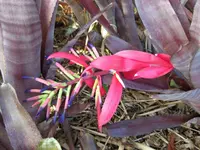
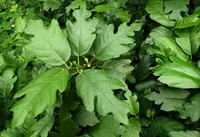
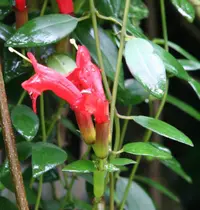
Black pearl Care (Majidea zanguebarica)

Also known as: velvet seed
Black pearl

About Black pearl

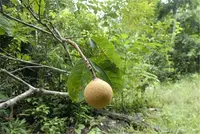
Black pearl (Majidea zanguebarica) is a small tropical tree grown mainly as an ornamental for its glossy foliage and distinctive seed pods. The pods dry and split to reveal shiny black seeds, which give the plant its common name.

In nature it occurs in coastal and lowland forests of East Africa, where it grows in warm, frost-free conditions. It tends to develop a tidy, rounded crown and can be maintained as a container specimen in suitable climates.

This species is moderately fast-growing and generally resilient if given warmth, good light, and protection from prolonged cold. Understanding how to care for Black pearl starts with providing well-drained soil and avoiding waterlogged conditions.

Main Plant Requirements

Care Difficulty

Moderate Care

Light Preference

Partial Sun

Water Requirements

Moderate Water

Temperature Preference

Tropical / Frost Sensitive

Hardiness Zone

10–11

Soil Texture

Sandy, Loamy, Organic-rich

Soil pH

Acidic (5.5–6.5), Slightly acidic (6.5–7.0)

Soil Drainage

Well-drained

Fertilization

Minimal (feed rarely)

Get Personalized Care Plan

Scan your plant to receive care tips personalized for your specific plant

Available on iOS and Android

How to Care for the Black pearl

Majidea zanguebarica prefers bright, filtered light with some direct sun in cooler hours.

  • Provide 4–6 hours of morning sun or late-afternoon sun, with light shade at midday in hotter climates to prevent leaf scorch.
  • Tolerates partial shade (2–4 hours direct sun) but may grow slower and flower less; dense shade leads to leggy, weak shoots.
  • For Black pearl in seasonal climates, give maximum sun in autumn–spring and protect from harsh summer afternoon sun with overhead or dappled shade.

This species prefers evenly moist but never waterlogged soil.

  • Outdoors in the ground, water when the top 3–5 cm of soil feel dry, using deep soaking rather than frequent light sprinkling.
  • Reduce watering in cool seasons when growth slows, but avoid letting soil dry hard or crack, which can stress Majidea zanguebarica.
  • Watch for yellowing, soft leaves and persistent wet soil as signs of overwatering, and for limp, dull leaves and dry, pulling-away soil as signs of underwatering.

This plant thrives in warm, frost-free conditions.

  • Ideal growth occurs at 68–86°F (20–30°C), with steady warmth supporting stronger shoots and flowering.
  • It is very sensitive to frost; growth is damaged near 32°F (0°C) and tissue injury can occur below 30°F (-1°C).
  • Short heatwaves up to about 95°F (35°C) are tolerated if soil moisture is maintained, but prolonged extreme heat with dry soil can cause leaf scorch and drop.

This species prefers moderately humid air but adapts to most household conditions if extremes are avoided.

  • Aim for 40–60% humidity for stable growth and better leaf condition in Black pearl.
  • Tolerates occasional drier air, but prolonged humidity below 30% can cause leaf-edge browning and tip dieback.
  • Increase humidity by grouping plants, placing the pot on a pebble tray with water below the pot base, or using a small room humidifier nearby.

Soil for this species should be loose, well-drained, and moderately fertile to support steady root and canopy growth.

  • Use a loamy, organic-rich mix such as 50% peat- or coco-based potting mix, 25% compost, and 25% perlite or coarse sand.
  • Ensure rapid drainage so water passes through within seconds, preventing prolonged saturation that can promote root rot.
  • Keep pH slightly acidic to neutral, roughly 6.0–7.2, which supports nutrient availability for Majidea zanguebarica.
  • Avoid heavy clay, compacted substrates, or mixes with fine peat only, and break up dense soil with perlite, bark chips, or coarse sand to improve aeration.

This tree is suitable for container growing when provided with a stable, well-drained pot.

  • Choose a deep, slightly wider-than-rootball container to allow strong vertical root development and reduce circling roots.
  • Select a heavier material such as ceramic or thick-walled terracotta to improve stability as the canopy becomes top-heavy.
  • Raise the container on pot feet or bricks so drainage holes stay clear and excess water escapes freely after heavy watering or rain.

Majidea zanguebarica benefits from moderate feeding when actively growing in containers or young landscape plantings.

  • Use a balanced liquid fertilizer (for example 10-10-10) at 1/2 strength every 4–6 weeks during spring and summer.
  • Alternatively, apply a slow-release granular fertilizer in early spring, following label rates for woody ornamentals.
  • For in-ground trees, a light ring of compost over the root zone once a year is usually enough.
  • Reduce or stop feeding in fall and winter, when growth slows and the plant is near dormancy; this supports proper Black pearl indoor care.

Pruning Majidea zanguebarica is mainly done to maintain structure and remove problem wood.

  • Carry out light pruning in late winter or very early spring before new growth begins.
  • Remove dead, diseased, or crossing branches first, using clean, sharp bypass pruners or loppers.
  • Thin congested interior shoots to improve airflow and light penetration, keeping the natural rounded crown.
  • Shorten overly long branches to shape the tree, cutting back to a healthy outward-facing bud or side shoot.

This species is usually grown as a small ornamental tree, so transplanting young specimens correctly is important.

  • Transplant in spring when temperatures are mild and the tree is just starting active growth.
  • Look for circling roots, crowded containers, or slowed growth as signs a potted plant needs a larger pot or open ground.
  • Move up only 1–2 pot sizes or into a well-drained planting hole, keeping the root flare at soil level.
  • Water thoroughly after planting, shade for a few days if sun is intense, and keep soil evenly moist to limit root stress.

Majidea zanguebarica is most often propagated from fresh seed under warm conditions.

  • Collect ripe seeds from mature pods and sow them in spring for the best germination.
  • Scarify hard seed coats lightly with sandpaper, then soak seeds 12–24 hours in lukewarm water.
  • Sow in a free-draining mix, keep at 70–80°F with consistent moisture, and provide bright, indirect light.
  • Stem cuttings are less reliable but can root in warm, humid conditions using semi-ripe wood and a rooting hormone.

This tropical tree is frost-sensitive and needs protection in regions with cold winters.

  • In USDA zones colder than 10, grow in containers and move indoors or into a heated greenhouse before nights drop below 40°F.
  • For in-ground plants in marginal climates, mulch the root zone with 5–8 cm of organic material, keeping it away from the trunk.
  • Use frost cloths or similar covers during brief cold snaps to limit leaf and young stem damage.

Care Tips

Early structural training

Select 1 strong central leader while the plant is young, remove competing vertical shoots, and stake lightly if needed so the tree develops a stable, single-trunk framework that will better support future canopy and pods.

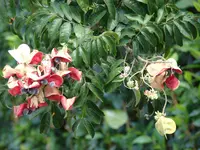
Container root management

If grown in a pot, slip the plant out of its container once a year to check for circling roots, then lightly tease or prune them and repot one size up to prevent root binding and improve long-term vigor.

Salt and fluoride caution

Use low-salt, fluoride-free water sources where possible, and occasionally flush the potting mix thoroughly so dissolved salts do not accumulate and burn the fine feeder roots.

Targeted wind protection

In exposed sites, position temporary windbreaks or grow near a solid fence so young plants are shielded from persistent strong winds that can snap flexible branches and desiccate foliage.

Pollination and seed set

For those growing Black pearl primarily for its ornamental pods, encourage pollinators by planting nectar plants nearby outdoors, or gently hand-brush between flowers indoors to improve pollination and pod production.

Common Pests and Diseases

Scale insects

This pest attaches to stems and leaf undersides, sucking sap and causing yellowing, stunted growth, and sticky honeydew that can attract sooty mold. Infestations are more common on container-grown trees in warm, sheltered spots.

Solution

Wipe stems and leaves with a cloth or cotton swab dipped in diluted alcohol or insecticidal soap, repeating every 7–10 days until new crawlers stop appearing. For outdoor specimens, horticultural oil sprays applied thoroughly to branches and leaf undersides help smother scale; improve light and airflow to reduce reinfestation risk.

Mealybugs

These insects form white, cottony clusters in leaf axils and along young stems, weakening the plant by sap feeding. Symptoms include distorted new growth, sticky residue, and sometimes sooty mold on leaves.

Solution

Isolate the plant and physically remove visible colonies with a cotton swab dipped in alcohol, then wash foliage with lukewarm water and mild insecticidal soap. Inspect weekly and repeat treatments, paying special attention to hidden areas around leaf bases and branch crotches, which is essential for good Majidea zanguebarica plant care in pots or conservatories.

Spider mites

This pest thrives in hot, dry indoor or greenhouse conditions, causing fine stippling on leaves, dull foliage, and delicate webbing between leaf stalks and stems. Heavy infestations can lead to partial defoliation on younger container plants.

Solution

Rinse the plant thoroughly with a firm stream of water, especially the undersides of leaves, to remove mites and webbing, then increase ambient humidity and avoid very dry air. Use repeated applications of insecticidal soap or horticultural oil at 5–7 day intervals, ensuring full coverage of leaf undersides until new damage stops appearing.

Leaf spot

This disease causes scattered brown or dark olive lesions on leaves, sometimes with a yellow halo, which may coalesce and lead to premature leaf drop. Symptoms include more severe spotting in plants grown in dense, humid, poorly ventilated conditions.

Solution

Remove and discard affected leaves and any fallen debris around the base to reduce the source of spores, then water at soil level to keep foliage dry. Improve spacing and airflow, avoid overhead watering, and if spotting continues, apply a copper-based or other broad-spectrum fungicide labeled for ornamental trees according to label directions.

Interesting Facts

Black pearl seed display

The woody pods split open to reveal glossy black seeds surrounded by bright red-orange inner walls, giving rise to the ornamental name black pearl tree.

Pinnate, airy foliage

Its leaves are finely divided and pinnate, with many small leaflets that create a light, fern-like canopy unusual among many other small ornamental trees.

Eastern African origin

This species is native to coastal and lowland regions of East Africa, including Tanzania and Mozambique, where it grows in warm, frost-free habitats.

Botan icon

Did you know?

In some parts of East Africa, the distinctive dried pods and shiny black seeds are collected and used in simple decorative crafts and ornaments, valued mainly for their striking color contrast rather than for fragrance or flavor.

FAQs about Black pearl

Lack of flowers usually comes from insufficient light, too much nitrogen fertilizer, or a plant that is still immature. Provide strong light, avoid high‑nitrogen feeds, and allow several years for seed‑grown plants to begin flowering reliably.

Grow Healthy Plants with Botan Care

Keep your plants happy and healthy with plant identification, disease detection, and easy care guidance.

Botan plant care app — identify plants on mobile

Explore More Plants