weeping beech Care (Fagus sylvatica)

Also known as: european beech, common beech, Beech, copper beech, Weeping Beech
weeping beech

About weeping beech

The weeping beech is a dramatic, pendulous form of Fagus sylvatica, a long-lived deciduous tree valued for its sculptural shape and dense canopy. It forms arching, cascading branches that often sweep to the ground, creating a curtain-like silhouette and deep shade beneath. Leaves are typically smooth, oval, and rich green, turning coppery in autumn. This tree is native to Europe but is widely planted in temperate landscapes as a focal specimen. It grows slowly to moderately and needs space, so it suits larger gardens and parks better than small yards. Once established, it is relatively low-maintenance, but successful care for weeping beech depends on planting it in well-drained soil with consistent moisture and good light exposure.

Main Plant Requirements

Care Difficulty

Moderate Care

Light Preference

Partial Sun

Water Requirements

Moderate Water

Temperature Preference

Cold Hardy

Hardiness Zone

4–7

Soil Texture

Loamy, Clay, Organic-rich

Soil pH

Acidic (5.5–6.5), Slightly acidic (6.5–7.0)

Soil Drainage

Moist but well-drained

Fertilization

Minimal (feed rarely)

Get Personalized Care Plan

Scan your plant to receive care tips personalized for your specific plant

Available on iOS and Android

How to Care for the weeping beech

Fagus sylvatica thrives in bright, open sites with protection from extreme afternoon heat.

  • Provide 4–6 hours of direct morning sun with light or dappled shade in the afternoon; weeping beech cultivars scorch more easily in intense sun.
  • Trees tolerate light shade, but dense shade reduces leaf density and slows growth; choose a site with at least bright, open sky exposure.
  • Newly planted trees benefit from temporary shade cloth in very hot summers to prevent leaf scorch, especially on south- and west-facing sides.

This species prefers evenly moist, cool soil that never stays waterlogged.

  • Before watering young or newly planted trees, check that the top 3–5 cm of soil has started to dry, then irrigate deeply to soak the root zone.
  • In the first 2–3 growing seasons, water during dry spells longer than 5–7 days; established Fagus sylvatica tolerates short droughts on deep, well-structured soils.
  • Yellowing leaves and soft, dark roots suggest overwatering or poor drainage, while crisp browning at leaf edges often indicates prolonged soil dryness.

This temperate tree is hardy and adapted to cool to mild climates with distinct seasons.

  • Active growth occurs best around 55–75°F (13–24°C), with cooler nights supporting healthy leaf and bud development.
  • Mature trees generally tolerate winter lows to about -20°F (-29°C); young trees benefit from mulch to buffer soil temperature swings.
  • In hot regions, extended periods above 90°F (32°C) can stress foliage; combine afternoon shade and consistent soil moisture to reduce heat and drought damage.

Humidity is rarely a limiting factor for European beech, including weeping beech, in outdoor landscapes.

European beech prefers cool, moist, well-structured soil for stable long-term growth.

  • Use deep, loamy soil with a mix of mineral particles and organic matter that holds moisture but does not stay waterlogged.
  • Aim for slightly acidic to neutral pH, roughly 5.5–7.0, avoiding very alkaline or strongly acidic conditions.
  • Incorporate 20–30% compost and well-rotted leaf mold to improve moisture retention and soil biology before planting Fagus sylvatica.
  • Avoid compacted, heavy clay or shallow, stony ground; if drainage is slow, amend with sharp sand or fine gravel to increase aeration.

European beech can be grown in containers only for temporary or bonsai-style use, not as a long-term full-size tree.

  • Select a wide, heavy container to prevent tipping as the trunk thickens and the crown becomes denser.
  • Use a deep pot to give the taproot and structural roots enough vertical space to anchor and reduce drought stress.
  • Choose a thick-walled ceramic or clay pot to moderate root temperature and reduce rapid moisture swings compared with thin plastic.

Fagus sylvatica, including weeping beech forms, grows well in reasonably fertile soil and usually needs only light feeding.

  • Use a balanced slow-release fertilizer (around 10-10-10) or well-rotted compost once in early spring for established trees.
  • Apply fertilizer only during the active growing season, avoiding midsummer to late fall to prevent soft, frost-tender growth.
  • Use a low to moderate rate, or half-strength of the manufacturer’s recommendation, focusing on the root zone just beyond the trunk flare.
  • Skip fertilization in winter dormancy unless soil tests show clear nutrient deficiency, then adjust with targeted amendments.

Pruning Fagus sylvatica is mainly for structural safety and to maintain a balanced crown, not for heavy shaping.

  • Schedule main pruning in late winter to very early spring before budbreak, avoiding heavy cuts in late summer or fall.
  • Remove dead, diseased, or storm-damaged branches first, then thin crossing, rubbing, or inward-growing shoots.
  • Make clean cuts with sharp bypass pruners or a pruning saw, keeping the branch collar intact to support healing.
  • Light thinning can improve airflow and light penetration, helping maintain strong framework branches and long-term tree stability.

Fagus sylvatica is usually grown in the ground; transplanting young trees carefully is more common than container repotting.

  • Plan major transplanting for late fall or very early spring when the tree is dormant and soil is workable.
  • Look for signs such as circling roots in containers or poor growth in cramped planting sites before deciding to move a tree.
  • Lift with as large a root ball as practical, keeping roots shaded and moist, and replant at the same soil depth in a wider hole.
  • Water thoroughly after transplanting, then maintain even moisture and a 5–8 cm mulch layer to reduce root stress and encourage re-establishment.

Propagation of Fagus sylvatica is slow and often handled by nurseries, but home growers can raise plants mainly from seed or layering.

  • Collect ripe nuts in fall, then cold-stratify for 8–12 weeks at about 34–41°F before sowing in a well-drained medium.
  • Sow seeds shallowly outdoors in a protected seedbed or in pots kept cool and evenly moist for gradual germination.
  • Use simple ground layering in spring on low, flexible branches, burying a wounded section and securing it until roots form.
  • Provide partial shade, consistent moisture, and protection from rodents around young seedlings and layered shoots during their first years.

Mature Fagus sylvatica trees are cold hardy in much of the US and generally need minimal winter care once established.

  • Apply a 5–8 cm mulch layer over the root zone in late fall, keeping it a few cm away from the trunk to moderate soil temperature.
  • Shelter young or newly planted trees from drying winter winds with windbreak fabric or temporary fencing where exposure is severe.
  • For container-grown specimens, move pots into an unheated garage or against a sheltered wall and insulate containers to prevent root freeze-thaw cycles.

Care Tips

Early leader selection

In the first 3–5 years, choose a single strong central leader and remove competing uprights in late winter to build a stable framework and reduce future storm damage.

Brace drooping limbs

On young trees with very pendulous branches, use broad, soft ties and sturdy stakes or frames to lift and space key limbs for 2–3 seasons, preventing breakage and creating a more open, walk-under canopy.

Protect shallow roots

Maintain a wide, permanent mulch ring 5–10 cm deep and avoid tilling or heavy foot traffic under the canopy because beech roots are shallow and easily damaged, which can trigger decline years later.

Copper beech scale monitoring

Inspect twigs and branches yearly for white woolly patches and sooty mold, and if found, consult a certified arborist about managing beech scale and associated bark disease before it becomes severe.

Drought and heat preparation

In late spring, before summer heat, apply a fresh mulch layer, check irrigation coverage, and reduce nearby lawn competition so the tree is better buffered against moisture stress when growing weeping beech in warmer regions.

Common Pests and Diseases

Beech woolly aphid

This pest forms white, woolly clusters on leaves and young twigs, causing leaf curling, honeydew, and sooty mold. Symptoms include sticky residue under the tree and distorted new growth.

Solution

Prune and dispose of heavily infested twigs, then spray reachable foliage with a strong stream of water to dislodge colonies. For persistent infestations, use horticultural soap or a light horticultural oil applied thoroughly to the underside of leaves and young shoots, and encourage natural predators such as lady beetles by avoiding broad-spectrum insecticides.

Beech scale

This pest appears as small, white, cottony or waxy spots on bark, weakening the tree and creating entry points for fungal infection. Symptoms include roughened bark, dieback of small branches, and general decline over time.

Solution

Brush or wash small trees to remove scales from bark, and improve tree vigor with proper watering and mulching. On manageable specimens, apply horticultural oil during the crawler stage according to label directions, and monitor closely because controlling beech scale is a key step in Fagus sylvatica care where beech bark disease is present in the region.

Beech bark disease

This disease is a complex involving beech scale insects and fungi (often Neonectria species), leading to cankers, cracked bark, and progressive dieback. Symptoms include sunken lesions, rough bark patches, and dead branches in the crown.

Solution

Remove and destroy severely affected branches to reduce fungal inoculum and safety hazards, and avoid wounding the bark. In areas with known disease pressure, manage beech scale populations on susceptible trees, prioritize overall tree health through correct watering and soil care, and consult a certified arborist for large trees showing extensive cankers or structural weakness.

Powdery mildew

This disease causes white, powdery patches on leaves, often late in the season, leading to reduced vigor and premature leaf drop on young or stressed trees. Symptoms include dull, mottled foliage and mild distortion of affected leaves.

Solution

Improve air circulation by thinning crowded branches and avoiding dense plantings close to the canopy. Rake and remove fallen leaves, water at soil level rather than over the foliage, and, in repeated severe cases on ornamental specimens, apply a labeled fungicide early in the season according to local guidelines.

Leaf scorch

This issue is a physiological disorder where leaf edges turn brown and dry, often starting on outer or upper branches, typically triggered by drought, heat, wind, or high-salt or compacted soils. Symptoms include browning margins, curled leaves, and in severe cases partial defoliation in late summer.

Solution

Increase soil moisture consistency by deep, infrequent watering during dry periods and maintaining a 5–8 cm layer of mulch over the root zone, keeping it away from the trunk. Avoid road salt exposure where possible, relieve soil compaction, and site or prune trees to reduce exposure to intense afternoon sun and drying winds, especially for young or newly transplanted specimens.

Interesting Facts

European climax forest

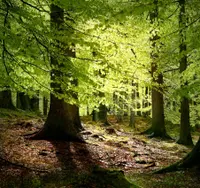
In much of temperate Europe, Fagus sylvatica naturally forms near-monodominant beech forests that represent the climatic climax vegetation, often outcompeting many other tree species in stable, undisturbed conditions.

Shallow, plate-like roots

European beech develops an extensive but shallow root system with plate-like lateral roots that make mature trees sensitive to soil compaction and drought but very effective at capturing nutrients from rich surface soils.

Low-light leaf strategy

This species produces shade-tolerant leaves with thin blades and high chlorophyll content, enabling seedlings and saplings to persist for years in very low light beneath the dense beech canopy until a gap opens.

Botan icon

Did you know?

Ancient European beech woodlands have been recognized as part of the UNESCO World Heritage serial site for primeval beech forests, highlighting their outstanding role as living archives of post-glacial forest evolution in Europe.

FAQs about weeping beech

This tree grows slowly, usually about 20–30 cm per year once established. Growth is even slower in dry, compacted, or nutrient-poor soil. Plan for its mature size early, as it is not easily moved later.

Grow Healthy Plants with Botan Care

Keep your plants happy and healthy with plant identification, disease detection, and easy care guidance.

Botan plant care app — identify plants on mobile

Explore More Plants