Albizia niopoides Care

Albizia niopoides

About Albizia niopoides

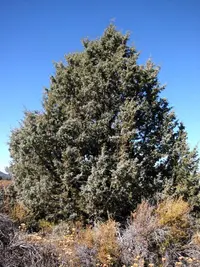
Albizia niopoides is a fast-growing leguminous tree known for its fine, feathery foliage and broad, spreading crown. It typically develops a light, airy canopy that casts dappled shade rather than dense darkness.

This species is native to tropical and subtropical regions of the Americas, where it often grows in open woodlands and disturbed areas. As a nitrogen-fixing tree, it can improve soil fertility over time.

Albizia niopoides is generally resilient and tolerant of heat, periodic drought, and poorer soils, which makes it easier to establish in warm climates. It prefers full sun, well-drained soil, and benefits from thoughtful planning on how to care for Albizia niopoides in landscapes where space for its mature size is available.

Main Plant Requirements

Care Difficulty

Moderate Care

Light Preference

Full Sun

Water Requirements

Moderate Water

Temperature Preference

Tropical / Frost Sensitive

Hardiness Zone

10–12

Soil Texture

Sandy, Loamy, Clay

Soil pH

Acidic (5.5–6.5), Slightly acidic (6.5–7.0)

Soil Drainage

Well-drained

Fertilization

Minimal (feed rarely)

Get Personalized Care Plan

Scan your plant to receive care tips personalized for your specific plant

Available on iOS and Android

How to Care for the Albizia niopoides

This fast-growing tree prefers strong light and warmth similar to its native tropical habitats.

  • Provide 6–8 hours of direct sun daily; full sun is ideal, though young Albizia niopoides benefits from a season or two of light afternoon shade in very hot regions.
  • In hot, dry climates, give morning sun with light filtered shade after 2–3 p.m. to reduce leaf scorch and moisture loss.
  • In winter or cloudy seasons, ensure it is not shaded by buildings or taller trees, or growth will become sparse and elongated.

This species prefers moderate, deep watering with periods of light drying between soakings once established.

  • For in-ground trees, water deeply when the top 5–8 cm of soil feels dry, aiming to wet the root zone to 20–30 cm, then allow partial drying.
  • Use well-drained soil; persistent puddling, sour smell, or yellowing leaves with soft new growth indicate overwatering and possible root stress.
  • In the first 1–2 growing seasons, water more often during hot, dry spells; once established, Albizia niopoides tolerates short dry periods but drops leaves if drought is prolonged.

This tropical legume performs best in consistently warm, frost-free conditions.

  • Optimal growth occurs around 70–90°F (21–32°C); growth slows noticeably below 65°F (18°C).
  • The tree is very sensitive to frost; damage often appears below 32°F (0°C), with young plants sometimes killed, so protect from radiative cold pockets.
  • Mature trees tolerate short heat spikes up to about 100°F (38°C) if soil moisture is adequate, but extended extreme heat with dry soil leads to leaf scorch and early leaf drop.

This species tolerates a wide humidity range and rarely needs special humidity management outdoors.

  • Performs well in 30–60% humidity, as commonly found in most outdoor temperate and subtropical environments.
  • Handles dry air if soil moisture is consistent, but prolonged hot wind can increase leaf edge browning.
  • Humidity stress shows as curled, browning leaf tips combined with rapid soil drying rather than isolated spotting.
  • In very dry, exposed sites, create a sheltered microclimate using nearby shrubs or windbreaks to reduce transpiration.

This tree prefers well-structured, free-draining soil that still holds moderate moisture.

  • Use a loamy or sandy-loam base with 20–30% coarse sand or fine gravel to enhance drainage and prevent waterlogging.
  • Aim for slightly acidic to neutral pH, roughly 6.0–7.5, adjusting with sulfur or lime only if a soil test indicates extremes.
  • In planting areas, blend in 20–30% mature compost to increase organic matter without creating a heavy, compacted layer.
  • Avoid dense clay pockets or sites where water stands after rain, as saturated conditions quickly damage roots of Albizia niopoides.

This species can be grown in containers for its juvenile stages or in smaller forms when root space is carefully managed.

  • Choose a deep, heavy container to anchor the developing root system and prevent tipping in wind as the crown expands.
  • Use a coarse, fast-draining mix such as 50% loam with added pine bark and grit so water clears from drainage holes within minutes.
  • Raise the pot slightly on blocks or feet to ensure rapid runoff from the base and avoid chronic moisture around the lowest roots.

This nitrogen-fixing tree needs only light feeding in most garden soils, so fertilizer use should stay modest.

  • For young Albizia niopoides in poor soil, use a balanced slow-release fertilizer (for example 10-10-10) at half label rate in early spring.
  • Supplement with a thin layer of compost around the root zone once per year to improve structure and micronutrients.
  • Avoid midsummer and late-fall feeding to prevent soft growth before cool weather and dormancy.
  • In containers, apply a diluted balanced liquid feed (1/4–1/2 strength) every 4–6 weeks during active growth only.

Pruning supports a stable structure and safe clearance without reducing this tree’s natural airy canopy.

  • Carry out main pruning in late winter or very early spring before new growth starts on Albizia niopoides.
  • Use clean, sharp bypass pruners or loppers to remove dead, diseased, crossing, and storm-damaged branches first.
  • Thin crowded interior shoots to improve light penetration and airflow while keeping the overall umbrella form.
  • Shorten or remove low or weakly attached limbs that could interfere with paths, buildings, or future crown stability.

This species is usually grown in the ground, so the focus is on careful transplanting of young trees rather than frequent repotting.

  • Transplant seedlings or small saplings in late winter to early spring when growth is still slow and temperatures are mild.
  • Move a plant that shows circling roots in its pot, slow growth, or becomes unstable from being root-bound.
  • Dig a wide planting hole, gently loosen circling roots, and set the tree at the same depth as in its container.
  • Water thoroughly after transplanting, then keep soil evenly moist and apply mulch to limit evaporation and reduce root stress.

Propagation is most often done by seeds, which are produced in quantity and store reasonably well when kept dry and cool.

  • Collect mature pods from Albizia niopoides, dry them, then remove and store seeds until late winter or early spring sowing.
  • Scarify hard seed coats lightly with sandpaper or a brief hot-water soak to improve water uptake and germination.
  • Sow seeds in a free-draining mix, keep at 70–80°F with bright light, and maintain steady, slightly moist conditions.
  • Grow seedlings on in individual containers until roots fill the pot, then harden off gradually before planting outside.

This warm-climate tree is not fully frost hardy and benefits from some winter protection in cooler regions.

  • In climates with occasional light frost, apply 5–8 cm of organic mulch over the root zone of Albizia niopoides in late fall.
  • Wrap young trunks with breathable tree wrap or horticultural fleece where hard freezes below about 28°F are expected.
  • Move container-grown plants indoors or into a frost-free greenhouse before night temperatures drop below 40°F.

Care Tips

Juvenile wind protection

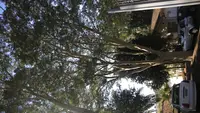
Stake young trees and use a breathable windbreak fabric in exposed sites for the first 2–3 years to reduce wind rock and help the developing root system anchor securely.

Root zone management

Maintain a wide, grass-free mulch ring around the trunk to reduce competition, keeping mulch 5–8 cm deep and pulled back 5–8 cm from the bark to prevent rot and pest issues at the base.

Formative canopy training

In the first 3–5 years, select 1 strong central leader and 3–5 well-spaced scaffold branches, removing narrow or crossing branches gradually to create a stable, spreading crown that will better resist storm damage.

Nitrogen-fixing support

Avoid unnecessary high-nitrogen fertilizer and instead protect existing root nodules by minimizing deep soil disturbance within the drip line, since this species already fixes atmospheric nitrogen through root bacteria.

Storm and drought assessment

After severe storms or extended drought, inspect for bark cracks, branch splitting, or dieback and prune damaged wood promptly back to healthy tissue to reduce the risk of decay and structural failure when growing Albizia niopoides.

Common Pests and Diseases

Mimosa webworm

This pest feeds on leaflets and ties them together with silk, causing browned, skeletonized foliage and webbed clusters of leaves along the branches.

Solution

Prune out and destroy webbed foliage as soon as it appears, then monitor new growth closely; for heavier infestations, use a targeted treatment with Bacillus thuringiensis (Bt) or a spinosad-based spray, applied thoroughly to the leaf surfaces in calm, dry weather.

Bagworms

These insects live in small spindle-shaped bags made of plant debris that hang from twigs and can defoliate branches when populations are high.

Solution

Handpick and destroy bags during winter and early spring before larvae emerge, and if trees are too tall to pick safely, consider a well-timed application of Bt or spinosad to young larvae shortly after they hatch.

Silk tree wilt

This disease causes sudden wilting, yellowing, and browning of leaves on one or more branches, often progressing to branch dieback and whole-tree decline due to fungal blockage of the water-conducting tissues.

Solution

Remove and destroy affected branches well below visible symptoms, sterilizing pruning tools between cuts, and avoid wounding roots or trunk; in landscape settings, plant in well-drained soil and reduce drought stress to improve resilience, as there is no reliable curative treatment once vascular tissues are extensively infected.

Powdery mildew

This disease appears as white or gray powdery patches on leaves, which may curl, yellow, or drop prematurely under severe infection, especially in warm, dry conditions with poor air circulation.

Solution

Improve airflow around the canopy through selective pruning, avoid overhead watering late in the day, and remove heavily infected leaves; for recurring issues, use a sulfur or potassium bicarbonate fungicide labeled for ornamental trees, applying according to label directions.

Leaf spot complex

Symptoms include small brown to dark spots on leaflets that may coalesce, creating larger blotches and occasional premature leaf drop during warm, humid weather.

Solution

Rake and dispose of fallen leaves to reduce fungal spores, irrigate at soil level instead of from above, and if the problem repeats yearly, apply a preventive fungicide at the start of the wet season as part of broader Albizia niopoides care instructions.

Interesting Facts

Nitrogen-fixing canopy tree

This species forms symbioses with root-dwelling bacteria that fix atmospheric nitrogen, allowing it to enrich poor tropical soils and support surrounding vegetation in low-fertility sites across its range from Mexico to South America.

Wind-dispersed flat pods

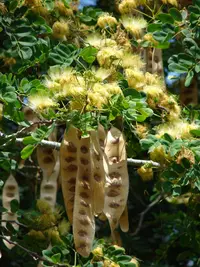
Its thin, papery seed pods are strongly compressed and often straw-colored when mature, and they split to release lightweight seeds that are readily carried by wind along river margins and dry forests where the species commonly grows.

Seasonal leaf behavior

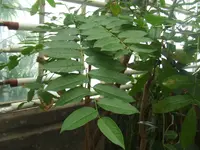
In many parts of its range, this tree behaves as brevi-deciduous, briefly losing most of its bipinnate leaves at the end of the dry season before rapidly flushing new foliage just before or with the onset of rains.

Botan icon

Did you know?

Albizia niopoides is one of the most widespread neotropical Albizia species, naturally occurring from lowland dry forests to moist gallery forests over a broad altitudinal and climatic gradient, which makes it a useful reference species in studies of tree adaptation to contrasting tropical environments.

FAQs about Albizia niopoides

This tree is generally fast growing, often adding 60–120 cm per year in warm climates with adequate moisture and space. Growth slows in poor soil, restricted root space, or cooler regions with shorter growing seasons.

Grow Healthy Plants with Botan Care

Keep your plants happy and healthy with plant identification, disease detection, and easy care guidance.

Botan plant care app — identify plants on mobile

Explore More Plants