Fullmoon maple Care (Acer shirasawanum)

Also known as: Shirasawa's maple, Japanese moon maple
Fullmoon maple

About Fullmoon maple

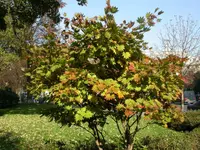
Fullmoon maple (Acer shirasawanum) is a small deciduous tree valued for its rounded, fan-shaped leaves that resemble a full moon. It usually forms a compact, layered canopy with fine branching.

This species is native to mountainous forests in Japan, where it grows in cool, moist conditions with partial shade. It is slower growing than many other maples and prefers shelter from strong wind and hot afternoon sun.

Gardeners who care for Fullmoon maple appreciate its reliable seasonal color and relatively modest size, but it does best in climates with mild summers and consistent soil moisture.

Main Plant Requirements

Care Difficulty

Moderate Care

Light Preference

Partial Shade

Water Requirements

Moderate Water

Temperature Preference

Cold Hardy

Hardiness Zone

5–7

Soil Texture

Loamy, Silty, Organic-rich

Soil pH

Acidic (5.5–6.5), Slightly acidic (6.5–7.0)

Soil Drainage

Moist but well-drained

Fertilization

Minimal (feed rarely)

Get Personalized Care Plan

Scan your plant to receive care tips personalized for your specific plant

Available on iOS and Android

How to Care for the Fullmoon maple

Acer shirasawanum prefers bright, gentle light that protects its delicate foliage from harsh sun.

  • Provide 3–5 hours of morning sun with light afternoon shade; dappled light under taller trees suits Fullmoon maple well.
  • In hot summers, shield from direct sun after 11 a.m. to reduce leaf scorch, especially in zones with intense UV and hot, drying winds.
  • In cooler climates, it tolerates more direct sun, but if new leaves pale or internodes stretch, increase light; if leaf edges brown, increase shade.

This species prefers consistently moist, cool soil that never stays saturated for long periods.

  • Use deep, infrequent watering, allowing the top 3–5 cm of soil to dry slightly, then water until the root zone is moist to 20–30 cm depth.
  • In spring and summer, monitor during warm, windy periods; drooping new leaves and dry topsoil indicate the need for a thorough soak.
  • Ensure free-draining, organic-rich soil; yellowing leaves, blackened roots, or sour smell signal overwatering, while crisp leaf edges suggest drought stress.

This maple performs best in cool to mild climates with moderate seasonal variation.

  • Ideal growing temperatures are 60–75°F (16–24°C) in spring and early summer, supporting steady leaf and shoot development.
  • Mature plants tolerate winter lows around 0–5°F (-18 to -15°C) when fully dormant, but late spring frosts can damage tender new growth.
  • In hot summers above 85–90°F (29–32°C), provide shade, mulch the root zone 5–8 cm deep, and avoid reflected heat from paving or walls.

This maple prefers moderately moist air and reacts to very dry conditions.

  • Aim for 40–60% humidity to reduce leaf edge crisping and tip dieback.
  • Dry indoor air or hot winds can cause curled, brown leaf margins and premature leaf drop.
  • Increase humidity with nearby shrub plantings, mulch over the root zone, or a windbreak that reduces drying exposure.

This species prefers cool, moist, well-structured soil that drains freely yet retains some consistent moisture.

  • Use a deep, loamy mix with high organic matter, such as garden loam blended with composted bark and leaf mold.
  • Ensure free drainage; heavy clay should be amended with fine bark, grit, and compost to improve aeration and water movement.
  • Target a slightly acidic to neutral pH around 5.5–7.0 for Acer shirasawanum to support nutrient availability and leaf color.
  • Avoid compacted, waterlogged, or very shallow soils, which promote root rot and weak, drought-sensitive growth.

This maple can be grown successfully in containers for many years with careful moisture and root-space management.

  • Choose a wide, heavy container to counterbalance the leafy canopy and reduce tipping in strong winds.
  • Select a potting mix that contains bark and pumice or grit so water drains quickly while roots still access moisture films.
  • Place the container where sun exposure is stable, since pots heat and cool faster than ground soil, stressing fine roots.

Acer shirasawanum benefits from light, measured feeding rather than heavy fertilization.

  • Use a balanced, slow-release fertilizer (around 10-10-10) or a thin layer of compost in early spring as growth begins.
  • Feed outdoor Fullmoon maple once in spring and again in midsummer, avoiding late-season applications that promote tender growth.
  • Apply at half the label rate for container plants, and always water thoroughly before and after feeding to limit root burn.
  • Stop fertilizing in late summer and do not feed during winter dormancy, when the tree is not actively growing.

Acer shirasawanum responds best to minimal, careful pruning that respects its natural form.

  • Schedule structural pruning in late winter or very early spring, before sap flow is strong and buds break.
  • Remove dead, diseased, or crossing branches first, then thin congested interior shoots to improve light and airflow.
  • Use sharp, clean bypass pruners or a fine-toothed pruning saw to make smooth cuts just outside the branch collar.
  • Limit pruning to small cuts that refine shape, as heavy removal can stress the tree and spoil its layered habit.

This maple is usually grown in the ground but can be transplanted or shifted in containers with careful handling.

  • Plan major transplanting for late fall after leaf drop or early spring before bud swell, when stress is lower.
  • Look for roots circling the container, water running straight through, or declining vigor as signals a potted tree needs a larger pot.
  • Transplant or repot every 3–5 years, moving to a container 2–5 cm wider with free-draining, slightly acidic mix.
  • Minimize root disturbance, keep the original soil level, water deeply, and shade the tree for 1–2 weeks to reduce transplant shock.

Acer shirasawanum is slow and somewhat challenging to propagate, so it is most often produced by grafting in nurseries.

This maple is generally cold hardy in suitable climates but benefits from some root-zone protection in harsher winters.

  • Mulch a 5–8 cm layer of bark or leaf mold around the root zone in late fall, keeping mulch off the trunk.
  • In exposed sites, use a windbreak or burlap screen to reduce drying winter winds on young trees.
  • For container-grown plants in cold regions, move pots into an unheated garage, cold frame, or against a sheltered wall to prevent root freeze.

Care Tips

Protect spring flush

During early spring, cover emerging leaves with horticultural fleece or a temporary windbreak on forecasted cold, dry nights to prevent frost-scorch and tattering of the delicate new growth.

Mulch for cool roots

Apply a 5–8 cm layer of shredded bark or leaf mold over the root zone each spring, keeping it a few cm away from the trunk, to stabilize soil moisture and temperature and reduce stress during summer heat.

Shield from wind

Install a low, permeable windbreak such as a slatted screen or dense shrub border on the windward side to reduce leaf scorch and torn branches without creating a stagnant, airless pocket.

Elevate in containers

If grown in a pot, place the container on pot feet or bricks so that drainage holes stay clear, which prevents waterlogging and fine-root dieback in heavy rains.

Gentle branch training

To develop a layered, architectural canopy, use soft ties to gently pull young, flexible branches outward and slightly downward over 1–2 seasons, checking and loosening ties regularly so they do not cut into the bark while growing Fullmoon maple.

Common Pests and Diseases

Verticillium wilt

This disease causes sudden wilting, branch dieback, and often one-sided decline, typically starting on individual branches before spreading through the canopy.

Solution

Prune out affected branches well back into healthy wood and disinfect pruning tools between cuts, then improve soil drainage and avoid overwatering to reduce stress. Do not replant maples in the same spot if a tree has died from this disease; choose resistant species instead and focus on long-term Acer shirasawanum care that keeps the tree vigorous and less susceptible.

Japanese maple scale

This pest appears as small, white to gray, crusty bumps on bark and twigs, leading to thinning foliage and branch dieback over time.

Solution

In late winter to early spring, apply a horticultural oil spray to smother overwintering scales, ensuring thorough coverage of branches and trunk. For light infestations, scrub affected bark gently with a soft brush and soapy water, and dispose of heavily infested prunings in the trash, not in compost.

leaf scorch

Symptoms include browning or crisping of leaf edges and tips, often on the sunniest or windiest side of the tree, while veins can remain green for some time.

Solution

Provide light afternoon shade, especially in hot, dry climates, and maintain consistent soil moisture with 5–8 cm of organic mulch over the root zone, kept away from the trunk. Avoid reflected heat from pavement or walls and reduce heat stress by shielding from strong drying winds where possible.

powdery mildew

This disease produces a white, powdery coating on leaves, which may curl, distort, or drop early in humid but not overly wet conditions.

Solution

Increase air circulation by thinning crowded branches and avoiding dense plantings around the maple, and water at soil level instead of over the foliage. Remove and discard heavily infected leaves, and if needed use a labeled fungicidal spray on new growth during periods of warm, humid weather.

aphids

These insects cluster on young shoots and leaf undersides, sucking sap and causing curling leaves, sticky honeydew, and sometimes sooty mold growth on Acer shirasawanum foliage.

Solution

Dislodge colonies with a strong stream of water from a hose, repeating every few days during active infestations, and encourage natural predators like lady beetles by avoiding broad-spectrum insecticides. For persistent problems, spot-treat with insecticidal soap or horticultural oil, thoroughly coating the undersides of leaves and tender shoots.

Interesting Facts

Distinct fullmoon leaves

This species has nearly circular leaves with 9–13 shallow lobes, giving rise to the common name fullmoon maple and distinguishing it from the more deeply cut Japanese maple leaves of Acer palmatum.

Naturally compact canopy

In the wild, it often forms a relatively small, rounded tree or large shrub with a dense, layered canopy, which has made it a foundation species for breeding compact ornamental maples for small gardens.

Genetic basis for color

Many cultivars of this species, such as those with golden or orange foliage, owe their stable leaf coloration to selected mutations in pigment pathways that alter the balance of chlorophyll and anthocyanins across the growing season.

Botan icon

Did you know?

The species is native to cool, moist mountain forests of central and northern Japan, where it often grows as an understory tree beneath taller conifers and broadleaf trees, contributing to a multi-layered forest structure that supports diverse shade-adapted plants and invertebrates.

FAQs about Fullmoon maple

Brown, crispy edges usually come from leaf scorch caused by hot sun, dry wind, or irregular moisture. Compacted or very dry soil, excess fertilizer, or recent transplant stress can worsen symptoms, especially during warm, low-humidity weather.

Grow Healthy Plants with Botan Care

Keep your plants happy and healthy with plant identification, disease detection, and easy care guidance.


Botan plant care app — identify plants on mobile

Explore More Plants