Windbreak establishment
In exposed sites, plant a temporary windbreak or use breathable wind mesh on the windward side for the first 2–3 years to reduce desiccation and winter scorch of young yews.

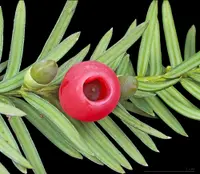
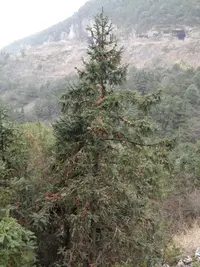
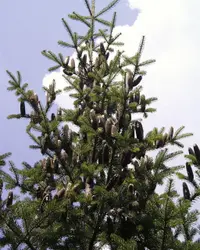
English yew, Taxus baccata, is an evergreen conifer often grown as a hedge, topiary, or specimen shrub. It naturally forms dense, dark green foliage with soft, needle-like leaves and red, berry-like arils that surround the seeds.
This species is native to Europe, western Asia, and parts of North Africa, where it typically grows in woodlands and on rocky slopes. It is long-lived and slow to moderate in growth, which makes structural pruning and long-term shaping possible.
Taxus baccata is generally tough but needs good drainage and does not tolerate waterlogged soil. Partial shade to full sun and consistent, moderate moisture help simplify how to care for English yew in gardens and landscapes.

Care Difficulty
Moderate Care

Light Preference
Partial Shade

Water Requirements
Moderate Water

Temperature Preference
Cold Hardy

Hardiness Zone
5–7

Soil Texture
Sandy, Loamy, Clay

Soil pH
Acidic (5.5–6.5), Slightly acidic (6.5–7.0)

Soil Drainage
Moist but well-drained

Fertilization
Minimal (feed rarely)
Scan your plant to receive care tips personalized for your specific plant
Available on iOS and Android
This conifer prefers cool, stable light conditions and can adapt to a range of outdoor exposures.
This species prefers evenly moist but not saturated soil once established in the landscape.
This evergreen tolerates a wide climate range but performs best in cool to mild conditions.
This species tolerates a wide humidity range and rarely needs special humidity management outdoors or in unheated spaces.
Taxus baccata prefers stable, moderately moist, well-structured soil with strong drainage.
This species can grow successfully in containers when given enough root space and stable moisture.
Taxus baccata grows slowly and usually needs only modest feeding in most garden soils.
Taxus baccata responds well to controlled pruning for size, density, and hedge shaping.
Taxus baccata is usually grown in the ground and prefers infrequent disturbance once established.
Taxus baccata is commonly propagated from semi-ripe cuttings and also from seed, though seed is slower.
Taxus baccata is cold hardy in most temperate gardens and usually needs minimal winter care once established.

Plant Health Check
Not sure what's wrong with your plant? Check your plant's health inside the app.
The fleshy red covering around the seed, called an aril, is not toxic and has been eaten traditionally, but the hard seed inside is highly poisonous if chewed or broken.
This species can survive and slowly grow under very low light in dense forests, which allows it to persist for centuries beneath taller tree canopies.
Pollen records and fossils show that this yew has been native to Europe since before the last Ice Age, making it one of the continent’s long-established conifer species.

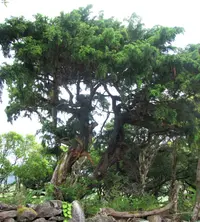
Some individual English yews are among the oldest known trees in Europe, with several living specimens estimated, using growth patterns and historical records, to be over 1,000 years old.
Browning foliage often results from salt damage, drought stress, or root problems from poor drainage or compacted soil. Winter wind scorch and dog urine are also common causes. Check soil moisture, drainage, and nearby salt or chemical exposure.
Keep your plants happy and healthy with plant identification, disease detection, and easy care guidance.