Snow load management
In snowy regions, gently brush heavy, wet snow off branches with a soft broom to prevent splitting or deformation of the dense canopy.

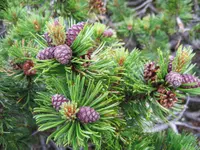
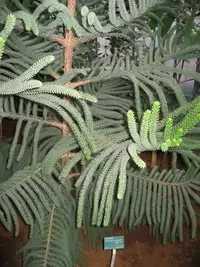
Mugo pine, Pinus mugo, is a compact, slow-growing conifer often used in rock gardens, containers, and small landscapes. It forms a dense, rounded or low-spreading shrub with short, stiff needles and small cones. Native to the mountains of central and southern Europe, it is adapted to harsh, windy conditions and poor, rocky soils. This background makes it generally hardy and forgiving in cultivation. Its main traits are durability, cold tolerance, and a naturally tidy shape that needs little pruning. Mugo pine prefers full sun, well-drained soil, and moderate moisture. Understanding how to care for Mugo pine helps keep it dense, healthy, and resistant to stress.

Care Difficulty
Easy Care

Light Preference
Full Sun

Water Requirements
Low Water

Temperature Preference
Cold Hardy

Hardiness Zone
2–7

Soil Texture
Sandy, Loamy, Rocky

Soil pH
Acidic (5.5–6.5), Slightly acidic (6.5–7.0)

Soil Drainage
Well-drained

Fertilization
Minimal (feed rarely)
Scan your plant to receive care tips personalized for your specific plant
Available on iOS and Android
This compact mountain conifer prefers bright, open sites to develop dense, healthy growth.
This species is drought tolerant once established but still needs structured moisture while roots develop.
This hardy pine is adapted to cold climates but still responds to clear temperature limits through the year.
Humidity is rarely a concern for this species in typical outdoor conditions.
Pinus mugo prefers sharply drained, mineral-rich soil that never stays waterlogged.
This species is suitable for long-term container growing outdoors when drainage and stability are controlled carefully.
This compact conifer needs modest feeding in most garden soils, but responds well to light, targeted nutrition in containers or poor ground.
Pinus mugo benefits from light, timely pruning to maintain a compact, dense form and remove problem growth.
This species is usually grown in the ground and only occasionally in containers, so focus on careful transplanting rather than frequent repotting.
Pinus mugo is usually produced by nurseries, as home propagation is slow and technically demanding for most gardeners.
This conifer is naturally cold hardy and usually needs minimal winter care in most temperate climates.

Plant Health Check
Not sure what's wrong with your plant? Check your plant's health inside the app.
In its native European mountain habitats, this species naturally grows as a low, dense shrub that hugs the ground, an adaptation that reduces wind damage and water loss in exposed alpine conditions.
Pinus mugo often forms a distinct belt of shrubby conifers just below the upper forest limit in the Alps and Carpathians, helping to stabilize the treeline and protect higher-altitude plant communities from harsh weather.
This pine can naturally hybridize with Pinus sylvestris (Scots pine) where their ranges overlap, creating intermediate forms that are studied by botanists to understand conifer evolution and gene flow.

Pinus mugo was widely planted across parts of central and eastern Europe in the 19th and 20th centuries for dune and slope stabilization, and in some lowland areas it has become invasive, forming dense stands that outcompete native vegetation.
This species is slow-growing, typically adding about 5–15 cm per year. Growth is most noticeable in spring candle extension. Rate depends on age, cultivar, climate, soil quality, and overall Pinus mugo care.
Keep your plants happy and healthy with plant identification, disease detection, and easy care guidance.