Noble Fir Care (Abies procera)

Also known as: feathercone fir, Oregon larch
Noble Fir

About Noble Fir

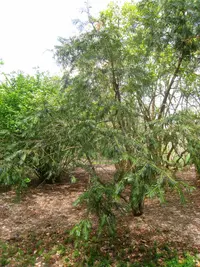
Noble fir, Abies procera, is a long-lived evergreen conifer known for its strong, straight trunk and symmetrical, layered branches. It is widely used as a Christmas tree and for ornamental planting in larger landscapes.

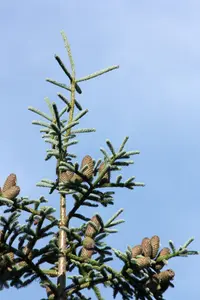
This species is native to the higher elevations of the Pacific Northwest in the United States, where it grows in cool, moist mountain forests. The short, bluish-green needles are dense and upturned, giving the branches a full, tidy look.

In gardens and managed landscapes, it prefers cool climates, consistent moisture, and well-drained, slightly acidic soil. Understanding how to care for Noble Fir helps prevent stress, needle drop, and poor growth over time.

Main Plant Requirements

Care Difficulty

Moderate Care

Light Preference

Full Sun

Water Requirements

Moderate Water

Temperature Preference

Cold Hardy

Hardiness Zone

5–6

Soil Texture

Sandy, Loamy, Organic-rich

Soil pH

Strongly acidic (4.5–5.5), Acidic (5.5–6.5)

Soil Drainage

Moist but well-drained

Fertilization

Minimal (feed rarely)

Get Personalized Care Plan

Scan your plant to receive care tips personalized for your specific plant

Available on iOS and Android

How to Care for the Noble Fir

This conifer prefers cool, bright outdoor conditions with consistent sun exposure for dense, healthy growth.

  • Provide 6–8 hours of direct sun daily, ideally with morning sun and some light afternoon shade in hotter regions to limit needle scorch.
  • Tolerates light to moderate partial shade, but too much shade causes thin, open branching and longer, weaker shoots on Noble Fir.
  • In hot summers, protect young trees from intense late-afternoon sun with neighboring plants or structures, while avoiding deep shade that reduces vigor.

This species prefers evenly moist, cool soil that never stays waterlogged.

  • Allow the top 3–5 cm of soil to partially dry, then water deeply so moisture reaches the full root zone, especially in the first 3–5 years after planting.
  • In summer drought, watch for drooping or slightly dull needles as a cue to irrigate; in winter, water only during thaw periods if soil is dry and unfrozen.
  • Ensure soil drains freely; signs of overwatering include yellowing needles and root collar softness, while chronic underwatering leads to browning tips and premature needle drop on Abies procera.

This cold-hardy conifer thrives in cool to cold climates with moderate summer heat.

  • Optimal growth occurs around 45–70°F (7–21°C), with best vigor in areas that provide cool summers and consistent winter chill.
  • Mature trees tolerate winter lows near -20°F (-29°C) once established, but young plants benefit from wind protection to reduce freeze desiccation.
  • Heat tolerance is limited; prolonged periods above 85°F (29°C) can stress the tree, so maintain soil moisture and mulch the root zone to moderate temperature swings.

Abies procera prefers cool, moderately moist air but adapts to typical outdoor humidity in most temperate regions.

  • Target 40–60% humidity outdoors; brief drops lower are tolerated if soil moisture is stable.
  • Dry air combined with wind can cause browning needle tips and edge scorch, especially on young container plants.
  • Increase humidity around a potted Noble Fir by grouping plants, using a nearby water feature, or sheltering it from drying winds.

Abies procera grows best in deep, moist, well-drained, slightly acidic mineral soil.

  • Use a loamy mix with 40–60% mineral topsoil, 20–30% composted organic matter, and 10–20% sharp sand for structure and drainage.
  • Aim for pH 5.0–6.5; incorporate pine bark fines or peat-free acidic materials if the native soil is neutral to slightly alkaline.
  • Ensure strong drainage by planting on a slight mound or raised area so water never pools around the root collar.
  • Avoid heavy, compacted clay and waterlogged sites; improve aeration by mixing in coarse sand or fine gravel rather than only more compost.

This species can be grown in containers when young, but long-term success is limited by its eventual size and root depth needs.

  • Choose a tall, heavy container to accommodate the deepening root system and reduce the risk of the tree tipping in strong winds.
  • Use a sharply draining, mineral-rich mix and elevate the pot on feet so drainage holes never sit directly on paving.
  • Position the container where winter winds are buffered to prevent root ball freeze–thaw cycles that desiccate roots.

Abies procera usually grows well in suitable soil and needs only modest fertilization in cultivation.

  • Use a balanced slow-release fertilizer (for example 10-10-10) or light compost top-dress once in spring as new growth starts.
  • Apply fertilizer to moist soil and keep granules or compost away from direct trunk contact to avoid burn or rot.
  • Use half-strength liquid balanced NPK only for container plants, every 4–6 weeks during the growing season if growth is weak.
  • Stop feeding Noble Fir by late summer and do not fertilize in winter dormancy to prevent soft, frost-prone growth.

Abies procera needs minimal pruning and is usually shaped by its natural growth habit.

  • Schedule any structural pruning for late winter or very early spring, before active growth begins.
  • Remove only dead, diseased, crossing, or storm-damaged branches, cutting back to the branch collar without leaving stubs.
  • Avoid cutting the central leader, as this maintains the classic conical form and stable structure.
  • Use clean, sharp bypass pruners or a pruning saw, disinfecting blades between trees to limit disease spread.

Abies procera is typically grown in the ground and only temporarily kept in containers before transplanting.

  • Check for circling roots, slow growth, or the root ball drying very fast as signs a container tree needs a larger space.
  • Plan transplanting for late fall or early spring when soil is workable and the tree is dormant or barely active.
  • Move young trees every 2–3 years at most, shifting to a slightly larger hole with well-drained, slightly acidic soil.
  • Minimize root stress by watering thoroughly before and after planting, handling the root ball gently, and adding mulch to stabilize soil moisture.

Abies procera is most often propagated by seed and is slow and technically demanding for home growers.

  • Collect ripe cones in late summer to early fall, then extract and dry seeds for short-term storage.
  • Provide cold stratification at about 34–41°F for 6–8 weeks by mixing seeds with moist sand in a refrigerator.
  • Sow stratified seeds in a well-drained, slightly acidic mix, keeping conditions cool, bright, and evenly moist.
  • Semi-ripe cuttings under mist and with rooting hormone are possible but show low success rates outside professional nursery conditions.

Abies procera is cold hardy in much of its native and cultivated range and usually needs little special winter care.

  • Mulch 5–8 cm around the root zone with bark or needles, keeping mulch slightly away from the trunk base.
  • In exposed, windy sites, use a windbreak fence to reduce desiccation of needles, especially for young trees.
  • Container-grown trees are more vulnerable; place pots in a sheltered spot and insulate containers with burlap or foam if winters drop well below the species hardiness range.

Care Tips

Shelter From Wind

Site trees where they are shielded from prevailing winter winds by buildings or taller evergreens to reduce moisture loss from needles and prevent root rock in stormy weather.

Mulch Root Zone

Apply a 5–8 cm layer of coarse bark mulch over the root zone, keeping it 5–10 cm away from the trunk, to moderate soil temperature, conserve moisture, and protect shallow feeder roots from mechanical damage.

Avoid Soil Compaction

Keep foot traffic, vehicles, and heavy equipment off the root zone, ideally protecting an area at least as wide as the drip line, because compacted soil severely reduces oxygen to roots and slows growth.

Monitor Needle Drop

Observe the pattern of needle shed each year and investigate promptly if browning or drop moves rapidly inward from branch tips, as this can indicate root stress, canker, or adelgid activity that needs early intervention when growing Noble Fir.

Seasonal Pest Check

Inspect twigs and undersides of needles in late winter and early summer for aphids, adelgids, and bark beetle entry holes, and remove or prune out lightly infested branches before pests spread through the canopy.

Common Pests and Diseases

Balsam woolly adelgid

This pest feeds on the bark and twigs, causing swollen, bumpy areas and gradual crown thinning, especially on stressed trees. Symptoms include white, wool-like patches on trunks and branches and dieback from the top down.

Solution

Prune out and destroy heavily infested branches where practical and avoid stressing the tree with drought or mechanical damage. In landscape situations, consult an arborist about systemic insecticides specifically labeled for adelgids and monitor neighboring firs to manage spread when caring for Noble Fir.

Spruce spider mite

These insects are tiny sap-feeders that cause dull, gray-green foliage, fine speckling on needles, and premature needle drop, often starting on the inner and lower branches. Fine webbing may be visible in heavy infestations, especially in dry, dusty conditions.

Solution

Rinse foliage thoroughly with a strong but gentle stream of water, focusing on the undersides of needles, and repeat every few days for several cycles. If populations remain high, use horticultural oil or insecticidal soap labeled for conifers during cool weather, and reduce plant stress by watering correctly and avoiding excessive nitrogen fertilization.

Fir needle cast

This disease is caused by several fungi that infect young needles, leading to yellow or brown discoloration, distinct banding, and premature needle drop, often leaving bare inner branches. Symptoms include small black fruiting bodies lined up on dead needles.

Solution

Remove and dispose of fallen needles and severely infected branches to reduce fungal spores, and improve air movement around the tree by avoiding overcrowding. In areas with a history of needle cast, a qualified professional may apply a preventive fungicide in spring as new needles emerge, timed according to local extension service guidance.

Needle rust

This disease produces yellow to orange spots or bands on needles, followed later by powdery orange pustules that release rust-colored spores. Symptoms include needle yellowing and drop, giving the tree a thin or sparse appearance.

Solution

Prune out and discard visibly infected branches where feasible and rake up fallen needles to reduce inoculum. Improve spacing and airflow, avoid overhead watering, and in high-value plantings consider preventive fungicide applications timed to local rust forecasts with guidance from a certified arborist or extension specialist.

Cytospora canker

This disease infects weakened branches and stems, causing sunken, resin-soaked cankers, dieback of affected limbs, and scattered dead branches within the crown. Symptoms include excessive resin flow and rough, cracked bark around the canker margin.

Solution

Prune out infected branches during dry weather, cutting several inches below visible symptoms, and disinfect pruning tools between cuts. Reduce plant stress by maintaining consistent soil moisture, avoiding trunk injury, and not over-fertilizing; severely affected trees in landscape settings may require assessment and management planning by an arborist.

Interesting Facts

Pacific Northwest endemic

Noble fir is naturally restricted to higher elevations in the Cascade Range and parts of the Coast Range of Washington and Oregon, where it forms cool, moist montane forests with species like Douglas fir and Pacific silver fir.

Exceptionally strong wood

The wood of noble fir is unusually strong yet relatively light for a true fir, so it has been used in specialized applications such as airplane construction frames and high‑quality lumber where strength-to-weight ratio matters.

Classic Christmas foliage

Noble fir produces dense, evenly spaced branches with long‑lasting, blue‑green needles, which makes it one of the most valued species for Christmas trees and wreaths because the foliage stays attractive and retains needles well after cutting.

Botan icon

Did you know?

Noble fir develops some of the largest cones of any true fir, with upright seed cones that can reach about 15–23 cm long, perched high in the crown and disintegrating in place to release winged seeds rather than falling to the ground whole.

FAQs about Noble Fir

This species grows slowly at first, often 15–30 cm per year in youth under good conditions. Growth slows with age. Cool summers, consistent moisture, and deep, well‑drained soil support the best long‑term development.

Grow Healthy Plants with Botan Care

Keep your plants happy and healthy with plant identification, disease detection, and easy care guidance.

Botan plant care app — identify plants on mobile

Explore More Plants