Stake Young Leaders
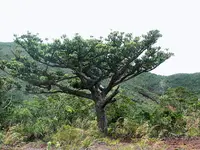
Install a single, sturdy bamboo or fiberglass stake beside the central leader in the first 3–5 years and loosely tie it with soft tree ties to maintain a strong vertical trunk and prevent a multi-leader, weak structure.

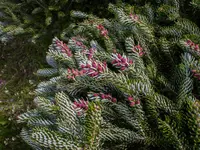
Abies koreana 'Horstmann's Silberlocke' is a compact dwarf conifer, valued for its slow, tidy growth and distinctive curled needles with bright silver undersides. It forms a small, rounded to broadly conical tree that fits well in modest gardens and rockeries.
This cultivar originates from the Korean fir species, which is native to cool, mountainous regions of Korea. It prefers cool summers, consistent moisture, and well-drained, slightly acidic soil.
The plant is generally hardy and low maintenance once established, but it can struggle in hot, dry climates or poorly drained sites. Understanding how to care for Korean Fir helps maintain its dense form and vivid needle color over time.

Care Difficulty
Moderate Care

Light Preference
Full Sun

Water Requirements
Moderate Water

Temperature Preference
Cold Hardy

Hardiness Zone
4–7

Soil Texture
Loamy, Sandy, Organic-rich

Soil pH
Strongly acidic (4.5–5.5), Acidic (5.5–6.5)

Soil Drainage
Moist but well-drained

Fertilization
Minimal (feed rarely)
Scan your plant to receive care tips personalized for your specific plant
Available on iOS and Android
This compact fir prefers bright outdoor conditions with some protection from harsh afternoon sun.
This fir prefers consistently moist but not saturated soil, especially during establishment.
This species is a cold-hardy outdoor conifer that prefers cool to moderate climates.
This conifer tolerates a wide humidity range and usually does not need special humidity management outdoors.
Abies koreana 'Horstmann's Silberlocke' grows best in cool, moist, well-aerated soil that never stays waterlogged.
This slow-growing dwarf conifer is suitable for long-term container growing outdoors on patios or terraces.
This compact Korean Fir benefits from light, measured feeding in poor soils but often manages well in reasonably fertile ground.
Abies koreana 'Horstmann's Silberlocke' needs only minimal, corrective pruning to maintain a natural, compact form.
This dwarf fir is usually grown in the ground and responds best to careful, infrequent transplanting rather than regular repotting.
Abies koreana 'Horstmann's Silberlocke' is usually propagated by specialists, as home propagation is slow and technically demanding.
This cultivar is generally cold hardy in suitable climates and usually requires little special winter care once established in the ground.

Plant Health Check
Not sure what's wrong with your plant? Check your plant's health inside the app.
This cultivar arose as a chance witch’s broom mutation on a standard Korean fir, meaning it originated from a compact, abnormal growth on an otherwise typical tree that was later propagated for its unique traits.
Its needles curve upward around the shoot, exposing the bright, silvery-white undersides, which creates a distinctive two-tone effect that is more pronounced than in most other Korean fir selections.
Unlike many conifers that need to reach large sizes before coning, this dwarf tree can begin producing showy, upright violet-purple cones while still relatively young and small in the landscape.

This cultivar is widely used in conifer collections and arboreta as a reference form for evaluating compact Korean fir habits, because it combines slow, predictable growth with a highly stable needle and cone display that stays true to type over many years of propagation.
This dwarf conifer grows slowly, typically 5–15 cm per year under good conditions. Expect a compact, mounded tree rather than a tall specimen, which suits small gardens, rock gardens, and foundation plantings.
Keep your plants happy and healthy with plant identification, disease detection, and easy care guidance.