Maidenhair tree Care (Ginkgo biloba)

Also known as: Maidenhair Tree, golden fossil tree, stinkbomb tree, gingko
Maidenhair tree

About Maidenhair tree

The Maidenhair tree, Ginkgo biloba, is a long-lived deciduous tree known for its fan-shaped leaves and strong upright growth. Mature trees develop a tall, narrow crown that widens with age.

It is native to China but is now widely planted in cities and gardens for its tolerance of pollution and variable soil conditions. The leaves turn clear yellow in fall, creating a distinct seasonal display.

This species is generally hardy, wind resistant, and relatively free from serious pests or diseases, which makes it straightforward to grow once established. It prefers full sun, moderate moisture, and well-drained soil, and these traits guide how to care for Maidenhair tree in home landscapes.

Main Plant Requirements

Care Difficulty

Easy Care

Light Preference

Full Sun

Water Requirements

Moderate Water

Temperature Preference

Cold Hardy

Hardiness Zone

4–9

Soil Texture

Sandy, Loamy, Clay

Soil pH

Acidic (5.5–6.5), Slightly acidic (6.5–7.0)

Soil Drainage

Well-drained

Fertilization

Minimal (feed rarely)

Get Personalized Care Plan

Scan your plant to receive care tips personalized for your specific plant

Available on iOS and Android

How to Care for the Maidenhair tree

This species prefers full sun for strongest growth and autumn color outdoors.

  • Provide 6–8 hours of direct sun daily; young Maidenhair tree saplings benefit from gentle morning sun plus light afternoon shade in hot regions.
  • Allow light partial shade (3–4 hours direct sun) in very hot summers to reduce leaf scorch and stress on shallow roots.
  • In the first 2–3 years, avoid sudden exposure changes; gradually increase sun after cloudy periods or after moving nearby structures or trees that alter light.

Ginkgo biloba prefers evenly moist but never waterlogged soil, especially while establishing outdoors.

  • Check the top 3–5 cm of soil; water only when this layer feels dry, applying a slow, deep soak rather than frequent light splashes.
  • Reduce watering once trees are established, relying mostly on rainfall and supplementing only during extended dry spells or heatwaves when leaves start to droop slightly.
  • Use well-drained soil to prevent standing water; yellowing leaves, soft new growth, or persistent wet soil indicate overwatering and possible root stress.

This hardy tree tolerates a wide temperature range but has distinct seasonal needs.

  • Active growth is strongest around 65–80°F (18–27°C), supporting leaf expansion and root activity in spring and early summer.
  • Dormant trees withstand winter cold down to about -20°F (-29°C), but young saplings benefit from mulch over the root zone to buffer freeze–thaw cycles.
  • Mature trees cope with summer heat up to about 95°F (35°C) if soil moisture is adequate; prolonged hotter periods can cause leaf edge browning and earlier leaf drop.

Ginkgo biloba handles a wide humidity range and rarely needs special adjustments outdoors or in typical homes.

  • Ideal humidity is about 30–60%, similar to most temperate outdoor conditions and central-heated homes.
  • Dry indoor air is usually tolerated, but prolonged hot, very dry air can crisp leaf edges on maidenhair tree.
  • If leaves brown at tips while soil moisture is correct, increase local humidity slightly with grouped plants or a nearby water tray, not by misting.

Ginkgo biloba grows best in moderately fertile, well-aerated mineral soil with steady drainage.

  • Use a loamy or sandy loam structure with 20–30% compost to supply nutrients while keeping the profile open.
  • Aim for slightly acidic to neutral pH, roughly 6.0–7.5, as strongly acidic or alkaline ground can limit nutrient uptake.
  • Where native soil is heavy clay, mix in coarse sand or fine gravel plus compost to improve drainage and root aeration.
  • Avoid constantly waterlogged, compacted, or peat-heavy mixes that stay wet for long periods, which predispose roots to rot.

This species can grow in containers for many years if the pot supports its slow, eventually top-heavy growth.

  • Choose a wide, heavy container to counterbalance the upright trunk and reduce the risk of tipping in strong wind.
  • Select thick-walled terracotta or concrete when possible, as these materials breathe and slightly reduce prolonged moisture around roots.
  • Raise the container on feet or spacers so drainage holes remain clear and excess water can leave the root zone quickly.

Ginkgo biloba is a slow-growing tree that needs only modest feeding in most garden soils.

  • Use a balanced slow-release fertilizer (for example 10-10-10) or a thin layer of finished compost in early spring.
  • Feed outdoor trees once each spring; container plants may need light feeding every 6–8 weeks during the growing season.
  • Apply at half the label rate for young or potted plants to avoid root burn and excessive, weak growth.
  • Stop feeding by late summer and do not fertilize during winter dormancy, which supports sturdy seasonal growth patterns when caring for Maidenhair tree.

Ginkgo biloba benefits from light, deliberate pruning to maintain a strong structure and safe size.

  • Carry out main pruning in late winter to very early spring, before bud break, to limit sap loss and stress.
  • Remove dead, diseased, storm-damaged, or crossing branches first, using clean, sharp bypass pruners or a pruning saw.
  • Thin crowded interior branches slightly to improve light penetration and air movement, but avoid heavy canopy removal.
  • Shape young trees by selecting a single central leader and well-spaced scaffold branches, creating a stable long-term framework.

Ginkgo biloba is usually grown in the ground, so focus on careful transplanting rather than frequent repotting.

  • Transplant young trees in early spring or fall when soil is workable and temperatures are mild, reducing stress.
  • Look for circling roots, slow growth, or a pot-bound rootball as signs container plants need a larger container or planting out.
  • Move up only 1–2 pot sizes, loosen circling roots gently, and set the tree at the same soil level as before.
  • Water thoroughly after planting, apply 5–8 cm of mulch over the root zone, and keep soil evenly moist until established.

Ginkgo biloba is typically propagated from seed or by grafting in nurseries, so home propagation is possible but slow and less predictable.

  • Collect ripe seeds in fall, clean off the fleshy coating, and stratify in moist medium at 35–45°F for 2–3 months.
  • Sow stratified seed in spring in a deep pot with well-drained, sandy substrate, keeping it just moist and protected from rodents.
  • Semi-hardwood cuttings taken in midsummer may root under high humidity and bottom heat, though success rates are often low.
  • Named male or dwarf cultivars are usually grafted onto seedling rootstocks, a technique best learned from detailed nursery guides.

This tree is very cold hardy once established, so Ginkgo biloba generally needs minimal winter care in the landscape.

  • Young trees benefit from 5–8 cm of organic mulch over the root zone, kept a few cm away from the trunk.
  • In very windy or exposed sites, stake young trunks loosely and use a breathable trunk wrap to reduce sunscald and cracking.
  • Container-grown specimens in cold climates can be moved into an unheated garage or shed to avoid root freeze–thaw cycles.

Care Tips

Juvenile staking

Stake young trees with a single, loose tie on the main stem for the first 2–3 years to keep the leader straight and prevent wind rock while roots establish.

Select strong leader

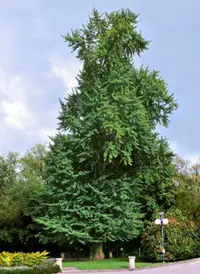
In the first few seasons, remove competing upright shoots and retain one central leader to develop a stable, symmetrical crown that resists storm damage later in life.

Root flare check

When planting or top-dressing, keep the root flare at or just above soil level and gently remove excess mulch from the trunk base to prevent bark rot and girdling roots.

Winter de-icing protection

Where road salt or de-icing products are used, place a physical barrier or plant at least 6–8 ft back from salted surfaces to reduce leaf scorch and soil salinity stress.

Low-maintenance underplanting

Underplant with shallow-rooted, shade-tolerant groundcovers instead of frequent cultivation around the base to protect surface roots and simplify caring for Maidenhair tree over time.

Common Pests and Diseases

Leaf scorch

Symptoms include browning and drying of leaf edges or entire fan-shaped leaves, often during hot, dry, or windy weather. This issue is typically physiological rather than infectious.

Solution

Provide consistent soil moisture during hot periods, apply a 5–8 cm mulch layer to keep roots cool, and avoid reflected heat from pavement or walls. Do not overfertilize, and allow fallen leaves to remain as a light mulch where appropriate to reduce water stress, which is a key part of Ginkgo biloba care.

Anthracnose

This disease causes small tan to brown leaf spots that may enlarge and cause irregular dead areas, especially in cool, wet springs. In severe cases, leaves may distort or fall early, though the tree is rarely seriously harmed.

Solution

Rake and discard fallen leaves in autumn to reduce spores, and avoid overhead watering that keeps foliage wet. Improve air circulation around the canopy with selective pruning; in high-value specimens with repeated severe infections, a licensed arborist may apply a targeted fungicide in early spring following label directions.

Canker disease

This disease leads to sunken, discolored patches on branches or twigs, sometimes with oozing sap and dieback beyond the infected area. Infections often enter through wounds and progress slowly.

Solution

Prune out affected branches several inches below visible symptoms during dry weather and disinfect tools between cuts with 70% alcohol or a 10% bleach solution. Reduce stress by watering during prolonged drought and avoiding trunk injuries from lawn equipment, which helps the tree compartmentalize and limit the canker.

Scale insects

These insects appear as small, immobile bumps on twigs or leaves and feed on sap, which can cause leaf yellowing and reduced vigor. Some species excrete sticky honeydew that can lead to sooty mold on nearby surfaces.

Solution

For light infestations, gently scrub affected twigs with a soft brush and soapy water or remove scales by hand. On larger trees, horticultural oil applied during the dormant season or at crawler stage, timed according to local extension guidance, helps control populations with minimal impact on beneficial insects.

Leaf miners

These insects create pale, winding tunnels or blotches inside leaves, but damage is usually cosmetic on healthy trees. Severely affected leaves may yellow and drop early.

Solution

Rake and dispose of fallen leaves to remove overwintering larvae and reduce the next generation. Established trees typically outgrow the damage, so chemical control is rarely needed; maintain good watering and avoid excess nitrogen to support strong leaf production and natural recovery.

Interesting Facts

Living fossil lineage

This species is the only surviving member of its entire plant division, Ginkgophyta, with fossils essentially identical to modern leaves dating back over 200 million years.

Fan-shaped leaf anatomy

Its distinctive fan-shaped leaves have parallel branching veins that fork repeatedly instead of forming a network, a vein pattern that is unusual among living trees.

Urban pollution tolerance

The tree is widely planted in cities because it tolerates air pollution, compacted soils, and road salt better than many other street trees once established.

Botan icon

Did you know?

Natural wild populations are extremely restricted and are thought to survive mainly on a few mountains in eastern China, likely maintained for centuries by human cultivation around temples and villages.

FAQs about Maidenhair tree

Growth is slow to moderate. Young trees often add about 20–30 cm per year, sometimes up to 45 cm in ideal conditions. Rate depends on genetics, soil quality, moisture, and available root space.

Grow Healthy Plants with Botan Care

Keep your plants happy and healthy with plant identification, disease detection, and easy care guidance.

Botan plant care app — identify plants on mobile

Explore More Plants