


Host tree selection
Establish this mycorrhizal fungus near compatible host trees such as oaks or other broadleaf hardwoods, since it depends on their roots for nutrients and will not fruit reliably in isolation.

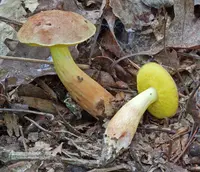
The sour gold-pored bolete, Aureoboletus auriporus, is a fleshy wild mushroom rather than a traditional garden plant. It forms stout stems with soft caps and bright yellow pores that can taste slightly sour. This species usually appears on the ground in mixed or coniferous woodlands, often near oaks or pines.
It grows in symbiosis with tree roots, so it is not practical as a typical indoor or potted specimen. Because of this close tree partnership, it is considered difficult to cultivate on purpose. Anyone wanting to care for sour gold-pored bolete should focus on supporting healthy woodland conditions with undisturbed soil and natural leaf litter.

Care Difficulty
Hard Care

Light Preference
Partial Shade

Water Requirements
Keep Soil Moist

Temperature Preference
Cool Climate

Hardiness Zone
Unknown

Soil Texture
Loamy, Silty, Organic-rich

Soil pH
Acidic (5.5–6.5)

Soil Drainage
Moist but well-drained

Fertilization
Minimal (feed rarely)
Scan your plant to receive care tips personalized for your specific plant
Available on iOS and Android
This ectomycorrhizal fungus prefers bright woodland edges with filtered light rather than open, exposed sites.
This woodland bolete depends on consistently moist, not saturated, forest soil around its tree partners.
This species fruits best in mild to warm conditions typical of temperate woodlands.
This ectomycorrhizal mushroom requires consistently moist, humid conditions around its host tree roots, not dry indoor air.
This species fruits from the ground in association with trees, so substrate preparation focuses on a loose, well-aerated, organic-rich layer rather than standard potting soil.
This species is not well suited to typical container growing, as it relies on ectomycorrhizal partnership with living tree roots in open ground.
This mycorrhizal bolete relies mainly on its tree partner and usually needs no deliberate fertilization in gardens or woodland settings.
Aureoboletus auriporus requires no true pruning, as the mushroom fruiting bodies are seasonal and temporary structures.
Transplanting focuses on the host tree and soil rather than the fungus itself, which forms a long-term mycorrhizal partnership with roots.
Propagation of Aureoboletus auriporus is indirect and relies on spores and suitable tree partners rather than controlled home methods.
This woodland fungus is naturally cold hardy in its native range and needs no dedicated winter care in outdoor habitats.

Plant Health Check
Not sure what's wrong with your plant? Check your plant's health inside the app.
The undersides of the caps develop a rich golden to sulfur-yellow pore layer rather than gills, which is a key field character that separates this species from many similar brown boletes.
In North America and Europe it occurs mainly in association with oak trees, forming ectomycorrhizae, a mutualistic root partnership that helps oaks absorb water and minerals while the fungus receives sugars.
The cap and pore surface can have a slightly sour taste in fresh material, a sensory feature that contributes to its common name, sour gold-pored bolete.
This species is considered edible but not highly valued, with a mild to slightly sour taste and soft texture. Always confirm identification with an expert, since confusing it with toxic boletes can be dangerous.
Keep your plants happy and healthy with plant identification, disease detection, and easy care guidance.

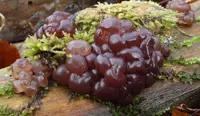
Ascotremella faginea
Ascotremella faginea
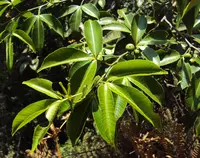
Climbing Orange
Zanthoxylum asiaticum
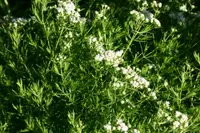
narrowleaf mountainmint
Pycnanthemum tenuifolium
Common Barberry
Berberis vulgaris
Jackson's slender Caesar
Amanita jacksonii
Spring Fieldcap
Agrocybe praecox
Black-staining Polypore
Meripilus sumstinei
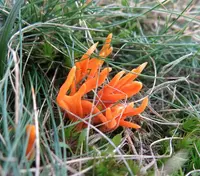
Apricot Club
Clavulinopsis luteoalba