Sterilize Growing Surfaces
Before inoculation, disinfect all work surfaces, tools, and containers with 70% isopropyl alcohol to minimize contamination from competing fungi and bacteria when growing Western Jumbo Gym.

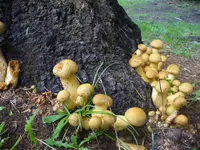
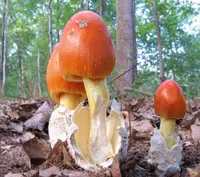
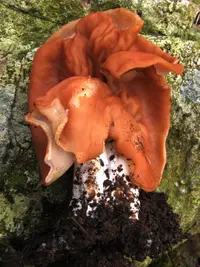
The Western jumbo gym, Gymnopilus ventricosus, is a large wood-decaying fungus rather than a leafy houseplant. It forms thick, often clustered mushrooms with robust stems and broad orange-brown caps.
This species is native to western North America, typically appearing on conifer stumps, logs, or buried woody debris in forested areas. It plays an ecological role in breaking down dead wood and recycling nutrients.
In cultivation, it is rarely grown indoors because it depends on substantial woody substrates and specific outdoor-like conditions. Anyone wanting to learn how to care for Western Jumbo Gym should understand that it is a specialized fungus, not a typical ornamental plant.
It generally prefers cool to mild temperatures, stable moisture around decaying wood, and shaded to partially shaded forest-like environments.

Care Difficulty
Moderate Care

Light Preference
Partial Shade

Water Requirements
Keep Soil Moist

Temperature Preference
Cool Climate

Hardiness Zone
Unknown

Soil Texture
Loamy, Organic-rich

Soil pH
Acidic (5.5–6.5)

Soil Drainage
Moist but well-drained

Fertilization
Minimal (feed rarely)
Scan your plant to receive care tips personalized for your specific plant
Available on iOS and Android
This wood-rotting fungus prefers dappled forest light rather than direct, open sun.
This species depends on consistently moist, but not waterlogged, woody substrate to form healthy fruiting bodies.
This fungus favors cool to mild conditions similar to those in coastal or montane conifer forests.
This wood-rotting mushroom does not need humidity management beyond normal outdoor woodland conditions.
This fungus fruits on decaying conifer wood rather than in conventional soil, so substrate texture and composition matter more than mineral soil type.
This species is not well suited to typical ornamental container culture, as it naturally fruits from large conifer stumps or logs rather than pots.
Gymnopilus ventricosus is a wild, wood-decaying fungus that gains nutrients from its substrate and does not benefit from conventional fertilizing.
Pruning is not applicable to Gymnopilus ventricosus, as it is a mushroom-forming fungus, not a woody or leafy plant.
Transplanting Western Jumbo Gym is rarely practical, since it depends on a specific woody substrate and underground mycelium network.
Propagation of Gymnopilus ventricosus is specialized and usually handled by experienced mycologists or advanced mushroom growers rather than casual plant owners.
Specific winter care is generally unnecessary, as this wild fungus persists mainly as mycelium in wood and fruits when conditions suit it.

Plant Health Check
Not sure what's wrong with your plant? Check your plant's health inside the app.
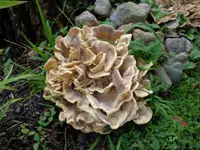
This species can form very large, dense clusters of mushrooms on wood in conifer forests, sometimes covering a substantial portion of a stump or buried root system.
It is regarded as inedible due to a pronounced bitter taste, which is linked to its secondary metabolites, chemical compounds that likely help deter herbivores and microbial competitors.
This fungus is most often recorded in coniferous habitats of the Pacific coast of North America, where it helps decompose woody debris and recycle nutrients in these forest ecosystems.

The caps of this species are among the largest in its genus, with individual fruit bodies sometimes reaching a size that makes them visually conspicuous even from several meters away on the forest floor.
This mushroom is not considered edible. It is bitter and may contain compounds that cause stomach upset or other adverse effects. It should not be foraged or eaten and is best treated as a non-edible woodland species.
Keep your plants happy and healthy with plant identification, disease detection, and easy care guidance.