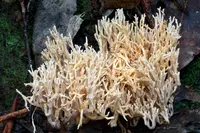
yellow coral fungus Care (Clavulinopsis amoena)

yellow coral fungus

About yellow coral fungus

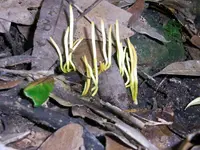
Yellow coral fungus, Clavulinopsis amoena, is a small, club-shaped fungus rather than a true plant. It forms bright yellow or orange, coral-like tufts that rise from the soil surface. The clusters often appear scattered through mossy grass, leaf litter, or rich forest soils. This species is typically found in temperate regions, especially in moist meadows, lawns, and woodland clearings.

In cultivation it is considered challenging, because it depends on complex soil communities and specific microclimates. Many people find it easier to observe than to actively grow. Those who explore how to care for yellow coral fungus usually focus on maintaining undisturbed, consistently moist, well-drained soil with organic matter and gentle, filtered light.


Main Plant Requirements

Care Difficulty

Hard Care

Light Preference

Partial Shade

Water Requirements

Keep Soil Moist

Temperature Preference

Cool Climate

Hardiness Zone

Unknown

Soil Texture

Loamy, Peaty, Organic-rich

Soil pH

Strongly acidic (4.5–5.5), Acidic (5.5–6.5)

Soil Drainage

Moist but well-drained

Fertilization

Minimal (feed rarely)

Get Personalized Care Plan

Scan your plant to receive care tips personalized for your specific plant

Available on iOS and Android

How to Care for the yellow coral fungus

Clavulinopsis amoena thrives in bright, indirect forest-like light with limited direct sun exposure.

  • Provide dappled or filtered light with 2–4 hours of gentle morning sun and full shade by early afternoon to mimic woodland edges.
  • Allow partial shade under shrubs, grasses, or low tree canopy; consistent shade with soft, scattered light supports stable fruiting of yellow coral fungus.
  • Avoid strong midday sun, which can dry the substrate and bleach fruiting bodies; in open sites, use leaf litter or low plants to create filtered light, especially in summer.

Watering for Clavulinopsis amoena focuses on keeping the substrate consistently moist but never stagnant.

  • Maintain evenly moist soil or leaf litter, letting only the top 1–2 cm begin to dry before the next soaking, especially during active fruiting.
  • Use a loose, well-drained, organic-rich substrate so excess water runs off; avoid puddling, sour smell, or slimy bases, which indicate overwatering and rot risk.
  • In cool, wet seasons reduce added water and rely more on rainfall; in hot, dry spells, water when the surface dulls, caps, or shrivels slightly, then rehydrate thoroughly.

This species prefers cool to mild conditions that resemble shaded forest floors.

  • Aim for 50–68°F (10–20°C) during active growth, which supports stable mycelium development and healthy fruiting structures.
  • Tolerate brief drops to about 32°F (0°C), but repeated hard frosts can damage fruiting bodies; protect colonies from exposed, wind-swept positions.
  • In hot periods above 77°F (25°C), shade and higher humidity become important, as excess heat combined with dry air shortens lifespan and deforms tips.

This fungus prefers consistently moist, humid conditions around its fruiting site.

  • Aim for 70–90% humidity around the substrate by keeping the surrounding air and surface evenly moist, not soaked.
  • It tolerates brief dips to 50–60% humidity but will dry and collapse quickly in prolonged dry indoor air.
  • Humidity stress shows as shriveling, fading color, and brittle tips; increase humidity with a covered but ventilated container or frequent fine misting.

This species fruits best in loose, organic-rich, evenly moist substrate rather than dense mineral soil.

  • Use a soft, humus-rich mix such as 60% fine composted leaf mold with 40% fine bark or coconut coir to mimic forest litter.
  • Ensure very free drainage by adding a thin base layer of coarse sand or fine gravel so water never stands around the fungal mycelium.
  • Keep pH slightly acidic to neutral, around 5.5–7.0, avoiding limed or strongly alkaline substrates that can suppress Clavulinopsis amoena development.
  • Maintain high aeration by keeping the mix fluffy and never compacting it; avoid heavy clay, peat-only mixes, or waterlogged conditions.

This fungus can be maintained in containers only under carefully controlled, moisture-stable conditions.

  • Choose a wide, shallow container that allows the mycelium to spread laterally in a 5–10 cm deep organic layer.
  • Use a rigid plastic or glazed ceramic pot that slows evaporation so the substrate stays evenly damp without frequent watering.
  • Create a drainage layer and side ventilation holes near the base to balance high surface moisture with rapid removal of excess water at the bottom.

Clavulinopsis amoena is a saprotrophic fungus that normally gains nutrients from decaying organic matter and does not need added fertilizer in garden or container culture.

Pruning is not a standard practice for Clavulinopsis amoena, since the visible coral structures are short-lived fungal fruiting bodies rather than persistent stems or foliage.

Transplanting yellow coral fungus is rarely successful, because the underground mycelium is delicate and tightly linked to specific soil conditions.

  • Avoid routine transplanting; instead, protect existing habitat with minimal soil disturbance and no deep digging.
  • If movement is unavoidable, lift a wide, deep plug of soil to keep the mycelium network as intact as possible.
  • Carry and place the soil plug gently into a site with similar soil texture, moisture, and organic content.
  • Water lightly after transplanting to settle soil, then leave undisturbed so the fungus can re-establish.

Propagation of Clavulinopsis amoena is challenging and not typically attempted by home growers because it depends on complex soil and microbial relationships.

Clavulinopsis amoena is generally cold hardy in its native range and needs no specific winter care in gardens or naturalized areas.

Care Tips

Substrate inoculation patches

Instead of sprinkling spores randomly, mix small patches of thoroughly colonized substrate into fresh, low-nutrient, well-drained soil pockets so the fungus can bridge gradually into new areas without drying out or losing contact with its mycelium network.

Leaf-litter layering

Maintain a thin, loose layer of hardwood leaf litter over the colonized area to buffer moisture, shade the soil surface, and provide a slow, steady food source without smothering the fruiting bodies.

Targeted misting routine

Use a fine-mist spray bottle to humidify only the soil surface and immediate air layer in the early morning, avoiding direct mist on mature fruiting bodies, which can deform or rot if repeatedly soaked.

Seasonal marking and mapping

Mark recurring fruiting spots with discreet plant labels or in a simple garden map, then avoid deep cultivation or foot traffic in those microzones so the mycelium remains intact and can fruit in future seasons.

Ventilated container setups

For yellow coral fungus indoor care experiments, use shallow, wide containers with multiple side and lid vents to provide fresh air exchange while keeping the substrate evenly moist and preventing stagnant, mold-prone conditions.

Common Pests and Diseases

Fungivorous springtails

These insects live in moist substrates and graze on fungal tissue and spores, sometimes scarring the surface of the fruiting bodies. Symptoms include small feeding pits, surface roughness, and reduced aesthetic quality of the coral structures.

Solution

Reduce excess surface moisture by improving drainage and ventilation, and avoid standing water around the substrate. If populations are high, use sticky traps around the growing area and, where allowed, apply a targeted biological control such as beneficial nematodes to the substrate rather than spraying the fruiting bodies directly.

Fungus gnat larvae

This pest lives in damp, organic substrates and its larvae feed on fine mycelium, which can stunt or distort fruiting of the yellow coral structures. Symptoms include slow or uneven emergence of fruiting bodies and frequent small black gnats flying near the substrate surface.

Solution

Allow the upper layer of the substrate to dry slightly between waterings while still keeping internal moisture adequate for growing yellow coral fungus. Use yellow sticky traps to capture adults and, if needed, drench the substrate with a biological control containing Bacillus thuringiensis israelensis (Bti) following label directions to target larvae without harming the fungus directly.

Competitive mold overgrowth

This disease occurs when fast-growing molds such as Trichoderma or Penicillium colonize the substrate, outcompeting the Clavulinopsis amoena mycelium. Symptoms include patches of green, blue, or gray fuzzy growth, suppressed or patchy coral fungus fruiting, and sometimes a musty odor.

Solution

Physically remove heavily contaminated substrate and fruiting bodies, and discard them away from the growing area. Improve hygiene by using clean tools, reducing airborne dust, increasing fresh air exchange, and, for future batches, starting from properly pasteurized or sterilized substrate to give the target fungus a head start.

Substrate bacterial soft rot

This disease develops in overly wet, poorly aerated substrates and leads to break down of organic matter supporting the fungus. Symptoms include sour or foul smell, slimy or waterlogged substrate patches, and sudden collapse or failure of nearby coral fruiting bodies.

Solution

Remove and discard the most affected substrate sections and any severely damaged fruiting bodies. Improve aeration and drainage, reduce watering frequency, and keep the substrate just moist rather than saturated; for persistent problems, restart culture on fresh, well-structured substrate and avoid reusing contaminated material.

Interesting Facts

Bright warning colors

The fruiting bodies are a vivid yellow to orange-yellow, a coloration thought to act as aposematic signaling, which in ecology refers to bright colors that can warn potential predators that a fungus may be unpalatable.

Grassland specialist

This species is most often found in unimproved, low-nutrient grasslands and lawns in Europe, where it fruits among short grasses and mosses, indicating relatively undisturbed, low-fertilizer soils.

Slim, coral-like clubs

Instead of forming a classic mushroom cap, it produces numerous slender, unbranched club-shaped structures 1–6 cm tall that resemble miniature coral, distinguishing it from many other coral fungi with repeatedly branched forms.

Botan icon

Did you know?

Clavulinopsis amoena is one of the so-called waxcap grassland fungi, a conservation-significant group whose presence can be used by field mycologists as an indicator of old, species-rich grassland habitats that have not been intensively fertilized or plowed.

FAQs about yellow coral fungus

This species is generally considered inedible or of no culinary value. Identification within coral fungi is difficult, and some relatives can cause stomach upset. For safety, it is best not to eat it.

Grow Healthy Plants with Botan Care

Keep your plants happy and healthy with plant identification, disease detection, and easy care guidance.

Botan plant care app — identify plants on mobile

Explore More Plants